

Bedding retro simply means duvet sets and sheets inspired by past decades, usually the 1950s to the 1970s, with bold florals, checks, earthy colours and cosy textures. The easiest way to nail the look is to choose one hero pattern, pick a colour palette from a single era, and keep the fabric soft and easy to wash. You can do all of that without paying vintage-shop prices.
This guide walks you through the eras, patterns, colours and fabrics that define the look, plus how to mix it all together without your bedroom looking like a charity shop explosion (unless that's your vibe, in which case, carry on).
What makes bedding retro?
Retro bedding borrows its look from mid-century design: big graphic prints, warm colour palettes, tactile fabrics and a slightly nostalgic, lived-in feel. It nods to the past without being a museum piece.
A few signature traits show up again and again:
- Bold repeat patterns such as oversized florals, geometric shapes and gingham or tartan checks
- Warm, earthy colours like mustard, burnt orange, avocado green, brown and cream
- Soft, comfy textures including brushed cotton, teddy fleece and crinkled cotton
- Playful details like piping, frills, ric-rac trim or contrast edging
There's a useful distinction between true vintage and retro. Vintage bedding is actually old, often with the wear, quirks and sizing differences that come with it. Retro bedding is new, made to look old. For most of us, retro wins on practicality: standard UK sizing, modern washing instructions and no mystery stains.
If you want a quick overview of how the style comes together, Happy Home Shop has a handy read on retro style bedding that pairs nicely with this guide.
Which decade should your retro bedding come from?
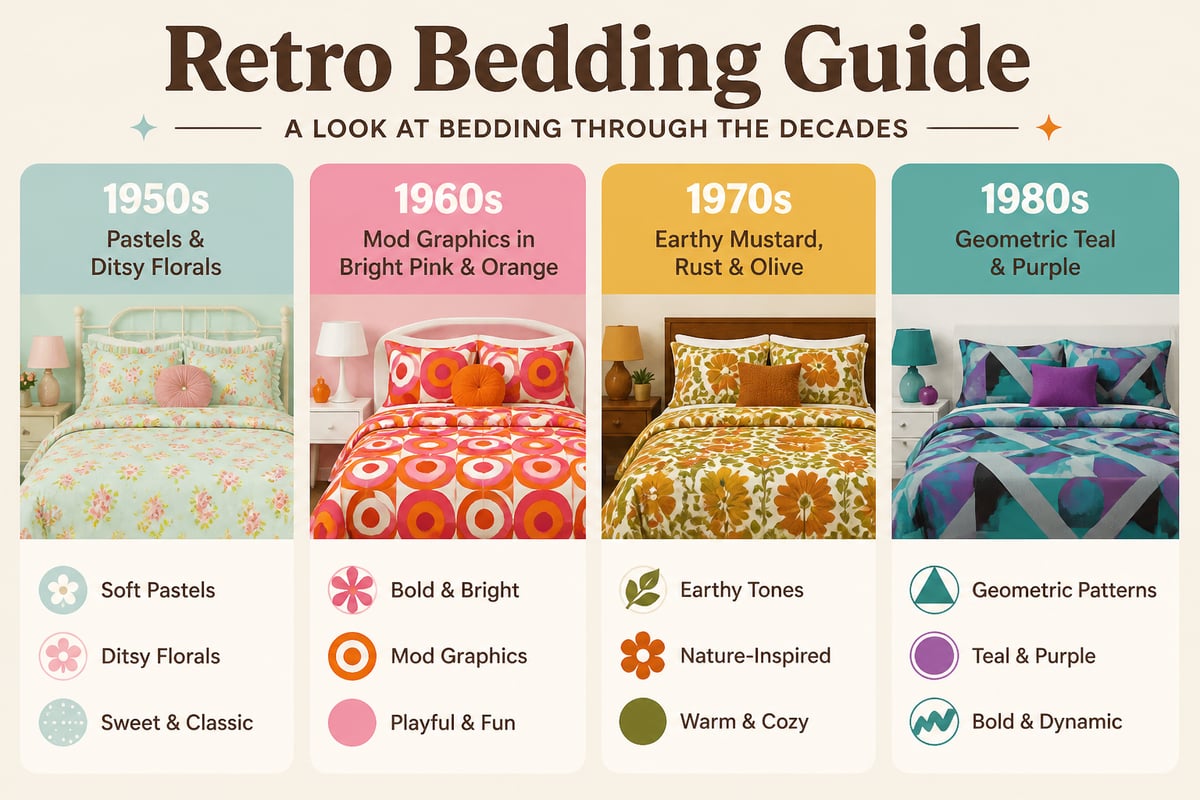
The best decade for your retro bedding is the one whose colours you'd happily wake up to every morning. Each era has a distinct personality, so it helps to pick a lane before you start browsing.
| Decade | Signature look | Colours | Best for |
|---|---|---|---|
| 1950s | Pretty, tidy, a little sweet | Pastel pink, mint, powder blue, cream | Calm, feminine, cottage-style rooms |
| 1960s | Mod, graphic, cheerful | Hot pink, tangerine, sky blue, white | Bright, playful spaces |
| 1970s | Earthy, relaxed, cosy | Mustard, rust, brown, olive | Warm, snug bedrooms |
| 1980s | Bold, geometric, a bit loud | Teal, purple, coral | Statement guest rooms |
If you're not sure, the 1970s palette is the most forgiving. Browns, golds and greens sit happily alongside most existing furniture and wall colours, and they hide the odd coffee splash better than white ever will.
Retro bedding patterns to look for
The patterns that read as retro most clearly are large florals, checks, geometrics and quirky novelty prints. Choose one as your star, then let everything else play a supporting role.
Florals
Oversized, slightly stylised flowers are the backbone of the look. Think daisies, poppies and chunky blooms in muted tones rather than delicate watercolour petals. The floral bedding collection is a good place to spot the bigger, bolder prints that give a room that grandmother's-best-guest-room charm.
Checks and gingham
Checks are the easy win. They feel nostalgic, work with almost any other pattern and look good even when the bed isn't perfectly made. Browse the check bedding collection if you want something that feels cosy and country without shouting about it.
Geometrics and graphics
Circles, stripes, zigzags and groovy waves scream 1960s and 1970s. These work best in two or three colours rather than a rainbow, so the pattern stays crisp.
Novelty and character prints
Retro isn't always serious. Cartoon characters, space prints and quirky critters were everywhere in past decades, and they still make a bedroom feel fun. If you want a playful twist, the character bedding collection is full of nostalgic crowd-pleasers, and the gonk bedding collection leans right into the cheeky, collectable spirit of the era.
The best fabrics for a retro bedding look
Brushed cotton, teddy fleece and plain cotton percale are the best fabrics for retro bedding, because each one delivers a different slice of nostalgia while staying easy to look after.
- Brushed cotton has a soft, slightly fuzzy surface that feels like flannelette sheets from childhood. It's warm, cosy and brilliant for autumn and winter. Have a look at the brushed cotton bedding collection for ready-made options.
- Teddy and fluffy fabrics add that 70s shag-carpet texture. They're ideal as a throw-over layer or a statement duvet set for chilly nights.
- Polycotton is the budget-friendly all-rounder: crisp, quick drying and fuss-free. Many of the original mid-century sets were made from it, so it feels authentic.
- Cotton percale gives a cooler, lighter feel that suits 1950s pastels and summer bedrooms.
Texture is half the retro effect. A flat, shiny polyester set can look like a costume, while a soft brushed cotton or crinkle weave looks properly lived-in.
How to choose retro bedding that actually suits your room
The easiest way to choose is to start with what you already own, then match the era and pattern to it. Retro works best when it's styled, not dumped on top of clashing furniture.
Follow these steps:
- Check your walls and floor. Neutral walls (white, cream, soft grey) let a busy pattern shine. Already-bold walls need a calmer set.
- Pick one hero pattern. A single large floral or check as the main duvet cover keeps things looking intentional.
- Pull two accent colours from the pattern. Use these in pillowcases, cushions and a throw.
- Add one plain layer. Plain sheets or a solid cushion give the eye a place to rest.
- Choose the right size first. A retro print on a duvet that's too small looks sad, not stylish.
A small bedroom can take retro too. Stick to one busy item and keep the rest simple, otherwise the room can feel crowded.
Retro colour palettes and how to mix them
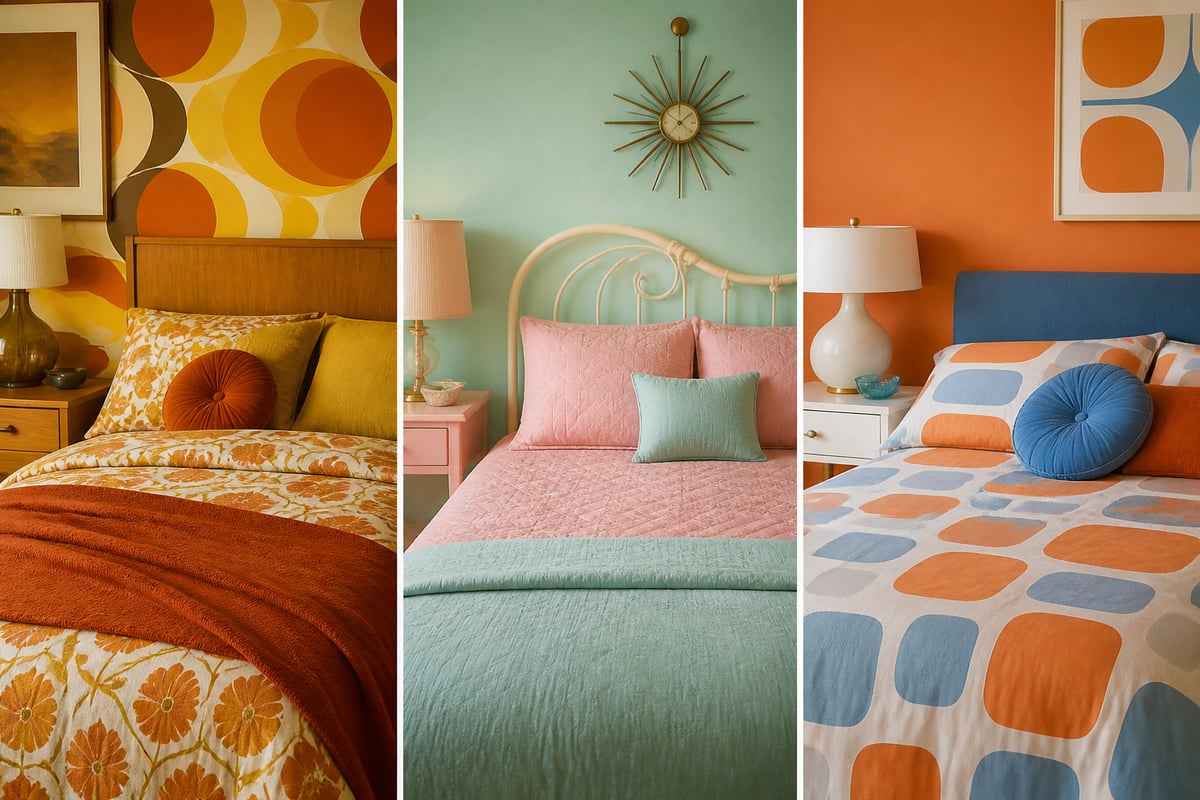
The safest retro palettes use three main colours: one dominant, one supporting and one pop. This keeps a vintage look feeling curated rather than chaotic.
Here are three combinations that work almost every time:
- Sunshine 70s: mustard, rust and cream, with a touch of chocolate brown
- Sweet 50s: powder pink, mint and white, with a little pale grey
- Mod 60s: tangerine, sky blue and white, with a dash of lemon yellow
Colour affects mood more than we tend to admit. Warm oranges and yellows feel energising and sociable, while soft greens and blues lean calming. If your bedroom is a place to switch off, it's worth reading about how colour in your bedding can boost your mood before you commit.
Safe, skin-friendly bedding: what to check
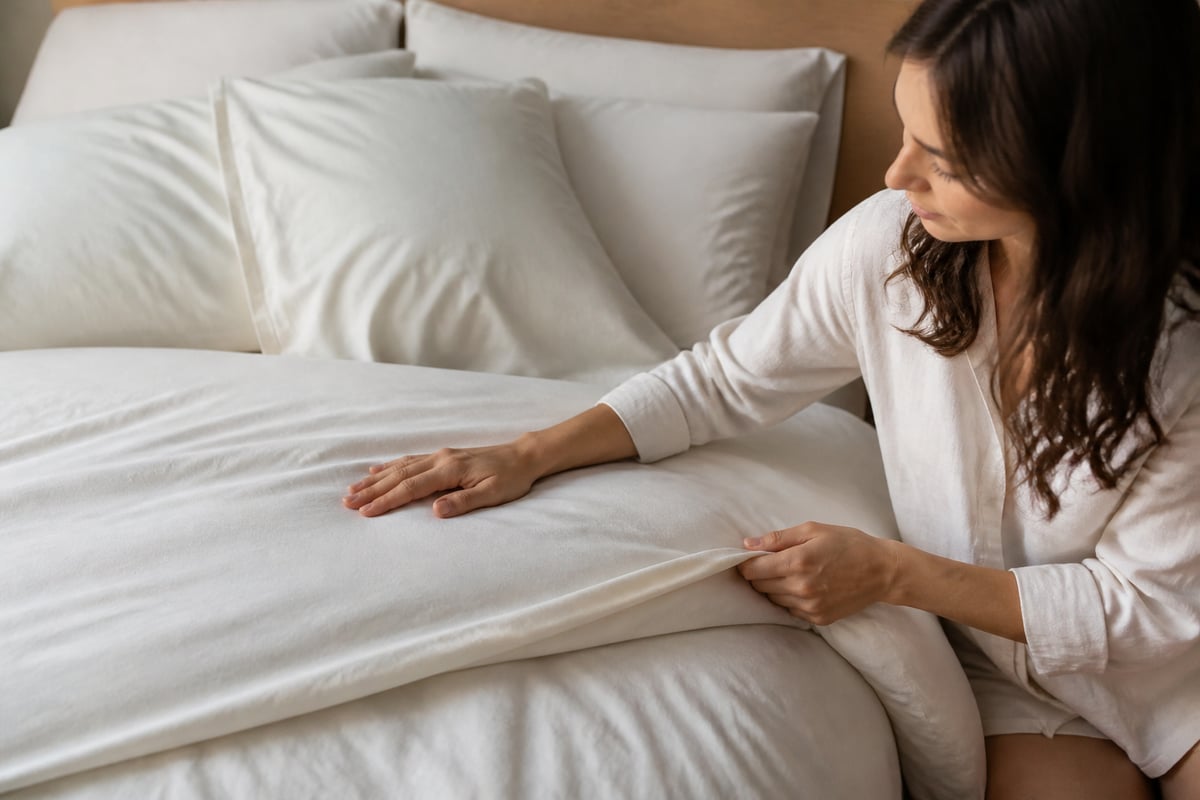
Because bed linen touches your skin for hours every night, it's smart to check how it's been tested. The OEKO-TEX STANDARD 100 label tests textiles for harmful substances, and bed linen falls under Product Class 2, which covers items in direct skin contact. If you're buying for a baby or toddler, look for Product Class 1, which has the strictest requirements and is mandatory for baby and toddler products.
This is worth bearing in mind with genuine second-hand vintage sets, too. Older textiles were made before modern testing standards, so they're best used as décor or washed thoroughly before use. The same caution applies to old mattresses. In the US, for example, the Consumer Product Safety Commission sets flammability rules for mattresses, including a smoldering-ignition standard (16 CFR Part 1632) and an open-flame standard (16 CFR Part 1633), and mattresses and pads must carry a permanent label with the month and year of manufacture and the manufacturing location. A retro bed is lovely, but a very old mattress is one thing to leave in the past.
New retro-style sets avoid all of that. If you'd like an eco-minded option, the sustainable bedding collection and the BCI cotton bedding collection are worth a look.
Retro bedding for every season, including Christmas
Retro bedding is brilliant for seasonal styling because the nostalgic prints and tactile fabrics already feel festive. Swap your set with the weather and you get a new bedroom without redecorating.
- Spring: pastel florals and ditsy prints in cotton or polycotton
- Summer: crisp checks and gingham in lighter weaves
- Autumn: mustard, rust and olive in brushed cotton
- Winter: teddy fleece, fluffy textures and cosy plaids
Christmas is where retro really shines. Think old-school reds, greens and woodland animals rather than glitter and slogans. The Christmas bedding collection has plenty of nostalgic designs, and the teddy Christmas bedding collection delivers that snuggly 70s texture for properly cold nights. It's the kind of thing that makes a spare room feel like a festive grandparents' house in the best way.
Budget-friendly ways to nail the retro look
You don't need to spend much to get a convincing retro bedroom, because the look relies on pattern and colour rather than expensive fabric. A single good duvet set does most of the work.
Here's how to stretch your money:
- Buy one statement set, not a whole new bedroom. Let the duvet cover be the star.
- Mix in what you already own. Plain white or cream sheets are a perfect neutral partner.
- Add cushions and a throw. These are cheap, easy to swap and carry the colour story across the room.
- Choose a bundle. A ready-made option like the complete Happy bedding bundle saves you matching things yourself.
- Shop the full range. Looking through all bedding lets you spot sets that fit your palette, and sale periods can make a bold print even kinder to your wallet.
How to care for retro bedding so it stays bright
Retro prints stay vivid when you wash them cool, turn them inside out and avoid harsh detergents. Bold colours like mustard, orange and brown can fade quickly if they're blasted with heat.
- Wash at 30 degrees, inside out, with a colour-safe detergent.
- Wash similar colours together, especially for the first couple of washes.
- Skip fabric softener on brushed cotton and teddy fabrics, as it can flatten the pile.
- Dry on a low heat or line dry out of direct sunlight.
- Store clean sets somewhere dry and breathable rather than sealed in plastic.
Build a retro bedroom from the bed outwards
The most effective way to extend the look is to treat your bedding as the starting point and add one or two supporting pieces. This keeps the room cohesive and stops the budget running away.
Try this simple order:
- Bed first. Your hero duvet set and matching pillowcases.
- Textiles next. A throw, a couple of cushions and perhaps a bedside rug in a complementary colour.
- Lighting after that. A warm lamp with a scalloped or fabric shade instantly adds a mid-century glow.
- Small touches last. Framed prints, a vintage-style clock or a plant in a ceramic pot.
If you want to mix retro with other styles, a whimsical, slightly storybook feel works beautifully alongside it. The ideas in whimsical bedding pair well with retro florals and playful prints.
Frequently asked questions
Is retro bedding the same as vintage bedding?
No. Vintage bedding is genuinely old, while retro bedding is newly made with a nostalgic design. Retro is easier to find in standard UK sizes and comes with modern care instructions.
Which colours are most retro?
Mustard, burnt orange, avocado green, brown and cream feel the most 1970s. Pastel pinks and mints suggest the 1950s, while bright orange, hot pink and sky blue lean 1960s.
Can I mix retro patterns?
Yes, as long as you keep the colours linked. Combine one large pattern with a smaller one in the same palette, and add a plain piece to calm things down.
Is brushed cotton good for retro bedding?
It's one of the best choices. The soft, slightly fuzzy finish feels nostalgic and cosy, and it suits cooler months especially well.
Start by choosing your era and one hero pattern, then hold it up against your wall colour before you buy anything else. When you're ready to shop, Happy Home Shop has a wide range of affordable duvet sets, sheets and cushions in nostalgic designs and colours, with convenient delivery and regular discounts. It's an easy place to find a retro look that suits both your room and your budget.