If you've ever wrestled with a slippery duvet that refuses to stay put inside its cover, you'll understand the appeal of a fitted duvet cover. This clever bedding solution combines the decorative benefits of a traditional duvet cover with the stay-put security of a fitted sheet, keeping your duvet exactly where it belongs all night long. Whether you're trying to create a Pinterest-perfect bedroom on a budget or simply tired of your duvet bunching up in the corners, this guide will walk you through everything you need to know about choosing, using, and caring for this increasingly popular bedding option.
What makes a fitted duvet cover different?
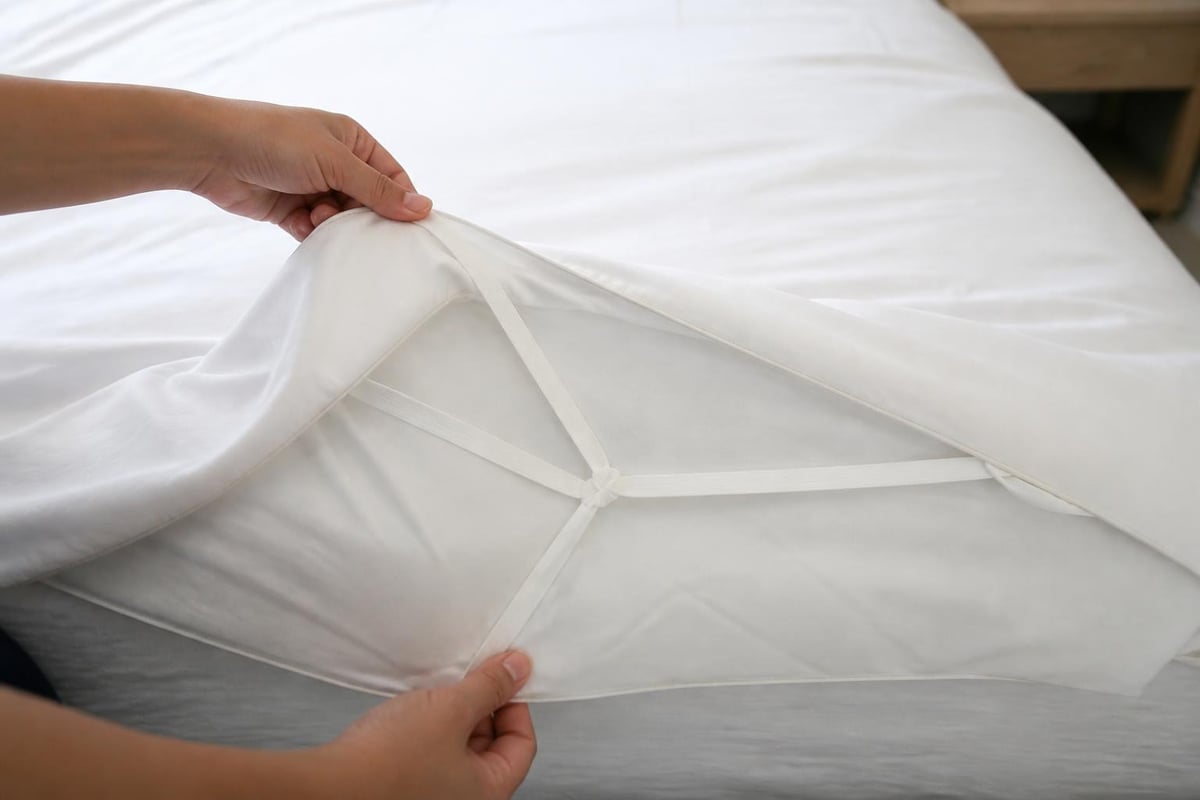
A fitted duvet cover reimagines the traditional duvet cover design by adding elastic corners, internal ties, or grip strips that anchor your duvet insert firmly in place. Unlike standard covers that rely solely on end fastenings, this style tackles the age-old problem of duvet shift and bunching.
The anatomy of a fitted design
Traditional duvet covers are essentially large fabric envelopes with button, zip, or popper closures at one end. They work brilliantly for style but can leave your duvet insert sliding around inside, creating lumpy, uneven bedding that needs constant readjusting. A fitted duvet cover addresses this frustration through several clever design features:
- Corner elastication that grips the duvet insert like a fitted sheet grips your mattress
- Internal corner ties or loops that attach to corresponding ties on your duvet
- Grip strips or non-slip backing along key areas to prevent movement
- Button or zip closure at the foot end, just like traditional designs
The Sleep Foundation explains what a duvet cover is and its various forms, noting that fitted versions have gained popularity precisely because they solve practical problems without sacrificing style. This hybrid approach means you get the aesthetic flexibility of changing covers to refresh your bedroom's look whilst enjoying the security of knowing your duvet won't migrate to one corner by morning.
Choosing the right fabric for your fitted duvet cover
Fabric choice transforms how your fitted duvet cover feels, performs, and lasts. The right material depends on your personal comfort preferences, seasonal needs, and budget considerations.
| Fabric Type | Best For | Key Benefits | Price Range |
|---|---|---|---|
| Cotton percale | Hot sleepers, summer | Crisp, breathable, cool | £30-£80 |
| Cotton sateen | Year-round comfort | Soft, smooth, slight sheen | £35-£90 |
| Brushed cotton/flannel | Cold sleepers, winter | Extra warmth, cosy texture | £25-£70 |
| Linen | Temperature regulation | Highly breathable, textured | £60-£150 |
| Microfibre | Budget buyers, easy care | Wrinkle-resistant, affordable | £15-£40 |
Muller Textiles' fabric comparison guide provides technical detail on how different materials perform across durability, breathability, and warmth retention. For 2026, cotton remains the gold standard for most households, offering an excellent balance of comfort, breathability, and value.
Natural versus synthetic materials
Natural fibres like cotton and linen allow air circulation that helps regulate body temperature throughout the night. Cotton percale delivers that crisp, hotel-fresh feel, whilst sateen offers silky smoothness that many find luxurious. Our guide on why cotton is the best choice for your duvet cover explores these benefits in greater depth.
Synthetic microfibre brings different advantages. It's typically more affordable, resists wrinkles beautifully, and dries quickly after washing. For families on tight budgets or those who prefer low-maintenance bedding, a microfibre fitted duvet cover can be brilliant. The trade-off comes in breathability, as synthetic fabrics generally trap more heat than natural alternatives.
If you or family members deal with allergies, look for covers that meet asthma and allergy friendly certification standards. A tightly woven fitted duvet cover can create an effective barrier against dust mites when combined with regular washing.
Thread count, weave, and quality indicators
Don't get too hung up on thread count numbers. Marketing often inflates these figures, and a 200-thread-count percale can actually feel crisper and last longer than a loosely woven 600-thread-count alternative. Instead, focus on:
- Feel the fabric yourself when possible (or check detailed product descriptions)
- Check certification marks like OEKO-TEX that guarantee chemical safety
- Read reviews mentioning durability after multiple washes
- Compare weight (GSM/grams per square metre) for seasonal suitability
PureLinen's technical guide breaks down weave types brilliantly, explaining how percale, sateen, and twill constructions affect everything from breathability to wrinkle resistance.
Getting the perfect fit for your duvet
Even the cleverest fitted duvet cover won't work properly if you've chosen the wrong size. Proper fitting ensures your duvet insert stays smooth and comfortable all night.
Understanding UK bedding sizes
UK duvet sizes follow standard measurements, but slight variations between manufacturers mean you should always check specific dimensions:
- Single: 135 × 200 cm
- Double: 200 × 200 cm
- King: 230 × 220 cm
- Super King: 260 × 220 cm
Your fitted duvet cover should match your duvet insert size exactly. Unlike fitted sheets, where you measure your mattress, here you're matching cover to duvet. Too large and you'll still get bunching; too small and you won't be able to insert your duvet comfortably.
For detailed guidance on sizing problems and solutions, our article on duvet cover sizing and fit covers common mistakes and how to avoid them.
The tog rating connection
Your duvet's tog rating (warmth level) doesn't directly affect which fitted duvet cover size you need, but it influences thickness. A thick 13.5-tog winter duvet will fill out its cover more fully than a lightweight 4.5-tog summer version in the same size. This matters because:
- Thick duvets benefit more from fitted covers (more tendency to shift)
- Thin summer duvets might not engage elastic corners as effectively
- All-season duvets (10.5 tog) work beautifully with fitted designs
Consumer Reports' duvet performance testing helps you understand how duvet construction affects how it sits inside any cover, fitted or traditional.
How to put on a fitted duvet cover
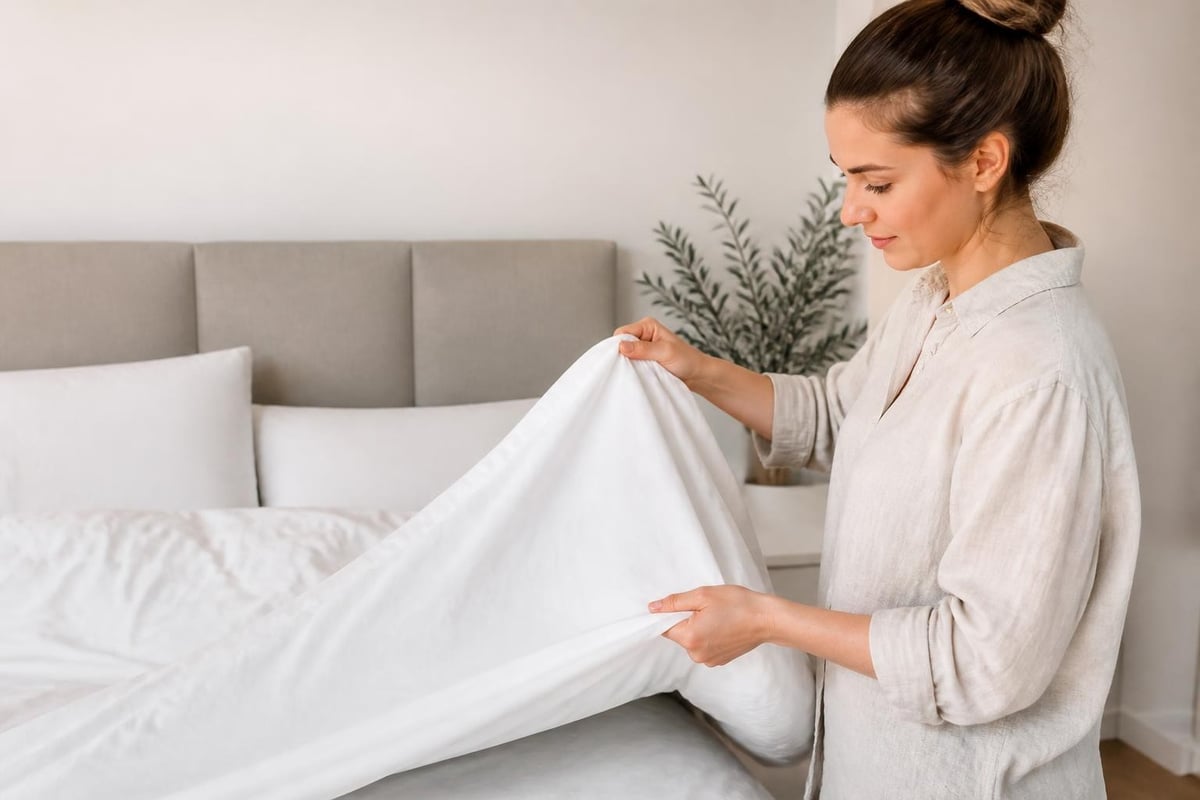
Even with elastic corners helping you, getting a duvet into its cover can feel like an Olympic sport if you don't know the tricks. The good news? A fitted duvet cover is actually easier to install than a traditional one once you master the technique.
The burrito method adapted for fitted covers
The burrito (or sausage) method remains the quickest approach for most people, with a small adaptation for fitted designs:
- Turn your fitted duvet cover inside out and lay it flat on your bed
- Lay your duvet insert on top, aligning all corners carefully
- Start at the head end and roll duvet and cover together tightly toward the foot
- When you reach the foot, open the cover's closure and pull the cover over the rolled "burrito"
- Unroll everything back toward the head, letting the cover right itself as you go
- Secure elastic corners or internal ties if your design includes them
The Sleep Foundation's step-by-step duvet cover guide demonstrates several techniques with helpful visuals, though you'll need to add that final step of securing your fitted duvet cover's corner fastenings.
Time-saving alternatives
If the burrito method doesn't appeal, try these approaches:
- The clip method: Use large binder clips to hold duvet to cover at each corner before shaking the whole thing right-side-out
- The inside-out reach: Reach inside the cover, grab corners of the duvet through the fabric, then shake the whole thing right-side-out
- Partner assist: Grab one person for each end and work together (makes any method faster)
Whatever technique you choose, those elastic corners or internal ties will keep your duvet positioned correctly once it's in place, so you won't need to repeat this process nearly as often as with traditional covers.
Styling your bedroom with fitted duvet covers
Just because a fitted duvet cover is practical doesn't mean it can't be beautiful. The Happy Home Shop collection includes fitted options in gorgeous patterns and colours that suit every aesthetic.
Mixing patterns and textures
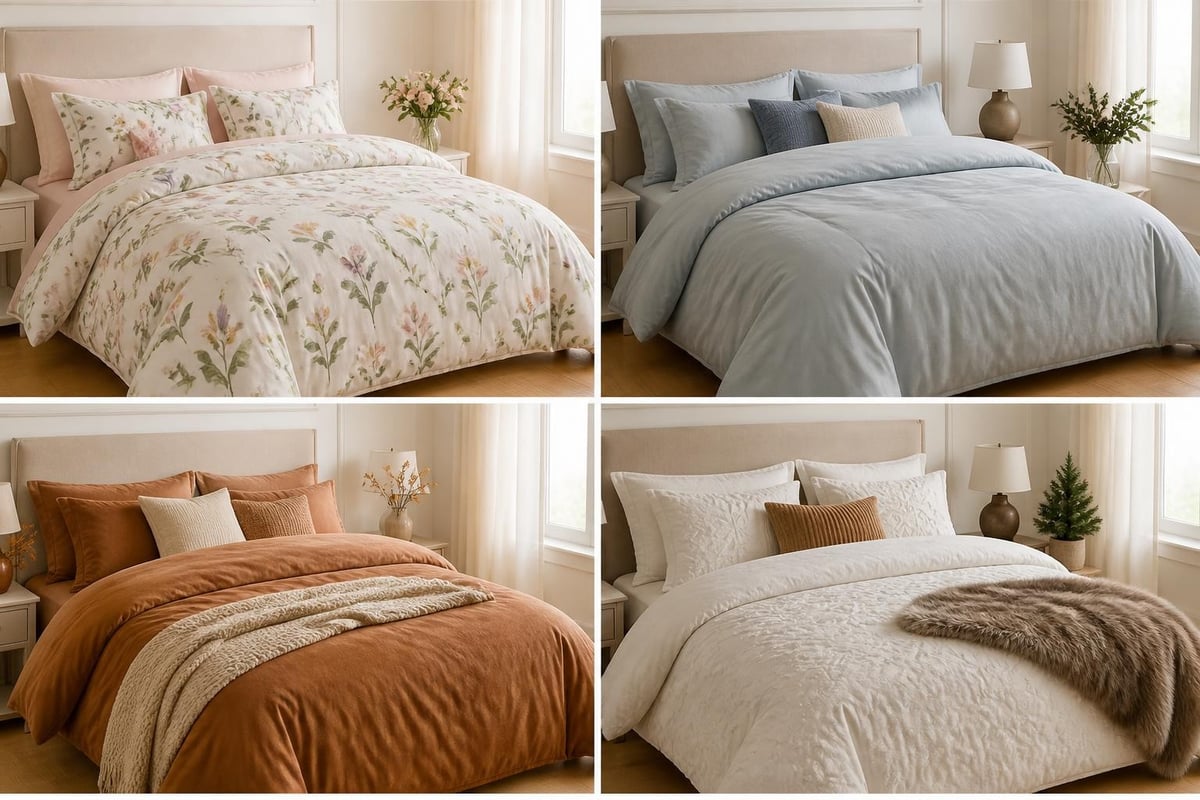
Your fitted duvet cover sets the tone for your entire bedroom. In 2026, we're seeing:
- Bold florals making a comeback in bedrooms, from delicate ditsy prints to oversized blooms
- Geometric patterns in jewel tones for modern, sophisticated spaces
- Textured weaves like waffle or jacquard that add visual interest without pattern
- Classic stripes that never go out of style and suit both traditional and contemporary rooms
If you're torn between colourful and minimal approaches, our article comparing colourful versus minimal duvet covers can help you identify which direction suits your personality and space.
Don't forget about coordinating pieces! A fitted duvet cover from a complete bedding collection makes it easy to match pillowcases, cushions, and throws for a pulled-together look. Browse options at Happy Home Shop's bedding collections to see how complete sets simplify decorating decisions.
Seasonal swaps on a budget
One of the loveliest things about duvet covers (fitted or traditional) is how easily they let you refresh your bedroom's look. Keep two or three fitted duvet covers in your linen cupboard and swap them seasonally:
Spring/Summer:
- Light, bright colours (whites, pastels, soft blues)
- Breathable cotton percale fabrics
- Fresh florals or nautical stripes
- Lightweight construction
Autumn/Winter:
- Warmer tones (burgundy, forest green, charcoal)
- Brushed cotton or flannel for extra cosiness
- Seasonal patterns like plaids or festive designs
- Slightly heavier fabric weight
This approach costs far less than buying new furniture or repainting walls, yet completely transforms how your bedroom feels. Check out autumn duvet cover ideas for seasonal inspiration as we head into the cooler months of 2026.
Caring for your fitted duvet cover
Proper care extends the life of your fitted duvet cover and keeps it looking fresh. The elastic corners and internal fastenings require slightly different attention than standard covers.
Washing frequency and temperature
How often should you wash your fitted duvet cover? Most experts recommend every one to two weeks, though this depends on personal factors:
- Weekly washing for hot sleepers, allergy sufferers, or if you don't use a top sheet
- Fortnightly washing for most households under normal conditions
- More frequently during illness, very hot weather, or if pets sleep on your bed
Our comprehensive guide on how often to change bed sheets covers the science behind these recommendations.
For washing temperature, check your specific cover's care label, but general guidelines include:
| Fabric | Recommended Temperature | Special Considerations |
|---|---|---|
| Cotton (white) | 60°C | Hot wash maintains brightness |
| Cotton (coloured) | 40°C | Preserves colour vibrancy |
| Linen | 40-60°C | Can withstand higher temps |
| Microfibre | 30-40°C | Lower temps prevent static |
| Delicate/silk | 30°C cold | Hand wash or gentle cycle |
Before washing, turn your fitted duvet cover inside out and fasten all closures. This protects the outer fabric and prevents the elastic corners from snagging on other items in your machine.
Drying and ironing considerations
The elastic components in a fitted duvet cover need gentle drying to maintain their stretch:
- Line drying is always gentlest and most energy-efficient
- Tumble dry on low if you must use a machine
- Remove promptly to minimize wrinkles
- Shake out thoroughly before hanging or folding
If you enjoy crisp, ironed bedding, you absolutely can iron a fitted duvet cover. Use the temperature setting appropriate for your fabric and work in sections. However, many people find that smoothing the cover onto the bed whilst slightly damp achieves a neat look without the ironing effort. Our article asking do you really need to iron bed sheets? explores both approaches.
Maintaining elastic and fastenings
The fitted elements of your duvet cover need a bit of extra attention:
- Inspect elastic regularly for signs of wear or loosening
- Don't overstretch when putting the cover on
- Check zips and buttons before washing to avoid mid-cycle disasters
- Replace when necessary rather than persisting with worn-out fastenings
For maximum longevity, rotate between two fitted duvet covers if possible. This reduces wear on any single cover and means you always have a fresh one ready whilst the other is in the wash. Our guide on washing and storing bedding for maximum longevity shares professional tips for extending the life of all your linens.
Where fitted duvet covers are made
Understanding where and how your fitted duvet cover is manufactured helps you make informed choices about quality, ethics, and value.
Global manufacturing landscape
The majority of affordable bedding sold in the UK comes from manufacturing hubs in Asia, particularly China, India, Pakistan, and Bangladesh. Market analysis data for 2026 shows that China remains the dominant producer of duvet covers globally, with sophisticated factories capable of producing everything from budget microfibre to luxury Egyptian cotton options.
This isn't inherently negative. Many Asian manufacturers produce excellent quality bedding under strict safety and labour standards. The key is choosing retailers who verify their supply chains and ensure ethical production practices.
What to look for in responsible manufacturing
When shopping for a fitted duvet cover, these certifications and standards indicate responsible production:
- OEKO-TEX Standard 100 confirms no harmful chemicals in the finished fabric
- Fair Trade certification ensures fair wages and safe working conditions
- Organic cotton certifications (GOTS, OCS) guarantee sustainable growing practices
- Transparency about manufacturing locations and processes
Textile Exchange's life cycle assessment resources provide fascinating insight into how different materials and production methods impact environmental sustainability. Whilst price matters when you're decorating on a budget, choosing retailers who prioritize ethical manufacturing ensures your pounds support better practices.
At Happy Home Shop, our fitted duvet covers are sourced from verified manufacturers who meet strict quality and ethical standards, allowing you to feel good about your purchase whilst staying within budget.
Budget-friendly fitted duvet cover shopping tips
Creating a beautiful bedroom shouldn't require a fortune. These strategies help you find quality fitted duvet covers without overspending.
When to buy for best value
Timing your purchase strategically can save substantial money:
- January sales (post-holiday clearance offers huge discounts)
- Spring refresh periods (April-May, as retailers make room for summer stock)
- Black Friday/Cyber Monday (November, though watch for genuine versus inflated discounts)
- End-of-season sales (late summer for bright colours, late winter for darker tones)
Sign up for newsletters from your favourite bedding retailers (including Happy Home Shop!) to receive advance notice of sales and exclusive discount codes. Our inspiration blog regularly features special offers and styling ideas to maximize your budget.
Quality indicators at every price point
You can find well-made fitted duvet covers across all price ranges if you know what to check:
Under £30:
- Look for microfibre or basic cotton blends
- Check reviews mentioning durability after washing
- Expect simpler designs and fewer colour options
- Verify strong stitching at stress points (corners, zips)
£30-£60:
- 100% cotton becomes accessible at this range
- More variety in patterns, colours, and sizes
- Better quality fastenings (metal zips versus plastic)
- Often include matching pillowcases
£60+:
- Premium fabrics like linen or high-thread-count Egyptian cotton
- Designer patterns and exclusive collaborations
- Superior construction and finishing details
- Longer manufacturer warranties
Remember that a fitted duvet cover at any price point should have firmly sewn elastic corners, secure fastenings, and even stitching throughout. The difference in price generally reflects fabric quality and design rather than basic construction integrity.
Building a bedding collection gradually
You don't need to buy everything at once. Start with one quality fitted duvet cover that you truly love, then build your collection over time:
- First purchase: Neutral fitted duvet cover in a colour you won't tire of quickly
- Second purchase: Seasonal alternative (lighter for summer or warmer for winter)
- Third purchase: Statement pattern or bold colour for when you fancy a change
- Ongoing: Add coordinating cushions, throws, and accessories as budget allows
This approach spreads costs across months or years whilst ensuring you're investing in pieces you genuinely want rather than settling for whatever's immediately affordable. Browse the Happy Home Shop bedding collections to plan your wish list and watch for sales on your favourite pieces.
Troubleshooting common fitted duvet cover problems
Even the best fitted duvet cover can present occasional challenges. Here's how to solve the most common issues.
Elastic has lost its stretch
After many washes, the elastic corners may become loose and stop gripping your duvet effectively:
- Quick fix: Tie small knots in the elastic to tighten it temporarily
- Proper repair: Unpick the corner seams and replace the elastic (simple sewing project)
- Prevention: Always wash on gentle cycles and avoid excessive heat when drying
- Replacement: When elastic fails across multiple corners, it's probably time for a new cover
Zip or button closures breaking
Fastenings endure significant stress during use and washing:
- For broken zips: Replace the entire zip (doable at home with a sewing machine) or take to a alterations shop
- For lost buttons: Sew on replacement buttons using strong thread and secure stitching
- For worn poppers: Replace with new press studs from any haberdashery shop
- Prevention: Always fasten closures before washing to prevent snagging
Duvet still bunching despite fitted design
If your duvet won't stay smooth even with a fitted duvet cover:
- Check size matching: Ensure cover and duvet are genuinely the same size
- Secure all corners: Make certain elastic is engaged or ties are fastened
- Distribute filling: Shake duvet thoroughly to redistribute filling evenly
- Consider duvet quality: Very cheap duvets with clumpy filling never sit perfectly
Sometimes the issue is actually your duvet rather than your cover. If the insert has severely uneven filling or is past its useful life, even the best fitted duvet cover can't fix the underlying problem.
Colour fading over time
Keeping colours vibrant requires specific care:
- Wash coloured covers separately the first few times (excess dye may run)
- Use colour-safe detergent specifically formulated to protect brightness
- Avoid direct sunlight when line-drying coloured fabrics
- Turn inside out before washing to protect the outer surface
Our guide on keeping white bedding bright includes tips applicable to all bedding colours, whilst our bedding care article covers comprehensive washing best practices.
A fitted duvet cover solves one of bedding's most annoying problems whilst adding style and comfort to your bedroom at an affordable price. Whether you prefer crisp cotton percale, cosy brushed cotton, or budget-friendly microfibre, there's a fitted option perfect for your needs and aesthetic. Ready to transform your sleep space without the nightly duvet wrestling match? Explore the beautiful range of duvet covers and complete bedding sets at Happy Home Shop, where quality bedding meets budget-friendly prices, and discover how easy it is to create the bedroom of your dreams.