There's something truly magical about slipping into a bed that feels like it was made just for you. In 2026, the world of home textiles has evolved beyond mass-produced sheets and generic duvet covers, making it easier than ever to create a bedroom that reflects your unique personality without breaking the bank. Whether you're trying to match an unusual mattress size, incorporate your favourite colours into your sleep sanctuary, or simply want bedding that stands out from the crowd, exploring personalised options can transform your bedroom from ordinary to extraordinary.
What makes a custom bedding set different from off-the-shelf options
When you walk into most homeware shops, you'll find standard sizes and pre-selected patterns that might tick some boxes but rarely tick all of them. A custom bedding set flips that script entirely by putting you in the designer's chair.
The fundamental difference lies in control. With bespoke bedding, you're not limited to what manufacturers think will sell to the masses. Instead, you can:
- Choose exact dimensions that fit non-standard mattresses perfectly
- Select from a wider range of fabric weights and weave types
- Specify thread counts that match your comfort preferences
- Mix and match colours that aren't available in ready-made collections
- Add personalised details like monograms or unique borders
Standard bedding works well for most people, but it requires compromise. Perhaps you love a pattern but wish it came in navy instead of grey, or you've found the perfect duvet cover but it's just 5cm too short for your mattress. These small frustrations disappear when you opt for personalisation.
The anti-hotel bed trend perfectly captures this shift towards individual expression in bedroom design. Today's homeowners want their sleeping spaces to feel personal rather than generic, and customisation delivers exactly that.
Understanding the price difference
One common misconception is that custom automatically means expensive. Whilst premium bespoke bedding can certainly command a higher price, many affordable options now exist in 2026.
| Bedding Type | Typical Price Range (Double) | Lead Time | Personalisation Level |
|---|---|---|---|
| Ready-made standard | £20-£60 | Immediate | None |
| Semi-custom (limited options) | £50-£120 | 1-2 weeks | Moderate |
| Fully custom | £80-£250+ | 2-4 weeks | Extensive |
The key is deciding which elements matter most to you and where you're willing to compromise.
Choosing the right fabric for your custom bedding set
Fabric selection might be the most important decision you'll make when creating personalised bedding. The material you choose affects everything from how well you sleep to how long your investment lasts.
Natural versus synthetic fibres
Understanding the impact of bedding fibre types on sleep quality helps you make informed decisions. Research shows that different materials genuinely affect how well you rest.
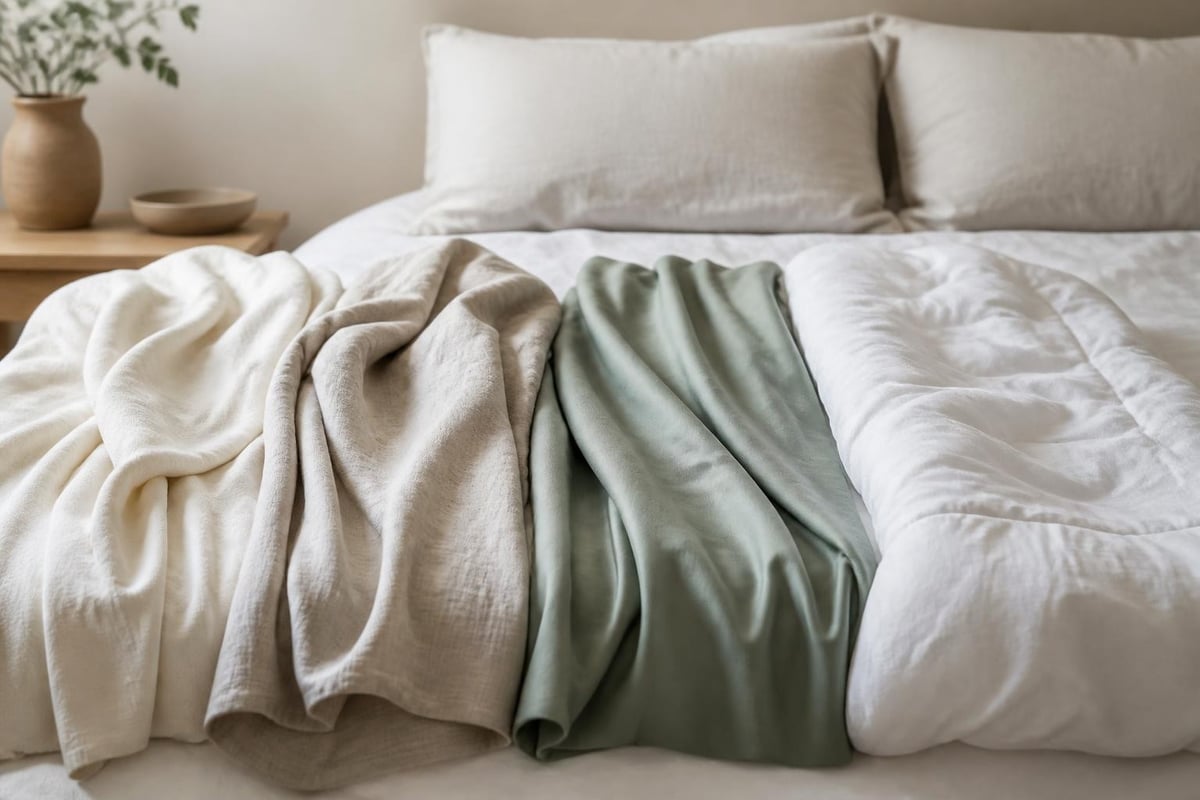
Cotton remains the gold standard for good reason. It breathes beautifully, washes easily, and softens with age. Egyptian and Pima cotton varieties offer extra-long staple fibres that create smoother, more durable fabrics. If you're curious about why cotton dominates the bedding world, our guide on why cotton is the best choice for your duvet cover explores the science behind its popularity.
Linen brings a relaxed, lived-in aesthetic that's perfect for warmer months. It wicks moisture exceptionally well and becomes softer with every wash, though it does wrinkle easily (which many people actually love as part of its charm).
Bamboo and eucalyptus fabrics offer eco-friendly alternatives with natural temperature-regulating properties. They're particularly brilliant for people who tend to overheat at night.
Microfibre and polyester blends deserve consideration too, especially if you're working with a tight budget. Modern synthetic fabrics have come a long way from their scratchy predecessors. They resist wrinkles, dry quickly, and cost considerably less than natural fibres.
Thread count myths and realities
Higher thread count doesn't automatically equal better quality-a fact that surprises many first-time custom bedding buyers. Manufacturers have become clever at gaming this metric.
A thread count between 200 and 400 typically provides the sweet spot of softness and durability. Beyond 600, you're often paying for marketing rather than meaningful quality improvements. Some manufacturers even use multi-ply yarns to artificially inflate their numbers.
Pay more attention to staple length (longer is better) and weave type (percale for crisp, sateen for silky) than to thread count alone.
Designing your personalised bedroom aesthetic
Creating a custom bedding set gives you the chance to be your own interior designer. This is where the fun really begins.
Colour psychology and bedroom vibes
The colours you choose for your bedding dramatically influence how your bedroom feels. In 2026, we're seeing a delightful mix of bold maximalism and soothing minimalism, with both camps finding expression through customisation.
Warm tones (terracotta, golden yellows, soft peaches) create cosy, inviting spaces perfect for autumn and winter. They make bedrooms feel smaller and more intimate-ideal if you're working with a larger room that feels a bit cavernous.
Cool tones (soft blues, sage greens, lavenders) promote calmness and relaxation. Research suggests these colours can actually help lower heart rate and blood pressure, making them smart choices for people who struggle with sleep.
Neutral palettes never go out of style. Whites, creams, and greys provide a versatile backdrop that you can easily update with accent cushions and throws. Our article on colourful vs minimal duvet covers dives deeper into finding your personal style.
If you're feeling adventurous, don't shy away from deeper, more dramatic colours. Charcoal, navy, emerald, and even black bedding can create sophisticated, cocoon-like sleeping spaces when paired with the right lighting and textures.
Pattern and print considerations
- Scale matters tremendously. Large patterns suit bigger beds and spacious rooms, while small prints work better in compact bedrooms.
- Mix patterns carefully. If you're combining a patterned duvet with patterned sheets, ensure they share a common colour but differ in scale.
- Consider viewing distance. Intricate details that look stunning up close might disappear visually from across the room.
- Think about longevity. Trendy prints are fun, but ask yourself if you'll still love them in three years' time.
Digital printing innovations have made it possible to reproduce almost any image or design on fabric, opening up endless possibilities for truly unique bedding sets.
Getting the measurements spot-on
Nothing undermines a beautiful custom bedding set quite like poor fit. This step requires a bit of patience but pays enormous dividends.
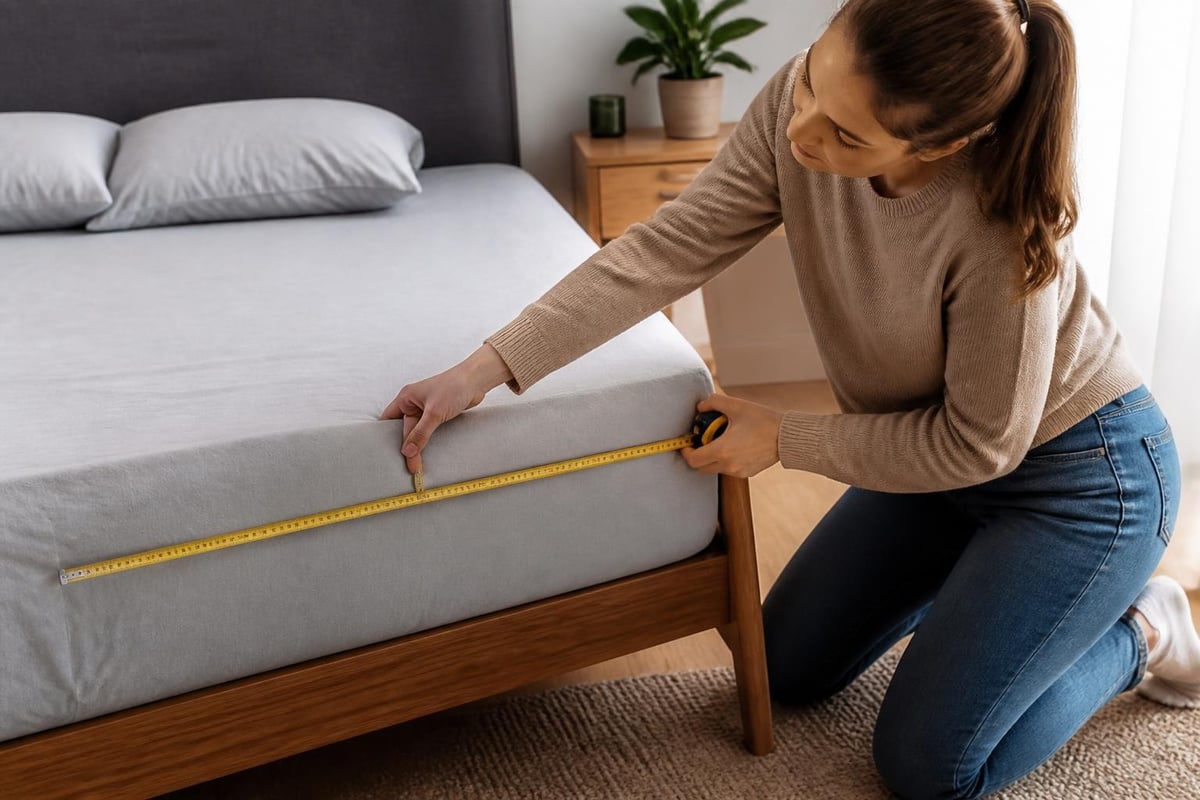
Measuring your mattress correctly
Follow Good Housekeeping's mattress-size guide for professional measuring techniques. You'll need:
- A measuring tape (rigid ones work better than flexible fabric versions)
- A helper to ensure the tape stays level
- Your mattress with all toppers and pads in place
Measure three dimensions:
- Length (top to bottom)
- Width (side to side)
- Depth (including any mattress toppers you use regularly)
Add at least 20cm to depth measurements for fitted sheets to ensure they tuck securely under the mattress. Nothing's more annoying than sheets that pop off the corners every night.
For duvet covers, measure your actual duvet (not your mattress). Duvets should be slightly larger than your mattress for proper coverage. Our guide on duvet cover sizing fit explains how to avoid the dreaded lumpy duvet syndrome.
Accounting for shrinkage
Even the highest-quality fabrics can shrink slightly after washing. When ordering a custom bedding set, discuss pre-shrinking options with your supplier.
Natural fibres like cotton and linen typically shrink 3-5% during their first few washes. Good manufacturers will pre-wash fabrics or add extra length to compensate. Always check their policies before finalising your order.
Caring for your investment
A custom bedding set represents both a financial investment and a personal creation, so proper care ensures it stays beautiful for years to come.
Washing and drying guidelines
The Consumer Reports guide on washing comforters offers lab-tested wisdom that applies to all large bedding items. The key principles:
- Wash bedding separately from other laundry to prevent pilling and snagging
- Use gentle, colour-safe detergents without brighteners on custom prints
- Choose cool to warm water rather than hot to preserve colours and fibres
- Avoid overloading your machine-bedding needs room to move freely
Drying requires equal care. Low to medium heat prevents shrinkage and preserves elastic in fitted sheets. Remove items while still slightly damp to make ironing easier (if you choose to iron at all-our article on whether you really need to iron bed sheets might change your perspective).
For detailed washing guidance tailored to different fabric types, check out our comprehensive post on how to wash and store bedding for maximum longevity.
Storage between seasons
If you've invested in multiple custom bedding sets for different seasons, proper storage protects your investment.
Store clean, completely dry bedding in breathable cotton bags rather than plastic bins. Plastic traps moisture, which can lead to mildew and musty odours. Add lavender sachets or cedar blocks to deter moths if you're storing natural fibres.
Keep stored bedding in cool, dark places. Sunlight fades colours over time, and heat can yellow whites and weaken fibres.
Regulatory and labelling considerations
If you're ordering a custom bedding set from a professional manufacturer (rather than making it yourself), understanding textile regulations ensures you receive properly labelled, safe products.
The FTC's Textile Fiber Rule requires specific information on textile products sold in the United States. Whilst UK regulations differ slightly post-2026, similar principles apply. Your bedding should clearly state:
- Fibre content by percentage
- Manufacturer or registered identification number
- Country of origin
This information isn't just bureaucratic box-ticking. It helps you verify you're receiving the materials you paid for and assists with care decisions.
Budget-friendly customisation strategies
Creating a custom bedding set doesn't require a designer budget. Several clever approaches let you enjoy personalisation whilst keeping costs reasonable.
Start with semi-custom options
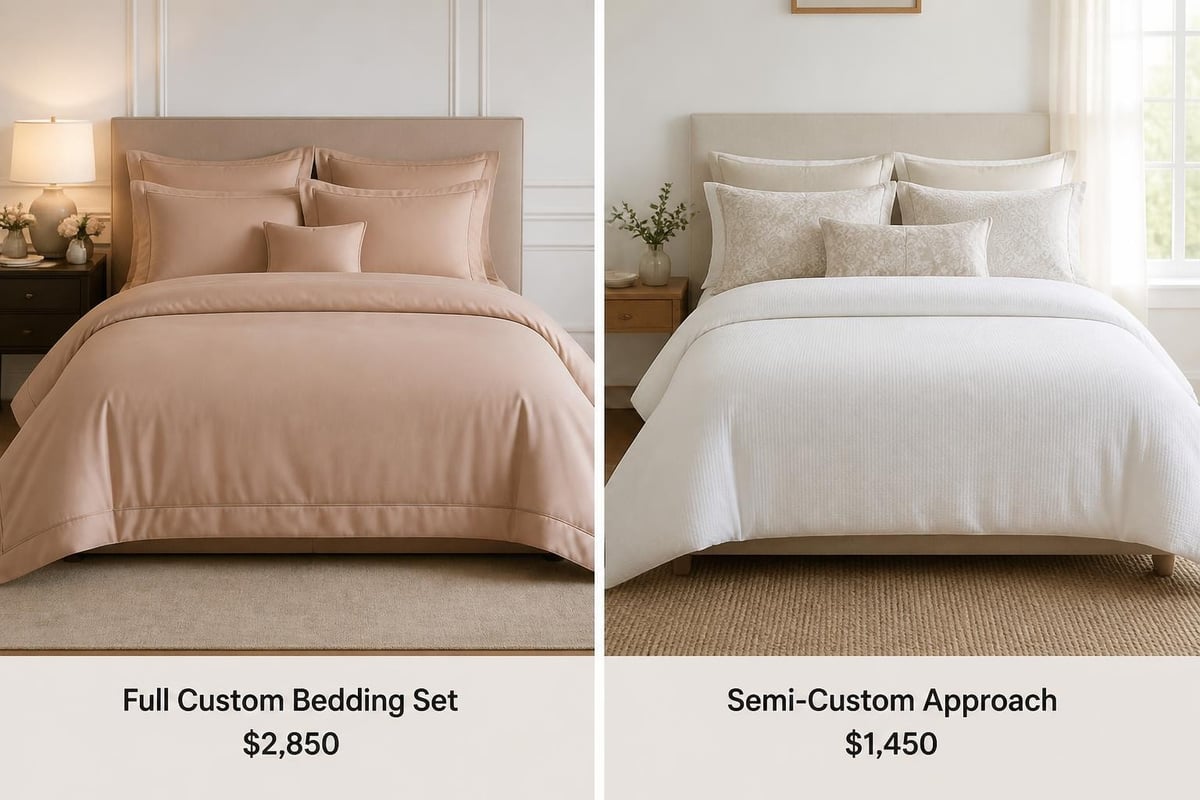
Many retailers now offer semi-custom programmes where you select from pre-approved fabrics, patterns, and sizes. These provide meaningful personalisation without the premium pricing of fully bespoke services.
At Happy Home Shop, our diverse collection of duvet sets, sheets, and cushions in various designs and colours provides an excellent foundation for mixing and matching to create your unique look.
Prioritise what matters most
You don't need to customise every element. Consider this strategic approach:
| Budget Priority | Customise | Buy Ready-Made |
|---|---|---|
| Maximum impact | Duvet cover (most visible) | Fitted sheets (mostly hidden) |
| Comfort-focused | Sheets and pillowcases | Decorative cushions |
| Visual drama | Top sheet and duvet | Base layers |
This targeted approach lets you spend money where it shows whilst saving on less visible elements.
DIY customisation tricks
- Purchase solid-colour basics and add custom details yourself-trim, embroidery, or fabric paint can personalise ready-made bedding at a fraction of custom costs.
- Mix high-street finds with one bespoke piece-a custom duvet cover paired with coordinating ready-made sheets creates a pulled-together look.
- Embrace removable options-decorative duvet covers are easier and cheaper to customise than structural bedding pieces.
Seasonal flexibility with custom sets
One brilliant advantage of creating a custom bedding set is the ability to design for specific seasons, taking advantage of how bedroom temperature and bedding choices affect sleep.
Summer bedding specifications
Lightweight fabrics like cotton percale or linen keep you cool during warmer months. These breathable weaves allow air circulation and wick moisture away from skin.
Choose lighter colours that reflect rather than absorb heat. Whites, pastels, and cool blues not only look refreshing but genuinely help regulate temperature.
Consider a lower tog rating for summer duvets (around 4.5 tog) or skip the duvet entirely in favour of a single cotton sheet during heatwaves.
Winter warmth considerations
Heavier fabrics like brushed cotton (also called flannelette) or cotton sateen provide extra cosiness when temperatures drop. These fabrics trap warm air close to your body.
Deeper, richer colours-burgundy, forest green, charcoal-create visual warmth and suit the darker, cosier evenings of autumn and winter. Our collection of autumn duvet covers showcases how seasonal colour changes can transform bedroom atmosphere.
Higher tog ratings (10.5-13.5) keep you warm through cold nights without needing to layer multiple blankets.
Making your custom bedding set last
Durability should factor into every customisation decision. The most beautiful bedding in the world loses its appeal if it falls apart after six months.
Quality indicators to demand
When commissioning a custom bedding set, ask about:
- Seam construction-French seams or enclosed seams prevent fraying better than simple straight stitches
- Zip quality-YKK or similar branded zips on duvet covers last significantly longer than generic alternatives
- Elastic reinforcement-double-stitched elastic on fitted sheets prevents premature stretching
- Colour fastness testing-reputable manufacturers test dyes to ensure they won't bleed or fade quickly
Rotation strategies
Even the best-made custom bedding benefits from rotation. Owning at least two sets for each bed allows you to:
- Wash bedding more frequently without wearing it out
- Reduce sun damage by alternating exposure
- Always have fresh bedding ready whilst the other set is in the wash
- Create seasonal variety without constantly buying new pieces
Following the recommended guidance on how often to change bed sheets becomes much easier when you have multiple sets in rotation.
Sustainability and ethical considerations
In 2026, many of us want our homes to reflect our values. A custom bedding set offers opportunities to make more sustainable choices than mass-market alternatives.
The Textile Exchange Raw Materials Calculation Guide provides frameworks for understanding and documenting the environmental impact of different fibre choices.
Eco-friendly fabric options
Organic cotton eliminates pesticides and synthetic fertilisers from the production process. Whilst slightly more expensive, it's gentler on the environment and often softer against skin.
Linen requires less water and fewer pesticides than cotton to grow, making it an excellent sustainable choice. Flax plants (which produce linen) also improve soil quality and biodiversity.
Recycled fibres are increasingly available in home textiles. Some manufacturers now produce beautiful bedding from recycled plastic bottles or reclaimed cotton.
Longevity as sustainability
Perhaps the most sustainable choice is simply buying less often. A well-made custom bedding set that lasts five years has far less environmental impact than cheap bedding replaced annually.
Investing in quality personalisation means you'll genuinely love your bedding, making you more likely to care for it properly and keep it longer.
Where to find custom bedding services
The customisation market has expanded dramatically over the past few years. Options range from local seamstresses to online platforms offering sophisticated design tools.
Questions to ask potential suppliers
Before committing to a custom bedding set order, clarify:
- What exactly is customisable? (size, fabric, colour, pattern, details)
- What are the minimum order quantities?
- How long is the production timeline?
- What's the returns or alterations policy?
- Are fabric swatches available before ordering?
- Do they offer guidance on measurements and specifications?
Don't hesitate to request samples or speak with previous customers. Reputable suppliers welcome these questions.
Supporting local artisans
Local seamstresses and small textile businesses often offer personalisation services at competitive prices. Benefits include:
- Face-to-face consultations to discuss exactly what you want
- Easier returns or adjustments if something isn't quite right
- Supporting your local economy and preserving traditional skills
- Often more flexible about unusual requests or modifications
Creating a custom bedding set lets you design a bedroom that truly feels like yours, combining the exact colours, fabrics, and dimensions that suit your space and sleep style perfectly. Whether you're working with an unusual mattress size, expressing your personal aesthetic, or simply tired of compromising on ready-made options, personalisation makes beautiful, comfortable bedding accessible to everyone. Ready to start your bedroom transformation? Explore the extensive selection of duvet sets, sheets, and cushions at Happy Home Shop, where affordable quality meets endless style possibilities, helping you create the sleep sanctuary you've always dreamed of without breaking the bank.