A proper bedding check isn't just about making sure your sheets look tidy – it's an essential habit that keeps your sleeping space healthy, comfortable, and inviting. Whether you're freshening up your bedroom, preparing for guests, or simply maintaining your favourite duvet sets, knowing what to look for during a bedding check can save you from unpleasant surprises and help your linens last longer. Let's dive into everything you need to know about keeping your bedding in tip-top condition!
Why regular bedding checks matter
You spend roughly a third of your life in bed, so it makes sense to ensure your bedding is in excellent condition. A thorough bedding check helps you spot issues before they become problems, from wear and tear to hygiene concerns.
Regular inspections also protect your investment. When you've found gorgeous affordable bedding that suits your style perfectly, you want it to last as long as possible. Catching small issues early – like a loose thread or a tiny stain – means you can address them before they ruin an entire set.
Here's what makes bedding checks so important:
- Early detection of wear and tear
- Maintaining proper hygiene standards
- Extending the lifespan of your linens
- Ensuring comfortable, quality sleep
- Protecting against potential pests
Beyond the practical benefits, there's something deeply satisfying about knowing your bed is fresh, clean, and welcoming. It's one of those small touches that transforms a house into a happy home.
What to look for during a bedding check
When conducting a bedding check, you'll want to examine several key aspects of your linens. Start with the obvious – cleanliness and freshness. Give your sheets a good sniff test. If they smell musty or stale, it's time for a wash, even if they look clean.
Visual inspection essentials
Look closely at the fabric itself. Hold your sheets up to natural light and check for:
- Thinning areas where the weave is becoming transparent
- Pilling or those annoying little fabric balls
- Stains that didn't come out in previous washes
- Tears or holes along seams or in the main fabric
- Fading that makes colours look dull

Checking for uninvited guests
Nobody wants to think about it, but bed bugs and dust mites are real concerns. Checking for bed bugs should be part of your routine, especially if you've traveled recently or purchased second-hand furniture. Look for tiny dark spots (which could be bed bug droppings), small reddish-brown bugs, or unexplained bites on your skin.
The Illinois Department of Public Health emphasizes the importance of thorough inspection, particularly around mattress seams, headboards, and bed frames.
| What to Check | Where to Look | Warning Signs |
|---|---|---|
| Bed bugs | Mattress seams, piping | Small brown spots, shed skins |
| Dust mites | Pillows, mattress | Allergy symptoms, musty smell |
| General wear | Sheet corners, elastic | Loose threads, stretched fabric |
| Staining | Pillow areas, centre of sheets | Yellowing, discoloration |
How often should you perform a bedding check?
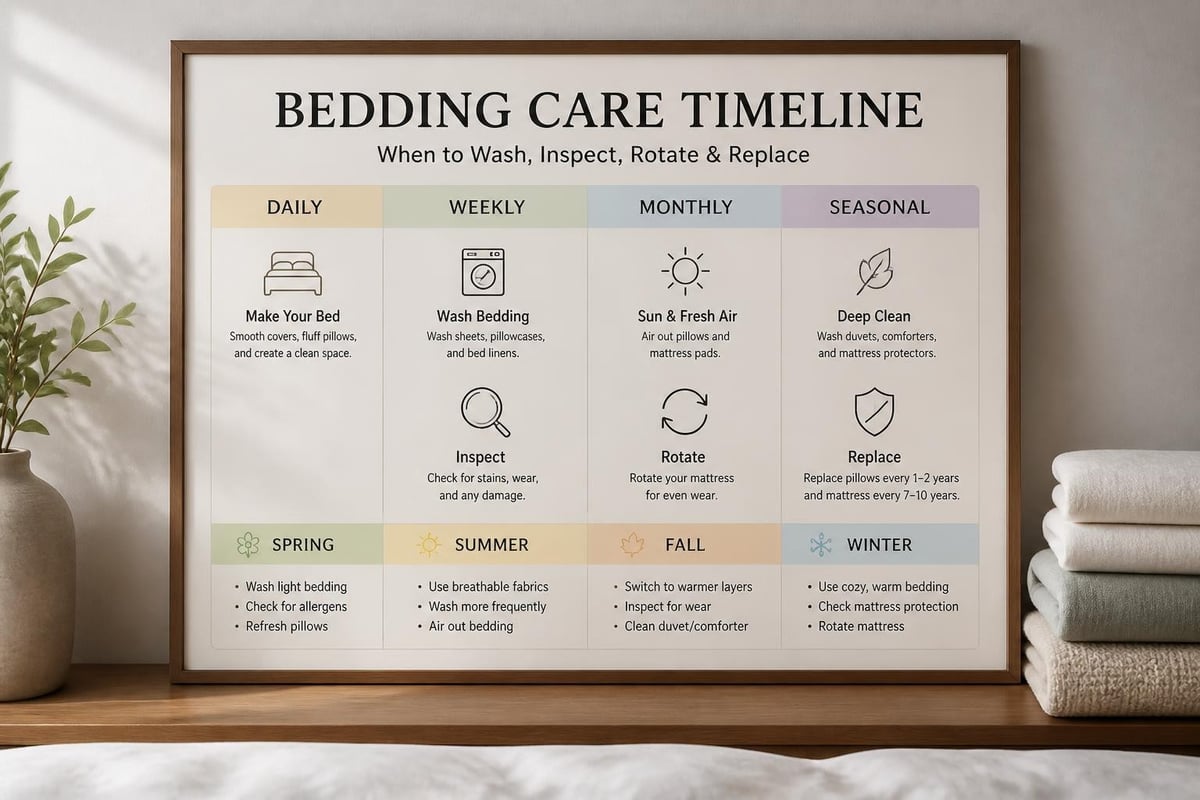
The frequency of your bedding check depends on several factors, but a good baseline is to do a quick visual inspection weekly when you change your sheets. According to guidance on how often to change your bed sheets, most people benefit from weekly linen changes.
Quick weekly checks should include:
- Sniff test for freshness
- Visual scan for obvious stains or damage
- Feel test for any rough patches or pilling
Monthly deep checks go further:
- Strip the bed completely
- Inspect the mattress and bed frame
- Check pillows for lumps or flatness
- Examine all seams and hems closely
- Rotate or flip mattress if applicable
If you're preparing a guest room or have been travelling, add an extra bedding check to your routine. Consumer Reports recommends checking for bed bugs when you return from trips, as hotels can sometimes be sources of unwanted hitchhikers.
Seasonal bedding maintenance
Different seasons call for different bedding check priorities. Summer bedding faces sweat and humidity, whilst winter linens battle against dry indoor heat and heavier use.
Summer bedding concerns
During warmer months, focus your bedding check on freshness and moisture-related issues. Cotton sheets breathe beautifully but can show sweat stains more readily. Understanding why cotton is the best choice helps you care for these pieces properly.
Check for:
- Yellowing around collar and body areas
- Musty smells from increased humidity
- Lighter duvets for adequate breathability
- Fading from washing more frequently
Winter bedding priorities
Winter brings its own challenges. Heavier duvets and flannel sheets need checking for pilling and static buildup. Your bedding check should ensure everything is cosy without being worn out.

Deep cleaning versus replacement
Sometimes a bedding check reveals that your linens need more than just a standard wash. Knowing when to deep clean and when to replace is crucial for maintaining a healthy sleep environment whilst being budget-conscious.
When deep cleaning works wonders
Before you consider replacement, try these deep cleaning approaches:
- Pre-soak stained items in cold water with enzyme cleaner
- Use oxygen-based bleach for white linens (following care labels!)
- Add white vinegar to the rinse cycle to freshen and soften
- Dry in direct sunlight when possible for natural bleaching
For tips on keeping your favourite pieces pristine, our guide on keeping white bedding bright offers brilliant solutions.
Signs it's time for replacement
Even with the best care, bedding doesn't last forever. Your bedding check might reveal these replacement indicators:
| Issue | Can It Be Saved? | Action Required |
|---|---|---|
| Multiple holes | Rarely | Replace |
| Elastic completely worn | No | Replace |
| Fabric feels papery | No | Replace |
| Stubborn stains | Sometimes | Try deep clean first |
| Minor pilling | Yes | Use fabric shaver |
| Slight fading | Yes | Continue using |
Professional inspection standards
While we're not all running hotels, there's wisdom in understanding professional bedding check standards. The hospitality industry maintains rigorous protocols for linen inspection that can inform your home routine.
King County's prevention guidelines suggest ongoing maintenance as the best defense against infestations. Regular cleaning and inspection of bedding creates an environment where problems can't take hold.
The Virginia Department of Health even regulates bedding and upholstered furniture to ensure consumer safety, highlighting just how important proper bedding maintenance truly is.
Creating your bedding check routine
Establishing a consistent routine makes bedding checks feel less like a chore and more like self-care. Think of it as part of creating that happy home you deserve!
Your simple bedding check schedule:
Every linen change (weekly):
- Quick visual scan whilst stripping bed
- Check fitted sheet elastic
- Inspect pillowcases for stains
Monthly:
- Full bed strip-down
- Mattress inspection
- Pillow fluffing and checking
- Washing of decorative cushions and throws
Seasonally:
- Rotate bedding sets
- Store off-season items properly
- Deep clean all pieces
- Replace worn items as needed
Learning proper washing and storage techniques ensures your beautiful bedding stays in excellent condition between checks.
Common bedding check mistakes to avoid
Even with the best intentions, it's easy to make mistakes during your bedding check. Here are the pitfalls to sidestep:
Checking only what's visible. Don't forget to inspect underneath sheets, the reverse side of duvet covers, and the insides of pillowcases. Stains and wear can hide in unexpected places.
Ignoring seams and hems. These high-stress areas often show damage first. A quick bedding check of seams can prevent small tears from becoming big problems.
Overlooking the mattress and pillows. Your bedding check shouldn't stop at removable linens. The mattress protector, pillows, and even the mattress itself need regular attention. Detailed inspection guides can help you spot issues before they escalate.
Storage considerations for off-season bedding
When your bedding check reveals items you won't need for months, proper storage becomes crucial. Summer sheets tucked away for winter need protection from dust, moisture, and pests.
Store clean, completely dry linens in breathable containers – never plastic bags that trap moisture. Adding lavender sachets or cedar blocks keeps everything fresh and deters moths. Label everything clearly so you know exactly what you're retrieving when seasons change.
Before storing, do a final bedding check to ensure nothing goes into storage with stains or damage. It's heartbreaking to pull out gorgeous bedding months later only to find a stain has set permanently or moths have made themselves at home.
Budget-friendly bedding maintenance
Maintaining beautiful bedding needn't break the bank. A regular bedding check actually saves money by helping you catch issues early and extend the life of your linens.
Cost-effective maintenance tips:
- Rotate multiple sets to reduce wear on any single set
- Wash at appropriate temperatures (not always the hottest)
- Air-dry when possible to reduce dryer wear
- Address stains immediately before they set
- Use mattress protectors to keep everything cleaner
The beauty of shopping at places offering affordable luxury bedding means you can maintain multiple sets in rotation without spending a fortune. Having backup sets makes regular bedding checks easier and ensures you're never without fresh linens.
Special considerations for different fabrics
Not all bedding fabrics need the same approach during a bedding check. Cotton, linen, polyester blends, and specialty fabrics each have unique care requirements and common issues.
Cotton shows wear through thinning and pilling but responds wonderfully to proper care. It's forgiving and long-lasting when treated well.
Linen develops a beautiful softness over time but can show wrinkles and slight fraying at edges. This is often character rather than damage.
Polyester blends resist wrinkles but may develop pilling more quickly. They're brilliant for budget-conscious households but need different checking criteria.
Bamboo and specialty fabrics require gentler handling and inspection for any snags or pulls that could unravel.
During your bedding check, adjust your expectations based on fabric type. What's acceptable wear on linen might indicate damage on cotton.
Making bedding checks enjoyable
Let's be honest – bedding checks could feel like just another boring chore. But with the right mindset, they become an opportunity to refresh your space and practice a bit of self-care.
Put on your favourite podcast or music whilst you work. Use the time to think about seasonal changes you might want to make. Perhaps your bedding check reveals it's time to switch from cosy winter tones to fresh spring colours?
Taking inspiration from guides about transforming rooms with texture and colour can make bedding checks exciting rather than mundane. Each inspection is a chance to reimagine your space!
The connection between bedding checks and sleep quality
There's a direct link between thorough bedding checks and how well you sleep. Fresh, well-maintained linens create a more inviting sleep environment, whilst worn or dirty bedding can actually disrupt rest.
During your bedding check, pay attention to how fabrics feel. Are sheets becoming scratchy? Are pillows losing their support? These comfort factors directly impact sleep quality. Regular inspection helps you maintain that hotel-fresh feeling every night.
Understanding the basics through resources like bedding basics guides ensures you're checking for all the right things. Knowledge transforms a simple bedding check into an informed assessment of your sleep environment's quality.
A thorough bedding check doesn't need to be complicated – just consistent and mindful. By incorporating these simple inspection habits into your routine, you'll enjoy fresher, longer-lasting linens whilst creating the comfortable sanctuary you deserve. Ready to refresh your bedroom with beautiful, affordable bedding that's built to last? Browse the gorgeous collection at Happy Home Shop, where you'll find everything you need to create a cosy, stylish sleeping space without stretching your budget.