There's something utterly magical about draping a vintage bed cover across your bed. The texture, the history, the stories woven into every thread. These aren't just functional pieces of fabric – they're heirlooms that transform ordinary bedrooms into spaces filled with character and charm. Whether you've inherited a treasured chenille spread from your grandmother or stumbled upon a geometric marvel at a charity shop, vintage bed covers offer an affordable way to add personality to your sleeping space without breaking the bank. In 2026, the trend towards sustainable living and unique home styling has made these classic pieces more popular than ever.
Why vintage bed covers deserve a place in your home
The appeal of a vintage bed cover goes far beyond simple nostalgia. These pieces were crafted during eras when quality mattered more than speed, when manufacturers took pride in creating textiles that could withstand decades of use. Unlike many modern options, vintage covers were designed to last.
Here's what makes them special:
- Exceptional craftsmanship and attention to detail
- Unique patterns you simply can't find in contemporary designs
- Sustainable choice that reduces textile waste
- Often more affordable than designer bedding
- Instantly adds character to minimalist or modern spaces
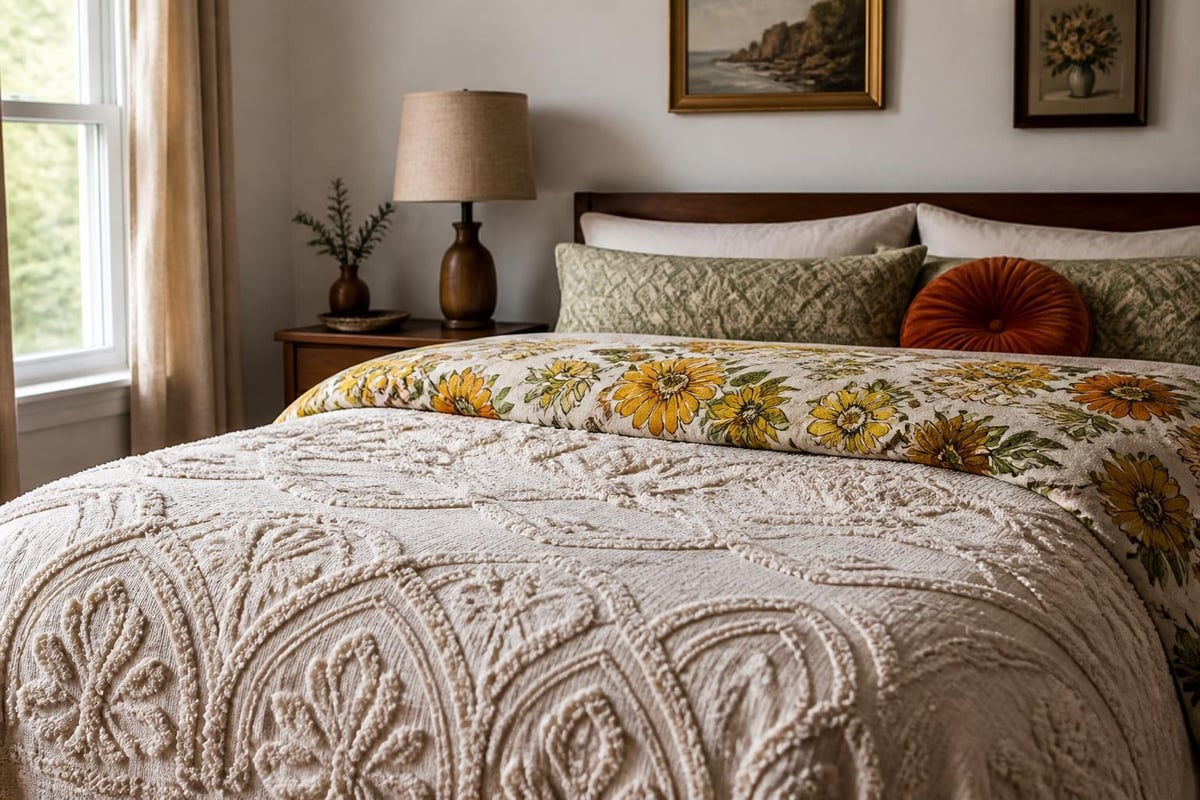
The beauty of incorporating vintage textiles into your bedroom is that they pair wonderfully with contemporary pieces. You might layer a 1960s chenille vintage bed cover over plain duvet cover sets for a curated, eclectic look that feels both fresh and timeless.
Understanding different vintage bed cover styles
Not all vintage bed covers are created equal. Each era brought its own distinctive aesthetic and manufacturing techniques. The history of vintage chenille bedspreads shows how American textile production evolved throughout the 20th century.
| Era | Characteristic Style | Common Materials | Typical Features |
|---|---|---|---|
| 1930s-1940s | Chenille with raised patterns | Cotton chenille | Popcorn texture, floral motifs, pastel colors |
| 1950s | Hobnail and tufted designs | Cotton, rayon blends | Atomic patterns, bright colors, decorative borders |
| 1960s-1970s | Bold geometrics and florals | Synthetic blends, cotton | Large-scale prints, earth tones, vibrant oranges and browns |
| 1980s | Quilted patterns | Polyester blends | Puffy textures, coordinated sets, lighter weight |
The Bates bedspread collection represents some of the finest American-made vintage bed covers, with the famous "Martha Washington's Choice" pattern becoming an icon of mid-century bedroom styling.
Finding authentic vintage bed covers on a budget
You don't need deep pockets to source beautiful vintage textiles. The thrill of the hunt is half the fun, and knowing where to look can yield incredible finds at bargain prices.
Best places to shop for vintage bed covers
Physical locations:
- Charity shops and thrift stores (check weekly for new stock)
- Car boot sales and jumble sales (arrive early for best selection)
- Estate sales and house clearances
- Antique markets and vintage fairs
- Auction houses (especially for lot sales)
Online options:
- eBay and Etsy (search "vintage chenille bedspread" or specific eras)
- Facebook Marketplace and local buy-and-sell groups
- Depop and Vinted for younger sellers clearing grandparents' homes
- Specialist vintage textile dealers
The key to budget-friendly vintage bed cover shopping is patience. Set up saved searches, check regularly, and don't feel pressured to buy immediately. The perfect piece will come along, and when it does, you'll know.
Identifying quality vintage bed covers
When you're browsing through piles of textiles, how do you separate the treasures from the tired? Learning to spot quality helps you invest wisely, even when spending just a few pounds.
Check these elements:
- Fabric integrity: Hold the vintage bed cover up to light to check for thin spots or holes
- Seam quality: Examine stitching for tight, even rows without unraveling
- Label presence: Original labels from makers like Bates, Cannon, or Fieldcrest add value
- Pattern clarity: Colors should be vibrant, patterns crisp and well-defined
- Texture consistency: Chenille should have full, fluffy tufts without bald patches
Minor issues like slight fading or a small stain shouldn't necessarily disqualify a piece. These imperfections tell the story of the vintage bed cover's life and can often be addressed with proper care. The guide on caring for vintage chenille offers brilliant tips for restoration.
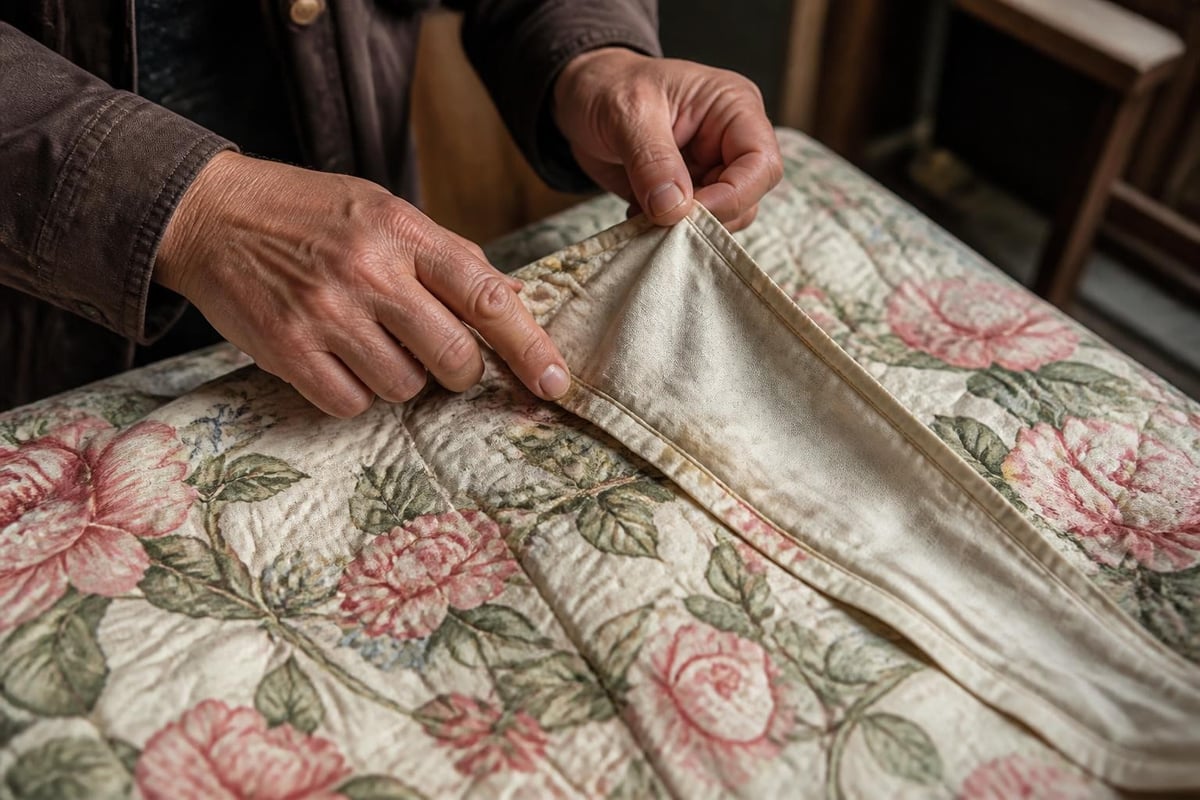
Decoding vintage bed cover labels
Original labels provide fascinating insight into your vintage bed cover's provenance. Bates Manufacturing Company, for instance, produced some of the most sought-after pieces, whilst British manufacturers like Witney created stunning wool blankets and covers.
Look for labels indicating "100% cotton," "colourfast," or "pre-shrunk" – these quality markers mattered to mid-century consumers and still indicate superior construction today.
Styling your vintage bed cover in modern spaces
The brilliant thing about vintage textiles is their versatility. A well-chosen vintage bed cover doesn't require an entirely period-appropriate bedroom – in fact, the contrast between old and new creates visual interest.
Mixing vintage with contemporary bedding
Layer your vintage bed cover over modern bedding for maximum impact. Start with a neutral base from hotel-style duvet cover sets in crisp white or soft grey, then drape your vintage piece at the foot of the bed or folded across the middle.
Styling approaches that work:
- The layered look: Vintage bed cover as a top layer over contemporary duvet and sheets
- The accent approach: Fold at bed foot or drape casually across one corner
- The statement piece: Use as the main cover with minimal additional bedding
- The seasonal swap: Rotate between vintage and modern based on weather
The bold patterns of 1970s bedspreads can actually complement minimalist Scandi-style bedrooms beautifully, adding warmth and personality without overwhelming the space.
Color coordination tips
Your vintage bed cover might feature colors you wouldn't typically choose, but that's part of its charm. Rather than matching exactly, pull one accent color from the vintage piece and echo it elsewhere in the room through cushions, artwork, or accessories.
If you're working with floral bedding in your regular rotation, a vintage floral bed cover can create a curated, maximalist aesthetic when carefully coordinated.
Caring for your vintage bed cover
Proper care ensures your vintage bed cover remains beautiful for years to come. These pieces have already survived decades – with the right approach, they'll last many more.
Washing vintage bed covers safely
Pre-washing checklist:
- Test colorfastness by dampening a hidden corner
- Check for loose threads or weak seams that need repair
- Remove any detachable trim or decorative elements
- Inspect for stains that need pre-treatment
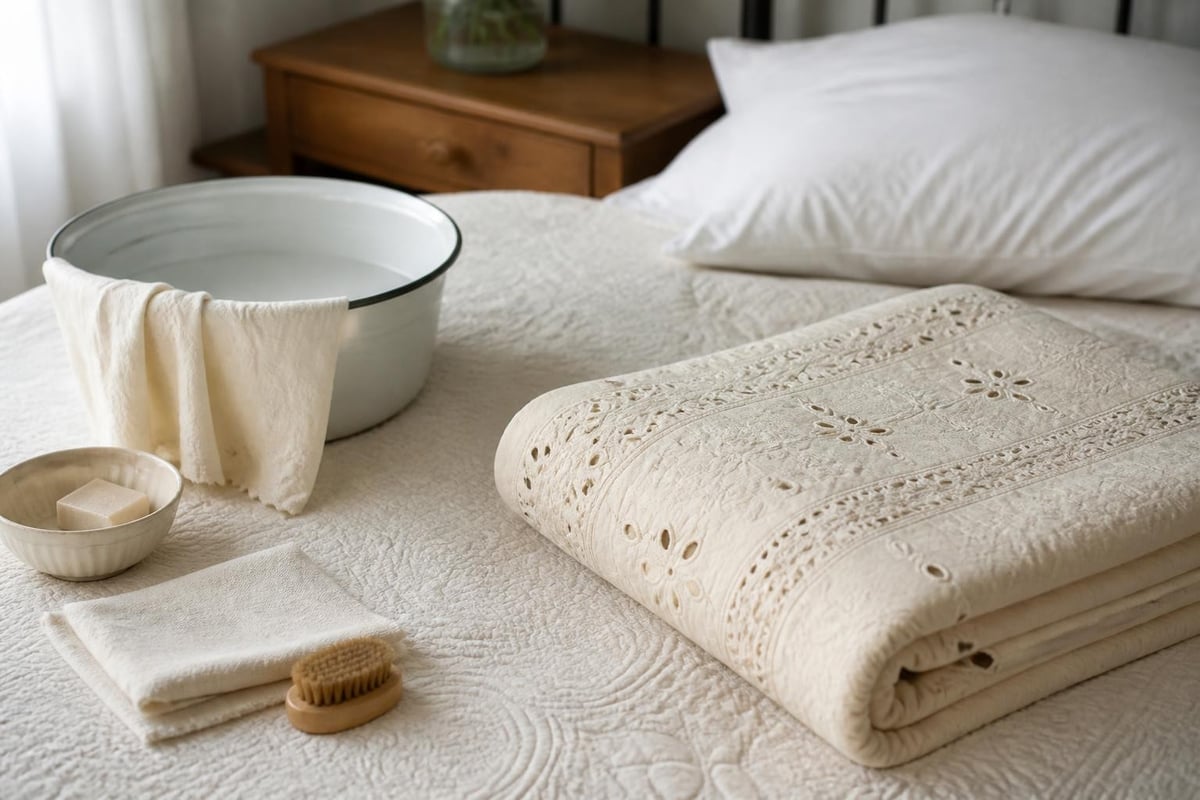
Most vintage bed covers can be gently machine washed, but your approach depends on the fabric. The comprehensive guide to washing vintage bed sheets offers excellent advice that applies to bed covers too.
| Fabric Type | Water Temperature | Detergent | Drying Method |
|---|---|---|---|
| Cotton chenille | Cool to warm | Gentle, fragrance-free | Line dry or low heat tumble |
| Wool blends | Cold | Wool-specific detergent | Flat dry only |
| Synthetic blends | Warm | Standard detergent | Low heat tumble |
| Delicate vintage silk | Hand wash cold | Mild soap | Flat dry, avoid sun |
Never use bleach on vintage textiles, even white ones. Oxygen-based cleaners work better and won't damage fibers or cause yellowing.
Storage solutions for vintage bed covers
When you're not using your vintage bed cover, proper storage prevents damage from moths, moisture, and light exposure.
Storage best practices:
- Fold loosely in acid-free tissue paper
- Store in breathable cotton bags, never plastic
- Keep in cool, dry locations away from direct sunlight
- Add lavender sachets (natural moth deterrent)
- Refold periodically to prevent permanent creases
If you've got limited storage space, consider rotating your vintage bed covers seasonally. Display your chenille beauties during cooler months when their weight provides extra warmth, then swap to lighter vintage options for summer.
Building a vintage bed cover collection
Once you discover the joy of vintage bed covers, it's easy to become a collector. Each piece tells a different story, represents a different era, and offers new styling possibilities.
Starting your collection strategically
Begin with versatile pieces that work across multiple seasons and bedroom styles. Neutral chenille vintage bed covers in white, cream, or soft pastels provide the most flexibility. As your collection grows, you can add bolder statement pieces.
Collection-building tips:
- Set a budget – Decide your maximum spend per piece
- Focus on condition – Better to have three excellent pieces than ten damaged ones
- Vary your eras – Mix 1940s, 1960s, and 1970s for diverse options
- Consider size – Single vintage bed covers suit modern doubles; collect what fits your beds
- Document your finds – Photograph labels and note where you found each piece
The collectors' guide to vintage Bates bedspreads offers brilliant insights into developing a discerning eye for quality pieces worth adding to your collection.
Display ideas beyond the bedroom
Your vintage bed cover collection doesn't need to stay hidden in the linen cupboard. These beautiful textiles deserve to be seen and appreciated.
Creative display options:
- Drape over a decorative ladder in the bedroom
- Hang as wall art in frames or on decorative rods
- Use as throws over sofas or armchairs
- Layer on guest beds for a welcoming touch
- Photograph and create a gallery wall of your favorites
The sustainability angle of vintage bed covers
In 2026, conscious consumption matters more than ever. Choosing vintage bed covers aligns perfectly with sustainable living goals whilst creating a beautiful home.
Environmental benefits of buying vintage
Every vintage bed cover you purchase is one less new item manufactured, shipped, and eventually discarded. The textile industry ranks as one of the world's largest polluters, so buying secondhand makes a genuine difference.
Sustainability wins:
- Extends product lifecycle by decades
- Prevents textile waste in landfills
- Reduces demand for new resource-intensive production
- Often higher quality than fast-fashion bedding alternatives
- Supports circular economy principles
If sustainability matters to you, explore modern options too. Sustainable bedding from contemporary manufacturers can complement your vintage finds whilst maintaining eco-friendly values.
Teaching the next generation about vintage textiles
Sharing your vintage bed cover appreciation with younger family members passes on valuable lessons about quality, sustainability, and the joy of unique finds. Let children choose vintage pieces for their rooms, teach them gentle handling, and explain the history behind different patterns and styles.
When kids understand that their character bedding might someday become vintage collectibles, they develop appreciation for preserving quality items.
Mixing vintage and modern bedding essentials
The most successful bedrooms blend old and new seamlessly. Your vintage bed cover becomes the star when supported by quality modern basics.
Building a versatile bedding wardrobe
Think of your bedding collection like your clothing wardrobe – you need reliable basics that work with everything, plus statement pieces that express personality.
Essential modern basics to pair with vintage bed covers:
- Crisp white sheets – Let vintage colors pop against clean backgrounds
- Neutral duvet covers – Provide foundation for layering
- Quality pillows – Comfort matters regardless of aesthetic
- Complementary throws – Add texture variation
- Coordinating cushions – Pull colors from your vintage piece
Reversible duvet cover sets offer brilliant versatility, letting you flip between looks whilst keeping your vintage bed cover as the focal point.
Seasonal rotation strategies
Create different looks throughout the year by rotating your vintage bed covers with modern pieces. Heavy chenille works beautifully in autumn and winter, whilst lighter vintage cotton suits spring and summer.
During warmer months, try microfibre duvet cover sets as your base layer, adding your vintage bed cover purely for decorative purposes at the bed foot. This approach keeps you comfortable whilst maintaining that vintage aesthetic you love.
Budget-friendly vintage bed cover projects
If you find a vintage bed cover with minor damage or staining, don't dismiss it. These imperfect pieces often sell for mere pounds and can be transformed into beautiful items with simple DIY projects.
Upcycling damaged vintage bed covers
Project ideas:
- Cut into cushion covers (avoid damaged sections)
- Create patchwork throws from multiple pieces
- Frame particularly beautiful sections as textile art
- Make draught excluders from damaged edges
- Transform into tote bags or storage baskets
Even heavily damaged vintage bed covers have value. The chenille texture makes gorgeous decorative pillows, whilst interesting patterns can become framed art that preserves the textile's history.
Repair techniques for minor damage
Small holes, loose seams, or missing chenille tufts can often be repaired at home. Learning basic textile repair skills extends the life of your vintage bed cover and increases your confidence in purchasing pieces that need minor attention.
Invisible mending techniques work brilliantly on subtle repairs, whilst decorative embroidery can transform obvious fixes into charming details that add character.
Vintage bed covers offer an accessible, sustainable, and stylish way to transform your bedroom into a space that truly reflects your personality. Whether you're drawn to the tactile appeal of chenille, the bold statements of 1970s geometrics, or the delicate charm of earlier eras, these timeless pieces bring warmth and character that new bedding simply can't match. If you're looking to complement your vintage finds with quality modern basics, Happy Home Shop offers an extensive range of affordable bedding essentials perfect for layering with your treasured vintage bed covers, helping you create a beautifully curated bedroom without exceeding your budget.