When I think about what truly makes a bedroom feel like a sanctuary, my bedding always tops the list. It's the first thing I see when I walk into my room and the last thing I touch before drifting off to sleep. Getting my bedding right isn't just about aesthetics, though that's certainly part of the fun. It's about creating a cosy retreat that supports brilliant sleep, reflects my personality, and doesn't break the bank. Whether you're refreshing your current setup or starting from scratch, understanding what goes into choosing and caring for your bedding can transform your entire bedroom experience.
Understanding what makes my bedding work for me
Choosing my bedding used to feel overwhelming with all the options available in 2026. Now I've learned that breaking it down into manageable decisions makes the process genuinely enjoyable. The foundation starts with understanding the components that make up a complete bedding set.
Essential bedding components include:
- Duvet covers and inserts
- Fitted and flat sheets
- Pillowcases and pillow protectors
- Optional decorative cushions
- Throws for added texture
My bedding choices depend heavily on the season and my personal comfort preferences. During winter months, I gravitate towards thicker duvet inserts and flannel sheets, whilst summer calls for lightweight cotton and breathable materials. The beauty of building my bedding collection gradually means I can swap things out as temperatures shift throughout the year.
The Guardian's comprehensive bedding buying guide helped me understand that thread count isn't everything when selecting quality bedding. Instead, the type of fabric and how it's woven matter far more for comfort and durability.
Material matters: finding the right fabric for my bedding
The fabric I choose for my bedding dramatically impacts how well I sleep. Natural materials like cotton remain my go-to choice because they breathe beautifully and regulate temperature throughout the night. I've experimented with different weaves and finishes over the years, and each offers something unique.
| Material | Best for | Care level | Budget-friendliness |
|---|---|---|---|
| Cotton percale | Hot sleepers | Easy | Excellent |
| Cotton sateen | Luxe feel | Moderate | Good |
| Linen | Year-round comfort | Easy | Moderate |
| Microfibre | Budget-conscious | Very easy | Excellent |
My bedding from Happy Home Shop includes several cotton options that have held up brilliantly through countless washes. When selecting materials, I avoid fabrics that trap heat like polyester blends and microfiber if I tend to sleep warm. These synthetic materials might seem appealing due to their lower price point, but they can disrupt sleep quality by retaining body heat.
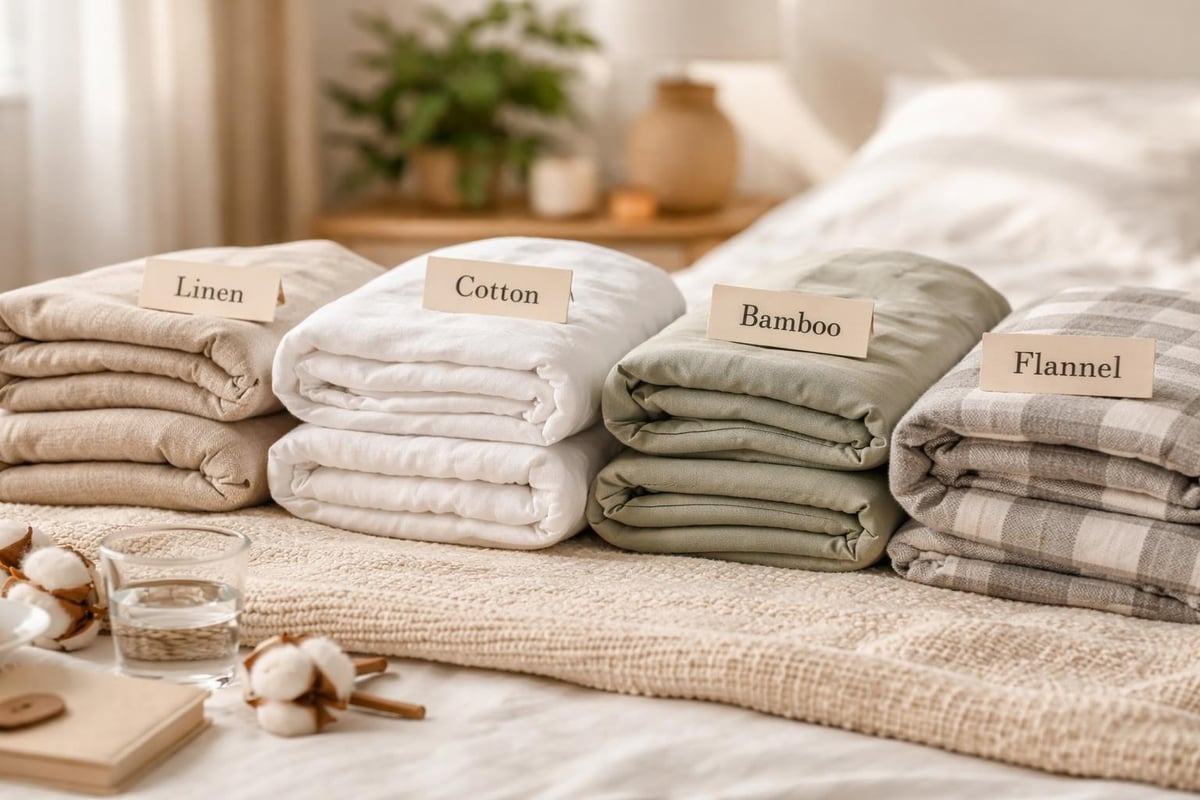
For those interested in understanding material properties more deeply, Nordstrom's fabric materials guide provides excellent detail about how linen offers natural temperature regulation whilst percale delivers crisp coolness. I've found that investing in quality natural materials for my bedding pays dividends in comfort and longevity.
Coordinating colors and patterns in my bedding collection
One of the most delightful aspects of refreshing my bedding is playing with colours and patterns. My bedroom aesthetic has evolved considerably over the years, moving from neutral minimalism to embracing bolder hues that genuinely lift my mood each morning.
When building my bedding wardrobe, I keep a few versatile neutral sets as my base. These work year-round and coordinate with everything. Then I add seasonal or statement pieces that inject personality without requiring a complete bedroom overhaul.
My color coordination strategy:
- Choose one neutral base color (white, grey, or beige)
- Select two accent colors that work together
- Mix solid colors with one patterned set
- Add texture through throws and cushions
- Rotate seasonally for fresh looks
The colorful versus minimal duvet covers guide from Happy Home Shop helped me understand my personal style preferences. I discovered that whilst I adore bold patterns, having them on my duvet cover can feel overwhelming. Instead, I keep my main bedding relatively simple and add pattern through decorative cushions and throws.
Seasonal switches that transform my bedding
Changing my bedding with the seasons has become a ritual I genuinely look forward to. It's an affordable way to give my bedroom a complete refresh without major expense or effort. Spring brings lighter colors and floral patterns into my rotation, whilst autumn invites warmer tones and richer textures.
My seasonal bedding approach involves having two complete sets: one for warmer months and another for cooler weather. This doesn't mean purchasing everything twice. Rather, I swap out my duvet insert weight and alternate between lighter cotton sheets and cosier flannel options.
During summer 2026, my bedding features crisp white cotton percale that feels refreshingly cool against my skin. When temperatures drop, I transition to a thicker duvet insert and add a beautiful throw at the foot of my bed for extra warmth and visual interest.
Caring for my bedding to maximize its lifespan
Proper care has extended the life of my bedding significantly beyond what I initially expected. Learning the right washing, drying, and storage techniques means my sheets and duvet covers still look fantastic even after years of regular use.
The most common mistake I made early on was washing my bedding too frequently with harsh detergents. Now I've established a balanced routine that keeps everything fresh without causing premature wear. Proper washing and drying techniques make an enormous difference in maintaining quality.
Weekly bedding care routine:
- Strip the bed every 7-10 days
- Wash sheets in warm water (40°C)
- Use mild, fragrance-free detergent
- Skip fabric softener (it reduces absorbency)
- Tumble dry on low or line dry when possible
- Store clean bedding in breathable containers

My bedding stays fresher longer when I follow comprehensive storage and washing guidelines. I've learned that folding sheets immediately after drying and storing them in a cool, dry cupboard prevents mustiness and keeps them ready to use.
Tackling stains and keeping white bedding bright
Maintaining my bedding when accidents happen used to stress me out considerably. Now I tackle stains immediately with simple household products rather than harsh chemicals that damage fibers.
For my white bedding sets, which I adore for their crisp, hotel-like appearance, I use these techniques to maintain brightness:
| Stain type | Treatment | Timing |
|---|---|---|
| Sweat | Baking soda paste | Pre-wash soak |
| Makeup | Dish soap | Immediate spot treatment |
| Blood | Cold water | Within 30 minutes |
| Wine | Salt and cold water | Immediately |
The white bedding care guide has become my reference for keeping my crisp white sets looking pristine. I avoid bleach, which weakens fibers over time, and instead use oxygen-based brighteners occasionally.
Similar stain removal principles that work for removing tough stains from towels apply equally well to my bedding. The key is acting quickly and using gentle, targeted treatments rather than aggressive washing.
Building my bedding collection on a budget
Creating a beautiful bedding wardrobe doesn't require spending hundreds of pounds all at once. I've built my collection gradually, prioritizing quality essentials first and adding decorative pieces as budget allows.
My approach involves investing more in items that directly contact my skin and affect sleep quality. This means spending a bit more on quality fitted sheets and duvet covers whilst being more flexible on decorative cushions and throws.
Budget allocation for my bedding:
- 40% on sheets and pillowcases - These get the most use
- 30% on duvet covers - Quality here impacts comfort
- 20% on duvet inserts - Choose appropriate tog ratings
- 10% on decorative elements - Cushions, throws, extras
Shopping during sale periods has allowed me to acquire premium bedding at accessible prices. Many retailers, including Happy Home Shop, offer regular discounts that make building a quality collection entirely achievable on a modest budget.
Smart shopping strategies for my bedding needs
I've developed shopping habits that stretch my budget further whilst maintaining quality standards. Buying complete bedding sets often costs less than purchasing individual pieces separately, and having coordinated items simplifies morning bed-making considerably.
Understanding proper duvet cover sizing prevents costly mistakes. I once purchased a duvet cover that didn't properly fit my insert, resulting in frustrating bunching and an uncomfortable night's sleep. Now I always verify measurements before ordering.

Mixing higher-end basics with more affordable accent pieces creates an expensive look without the hefty price tag. My white cotton sheets from quality suppliers pair beautifully with budget-friendly decorative cushions and seasonal throws that I rotate regularly.
Making my bedding work harder throughout my home
The versatility of certain bedding pieces means they can serve multiple purposes beyond the bedroom. Extra pillowcases become stylish cushion covers for my sofa, whilst lightweight throws transition beautifully between my bed and living room seating.
This multi-functional approach means I get more value from each purchase. A beautiful flat sheet can double as a lightweight summer blanket or even an impromptu picnic blanket for outdoor gatherings.
Versatile bedding pieces I use throughout my home:
- Decorative cushions that move between bedroom and sofa
- Throws that work in any room for added texture
- Extra pillowcases as seasonal cushion covers
- Flat sheets as furniture protectors during decorating
My approach to cushion styling extends naturally from my bedroom to my living spaces. Coordinating colors and textures throughout creates a cohesive home aesthetic that feels intentional rather than haphazard.
Addressing common bedding challenges I've encountered
Over the years, I've faced various bedding-related challenges that initially seemed insurmountable. From sheets that never quite fit properly to mysterious allergic reactions, troubleshooting these issues has made me far more confident in my bedding choices.
One persistent problem involved fitted sheets that constantly popped off mattress corners overnight. I solved this by ensuring I purchased sheets with the correct depth measurement for my mattress and investing in sheet fasteners for particularly troublesome corners.
Dealing with allergic reactions to my bedding
Discovering that my bedding might be causing skin irritation or respiratory issues was genuinely concerning. Through process of elimination, I identified that certain fabric finishes and residual detergents were the culprits rather than the bedding materials themselves.
Understanding what causes allergic reactions to bed sheets helped me make informed changes. Switching to natural, unbleached fabrics and fragrance-free detergents resolved most issues immediately.
For those experiencing similar problems, washing new bedding before first use removes chemical residues from manufacturing and shipping. I now wash all my bedding purchases at least twice before use, which has eliminated previous sensitivity issues entirely.
Styling my bedding for that finished look
Making my bed beautifully each morning sets a positive tone for my entire day. I've developed a quick routine that creates a polished, inviting appearance without requiring professional-level skills or excessive time.
The key to achieving that hotel-style finish lies in proper layering and attention to small details. I start with tightly fitted sheets, smooth out wrinkles as I work, and fold back my duvet cover at precisely the same point each day.
My five-minute bed-making routine:
- Pull fitted sheet taut and smooth out wrinkles
- Layer flat sheet with hospital corners
- Add duvet cover, shaking to distribute insert evenly
- Arrange pillows from largest to smallest
- Add decorative cushions and fold throw at foot of bed
This systematic approach means my bedding always looks intentional and inviting. I've learned that investing a few extra minutes in proper bed-making pays dividends in how my entire bedroom feels throughout the day.
Creating a cosy sanctuary with my bedding choices
Beyond practical considerations, my bedding plays a crucial role in creating the relaxing atmosphere I need for quality sleep. The textures, colors, and layering all contribute to that snuggly feeling that makes climbing into bed genuinely delightful.
Turning your bedroom into a cosy sanctuary involves more than just selecting pretty bedding. It's about creating layers of comfort that appeal to multiple senses and support relaxation.
I've discovered that having multiple texture layers in my bedding makes an enormous difference. A smooth cotton base layer, a slightly textured duvet cover, and a chunky knit throw create visual and tactile interest that elevates the entire space.
Creating the perfect bedding setup truly transforms how you experience your bedroom every single day. From selecting materials that suit your sleep style to caring for your investment properly, every choice contributes to building a space that genuinely feels like home. Whether you're refreshing your current setup or starting completely fresh, Happy Home Shop offers an extensive range of affordable, quality bedding options that make creating your dream bedroom accessible on any budget. Browse the collection today and discover how the right bedding can elevate your entire home experience.