Creating the perfect bedding bed setup is about more than just throwing a duvet on your mattress and calling it a day. Your bed is the centrepiece of your bedroom and the foundation of a good night's sleep. With the right combination of sheets, duvet covers, pillowcases, and extras like cushions and throws, you can transform your sleeping space into a cosy sanctuary that doesn't break the bank. Whether you're starting from scratch or giving your bedroom a refresh, understanding the essentials of a well-dressed bedding bed will help you make smart choices that improve both comfort and style.
Understanding your bedding bed layers
A properly dressed bedding bed consists of several key layers, each serving a specific purpose for comfort and aesthetics. At its most basic, you'll need a fitted sheet to protect your mattress, a flat sheet or duvet cover for warmth, and pillowcases for your pillows. However, creating a truly inviting sleep space involves understanding how these layers work together.
The foundation layer
Your fitted sheet is the unsung hero of any bedding bed arrangement. It creates a barrier between you and your mattress, protecting your investment whilst providing a smooth, comfortable surface to sleep on. When selecting fitted sheets, consider the depth of your mattress, including any toppers you might use. A sheet that's too shallow will pop off the corners in the middle of the night, whilst one that's too deep will bunch up and create uncomfortable wrinkles.
Material matters significantly here:
- Cotton remains the most popular choice for breathability and durability
- Microfibre offers a budget-friendly alternative with easy-care properties
- Brushed cotton provides extra warmth for winter months
- Percale weaves deliver a crisp, cool feel perfect for warm sleepers
Research has shown that bedroom temperatures and bedding material choices significantly affect sleep quality, making your foundation layer selection more important than you might think.

The comfort and warmth layer
Your duvet or comforter sits at the heart of your bedding bed setup, providing warmth and contributing significantly to your sleep comfort. The tog rating you choose depends on the season and your personal temperature preferences. A 10.5 tog works brilliantly for year-round use in most UK homes, whilst a 4.5 tog suits summer or warm sleepers perfectly.
Duvet covers protect your duvet whilst allowing you to change your bedroom's look without replacing the entire bedding bed ensemble. This is where Happy Home Shop's extensive collection really shines, offering everything from minimalist designs to colourful patterns that let you express your personal style affordably.
| Tog Rating | Season | Best For |
|---|---|---|
| 4.5 tog | Summer | Hot sleepers, warm rooms |
| 10.5 tog | Spring/Autumn | Year-round moderate climates |
| 13.5 tog | Winter | Cold sleepers, unheated rooms |
| All-season (2 duvets) | Year-round | Maximum flexibility |
Choosing the right materials for your bedding bed
The materials you select for your bedding bed directly impact your comfort, sleep quality, and how much time you'll spend on maintenance. Natural fibres generally offer superior breathability, whilst synthetic options often provide easier care and lower price points.
Cotton dominates the bedding market for excellent reasons. It's naturally breathable, gets softer with each wash, and suits most skin types beautifully. If you're interested in why cotton stands out, cotton's benefits for duvet covers apply equally to all your bedding bed components.
Thread count often confuses shoppers:
- Higher isn't always better
- 200-400 thread count provides excellent quality
- Anything above 600 often involves marketing tricks
- Weave type matters more than pure thread count
Seasonal considerations
Your bedding bed requirements shift throughout the year, and adapting your layers accordingly can dramatically improve sleep quality. Studies exploring bedding comfort and sleep quality emphasise how proper bedding selection supports better rest and even reduces certain types of discomfort.
During summer months, lightweight materials like cotton percale or linen create a cooler sleeping surface. Winter calls for flannel sheets or brushed cotton that trap warmth close to your body. Many savvy homemakers maintain two sets of bedding for their bedding bed arrangement, swapping them out as seasons change.

Building your bedding bed on a budget
Creating a beautiful, comfortable bedding bed doesn't require splurging on luxury brands. With smart shopping and proper care, affordable options can deliver excellent quality and longevity. The key lies in knowing where to invest and where to save.
Invest more in:
- Fitted sheets that contact your skin directly
- Duvet covers you'll use daily
- Quality pillows for proper neck support
Save money on:
- Decorative cushions that serve aesthetic purposes
- Throws used occasionally for extra warmth
- Seasonal items you'll only use a few months yearly
Happy Home Shop's approach to bedding basics demonstrates how accessible quality homeware can be when retailers focus on value rather than premium pricing. Their regular discounts make refreshing your entire bedding bed setup even more budget-friendly.
Mix and match strategies
You needn't purchase complete matching sets to achieve a cohesive bedding bed appearance. Mixing solid colours with patterns, or combining different textures, creates visual interest whilst allowing you to replace items individually as needed. This approach spreads costs over time and gives you flexibility to update your look without complete overhauls.
Start with neutral fitted sheets and pillowcases in white, grey, or beige. These versatile foundations pair beautifully with any duvet cover, allowing you to change your bedroom's mood with one simple switch. Add personality through your duvet cover selection, then complement with coordinating or contrasting cushions and throws.
Maintaining your bedding bed for longevity
Proper care extends the life of your bedding bed components significantly, protecting your investment and maintaining that fresh, inviting feel. Different materials require different approaches, but a few universal principles apply across the board.
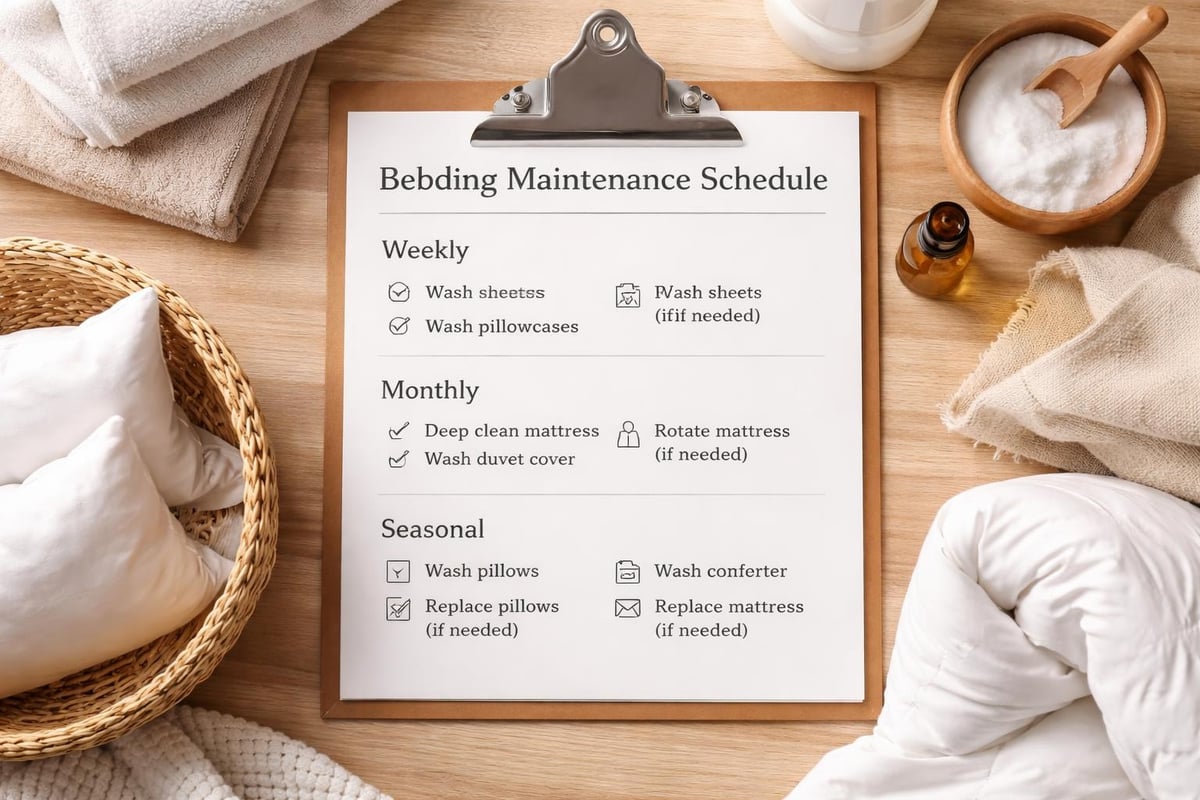
Washing and drying your sheets properly prevents premature wear, fading, and shrinkage. Generally, washing bedding every one to two weeks maintains hygiene without causing excessive wear. If you're wondering about how often to change bed sheets, weekly changes suit most households perfectly, though more frequent washing benefits those with allergies or skin sensitivities.
Essential care tips:
- Wash dark and light colours separately
- Use a gentle cycle with cool or warm water
- Avoid overloading your washing machine
- Skip fabric softener on moisture-wicking materials
- Tumble dry on low heat or line dry when possible
Storage solutions for rotation
If you maintain multiple bedding bed sets for different seasons or moods, proper storage keeps everything fresh between uses. Storing bedding for maximum longevity involves clean, dry conditions with good air circulation.
Vacuum storage bags tempt many people, but they can trap moisture and create musty odours. Instead, use breathable cotton storage bags or simply fold sets neatly in your linen cupboard. Placing a sheet of tumble dryer paper or a small sachet of lavender between folds keeps everything smelling fresh until you're ready to use it again.
Addressing common bedding bed concerns
Even with quality products and proper care, certain issues crop up regularly. Understanding how to prevent and address these problems keeps your bedding bed looking and feeling its best.
Keeping white bedding bright
White and light-coloured bedding creates a crisp, hotel-like aesthetic many people love, but maintaining that brightness requires specific care. Keeping white bedding bright involves regular washing with the right products and occasional deep cleaning to remove yellowing.
Adding half a cup of white vinegar to your rinse cycle naturally brightens whites without harsh chemicals. For stubborn stains or yellowing, a paste of bicarbonate of soda and water applied before washing works wonders. Drying white bedding in sunlight provides natural bleaching that no product can replicate.
Preventing pilling and wear
Pilling, those annoying little balls of fibre that form on fabric surfaces, commonly affects bedding bed items, particularly those made from cotton or blends. Washing items inside out reduces friction against other laundry, minimising pilling. Similarly, avoiding high heat in both washing and drying preserves fibres and prevents excessive wear.
| Problem | Prevention | Solution |
|---|---|---|
| Pilling | Wash inside out, low heat | Use fabric shaver |
| Fading | Wash in cold water, air dry | Choose colourfast fabrics |
| Shrinking | Follow care labels, low heat | Pre-wash before first use |
| Wrinkling | Remove promptly, fold immediately | Choose wrinkle-resistant materials |
Managing allergies and sensitivities
Some people experience reactions to certain bedding materials or detergents used on their bedding bed items. Allergic reactions to bed sheets can stem from dust mites, fabric treatments, or residual detergent rather than the fibres themselves.
Washing new bedding before first use removes manufacturing residues and treatments. Choosing hypoallergenic detergents without dyes or fragrances helps sensitive individuals avoid reactions. Hot water washing kills dust mites effectively, though check care labels to ensure your bedding bed items can withstand higher temperatures.
Styling your bedding bed for maximum impact
A well-made bedding bed serves as your bedroom's focal point, setting the tone for the entire space. The way you dress and arrange your bed influences not just aesthetics but also how inviting and restful your room feels.
The art of layering
Professional interior designers use layering to create depth and visual interest on a bedding bed. Start with your fitted sheet, add your duvet with its cover, then build from there. A folded throw across the foot of the bed adds texture and provides extra warmth on chilly evenings. Cushions in varying sizes create dimension, though remember that the perfect number depends on your bed size and personal preference.
Typical layering for a double bed:
- Fitted sheet
- Flat sheet (optional)
- Duvet with cover
- Two standard pillows with cases
- Two European pillows or cushions (optional)
- One or two decorative cushions
- Throw blanket across the foot
Colour coordination strategies
Your bedding bed's colour scheme dramatically affects your bedroom's atmosphere. Soft, neutral tones promote calm and relaxation, whilst bold colours energise the space. Consider your bedroom's overall palette, including walls, curtains, and flooring, when selecting bedding.
Creating contrast between your bedding bed and bedroom walls makes the bed stand out. Dark bedding against light walls or vice versa provides striking visual impact. Alternatively, tone-on-tone schemes in varying shades of the same colour family create sophisticated, cohesive looks.
Size matters for your bedding bed
Ensuring your bedding properly fits your mattress prevents frustrating issues like covers that don't quite reach or sheets that pop off corners. UK bed sizes follow standard measurements, but variations exist, particularly with older or specialised mattresses.
Standard UK bedding bed sizes
Understanding these dimensions helps you shop confidently for your bedding bed essentials. Measure your mattress if you're uncertain, as depth variations can affect fitted sheet fit significantly.
| Bed Size | Mattress Dimensions | Duvet Size |
|---|---|---|
| Single | 90cm x 190cm | 135cm x 200cm |
| Small Double | 120cm x 190cm | 180cm x 200cm |
| Double | 135cm x 190cm | 200cm x 200cm |
| King | 150cm x 200cm | 225cm x 220cm |
| Super King | 180cm x 200cm | 260cm x 220cm |
Getting duvet cover sizing right prevents the lumpy, uneven appearance that occurs when covers are too large or small for your duvet. A properly fitted cover should have minimal excess fabric but enough room to prevent the duvet from bunching in corners.
Mattress depth considerations
Modern mattresses, especially those with memory foam or pillow tops, often measure deeper than traditional styles. Standard fitted sheets typically accommodate mattresses up to 30cm deep. If your mattress exceeds this, look for deep-fitted or extra-deep options that specify their depth capacity.
Mattress protectors and toppers add additional height, which you'll need to account for when selecting your bedding bed components. Measure from the mattress surface to its bottom edge, including any protectors, to ensure your fitted sheet will actually fit.
Refreshing your bedding bed seasonally
Updating your bedding bed with the seasons keeps your bedroom feeling fresh and appropriate for the weather. This doesn't require purchasing entirely new sets each time; strategic swaps and additions work brilliantly.
Spring and summer updates
As temperatures rise, switch to lighter materials that breathe well and help regulate your body temperature. Cotton percale or linen fitted sheets feel cooler against skin than heavier weaves. Lower tog duvets or even just a flat sheet during the warmest months prevent overheating.
Colour psychology suggests that cooler tones like blues, greens, and soft greys feel refreshing in warm weather. Conversely, warm tones like oranges, reds, and deep browns create cosiness as temperatures drop.
Autumn and winter transformations
Transforming your bedding bed for colder months involves adding warmth through materials and layers. Flannel or brushed cotton sheets trap heat close to your body, whilst higher tog duvets provide necessary insulation. An autumn duvet cover in rich, warm tones sets the perfect seasonal mood.
Throws become functional as well as decorative during winter, providing extra warmth for reading in bed or chilly mornings. Layering a lightweight blanket between your sheet and duvet creates adjustable warmth you can add or remove as needed throughout the night.
Making your bedding bed work harder
Beyond simply looking lovely and providing comfort, your bedding bed setup can serve multiple purposes with clever choices. Multi-functional pieces stretch your budget whilst adding versatility to your bedroom.
Smart bedding bed choices include:
- Reversible duvet covers that offer two looks in one
- Throws that transition from bed to sofa
- Decorative cushions that match both bedroom and living areas
- Neutral basics that pair with multiple seasonal accent pieces
- Storage solutions that keep extra bedding organised and accessible
Happy Home Shop's diverse duvet bedding sets often include coordinating pieces that work throughout your home, maximising value and creating cohesive style across rooms. This approach proves particularly beneficial for those furnishing their first home or working with limited budgets.
Guest room considerations
If you maintain a guest room, your bedding bed approach might differ from your primary bedroom. Neutral, universally appealing choices ensure guests feel comfortable regardless of their personal preferences. Keep extra blankets readily available since guests' temperature preferences vary widely.
Complete bedding sets simplify guest room preparation, providing everything needed in coordinating styles. Store these sets together so you can quickly make up the bed when visitors arrive, eliminating last-minute scrambling for matching pieces.
Understanding bedding bed certifications and standards
Whilst shopping for your bedding bed essentials, you might encounter various certifications and standards claims. Understanding what these mean helps you make informed decisions about quality, safety, and environmental impact.
OEKO-TEX certification indicates that textiles have been tested for harmful substances, making them safer for sensitive skin and better for the environment. Whilst not mandatory, this certification provides peace of mind, particularly for those concerned about chemical treatments on fabrics.
In healthcare settings, specific standards apply to bedding materials regarding fire safety and hygiene. Though most homes needn't worry about these specialist textile standards, understanding that such regulations exist highlights how seriously bedding quality and safety are taken in professional contexts.
Creating the perfect bedding bed setup combines practical considerations like materials and sizing with personal style preferences and budget consciousness. By understanding the layers that create comfort, choosing appropriate materials for your needs, and maintaining your bedding properly, you'll enjoy better sleep and a more inviting bedroom for years to come. Whether you're seeking classic whites, bold patterns, or anything in between, Happy Home Shop offers the quality bedding essentials you need to transform your bedroom into a cosy sanctuary without overspending.