Finding the perfect bed linen bed sheets can transform your bedroom from ordinary to extraordinary without breaking the bank. Whether you're upgrading your entire bedding collection or simply replacing worn-out sheets, understanding what makes quality bed linen matters more than you might think. Your sheets affect everything from sleep quality to bedroom aesthetics, so choosing wisely means investing in better rest and a more beautiful space. With so many materials, thread counts, and styles available in 2026, navigating the world of bed sheets doesn't have to be overwhelming or expensive.
Understanding bed linen bed sheets materials
The fabric you choose for your bed linen bed sheets dramatically impacts comfort, durability, and maintenance requirements. Natural fibres remain the most popular choice, though modern technology has introduced impressive synthetic alternatives that deserve consideration.
Cotton stands as the traditional favourite for excellent reasons. It breathes beautifully, washes easily, and softens with age rather than deteriorating. Egyptian cotton and Pima cotton represent the luxury end, whilst standard cotton varieties offer brilliant value for everyday use. Different cotton types offer varying benefits, so understanding these distinctions helps you make informed choices.
Natural versus synthetic options
Here's how popular bed sheet materials compare:
| Material | Durability | Breathability | Cost | Care Level |
|---|---|---|---|---|
| Cotton | Excellent | High | Medium | Easy |
| Linen | Outstanding | Very High | High | Moderate |
| Bamboo | Good | High | Medium | Easy |
| Microfibre | Good | Low | Low | Very Easy |
| Silk | Moderate | Medium | Very High | Difficult |
Linen sheets deserve special attention for their incredible longevity and temperature-regulating properties. Linen excels in both warm and cool climates, making it surprisingly versatile despite its higher initial cost. The fabric's natural texture adds character to any bedroom whilst remaining wonderfully practical.
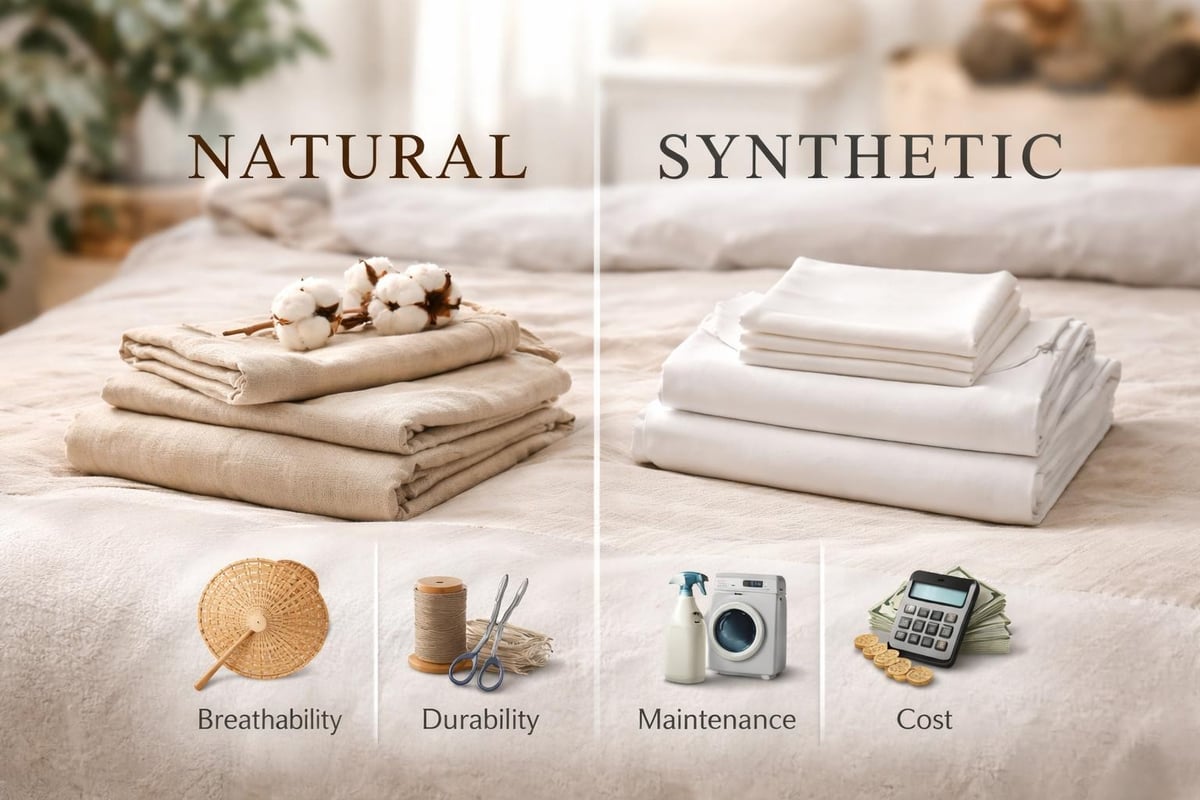
Bamboo has emerged as an eco-conscious alternative that feels silky smooth against skin. It naturally resists bacteria and wicks moisture brilliantly, perfect for those who tend to sleep warm. Meanwhile, microfibre options provide budget-friendly choices that resist wrinkles and stains admirably.
Decoding thread count and weave patterns
Thread count generates enormous confusion amongst sheet shoppers, often misleading people into poor purchasing decisions. The number indicates how many threads appear per square inch of fabric, but higher doesn't automatically mean better quality.
For cotton sheets, sweet spots exist between 200-800 thread count. Anything claiming counts above 1,000 likely uses marketing tricks like counting individual ply threads rather than whole threads. Thread count matters less than material quality, so don't let astronomical numbers convince you to overspend.
Weave patterns that matter
Different weaves create distinct textures and performance characteristics:
- Percale: Crisp, cool, matte finish with a classic hotel feel
- Sateen: Smooth, lustrous surface with a subtle sheen
- Jersey: Stretchy, t-shirt-like comfort that's incredibly soft
- Twill: Diagonal texture that's durable and wrinkle-resistant
- Flannel: Brushed warmth perfect for winter months
Percale weaves suit those who sleep hot, offering excellent breathability and a fresh, cool touch. Sateen provides a more luxurious drape and warmth, ideal for cooler bedrooms or people who appreciate silky textures. The Happy Home Shop bed sheets collection showcases various weaves to suit different preferences and budgets.
Choosing bed linen bed sheets for different seasons
Your ideal sheets might change throughout the year as temperatures fluctuate and your comfort needs shift. Building a versatile linen collection doesn't require massive investment when you shop strategically.
Summer calls for lightweight, breathable fabrics. Cotton percale and linen excel during warmer months, keeping you cool whilst wicking away moisture. Lower thread counts (around 200-400) actually perform better in heat because they allow superior air circulation. Pale colours reflect heat rather than absorbing it, contributing to a cooler sleep environment.
Winter demands cosier options that trap warmth without causing overheating. Flannel sheets, brushed cotton, and jersey knit varieties create that snuggly feeling perfect for cold nights. The teddy bedding collection offers exceptionally warm options that feel like sleeping in a cloud.
Year-round versatility solutions
- Start with quality mid-weight cotton (400-600 thread count) as your foundation
- Add seasonal specialty sheets for extreme temperatures
- Layer with appropriate blankets rather than relying solely on sheet weight
- Consider reversible options that adapt to changing needs
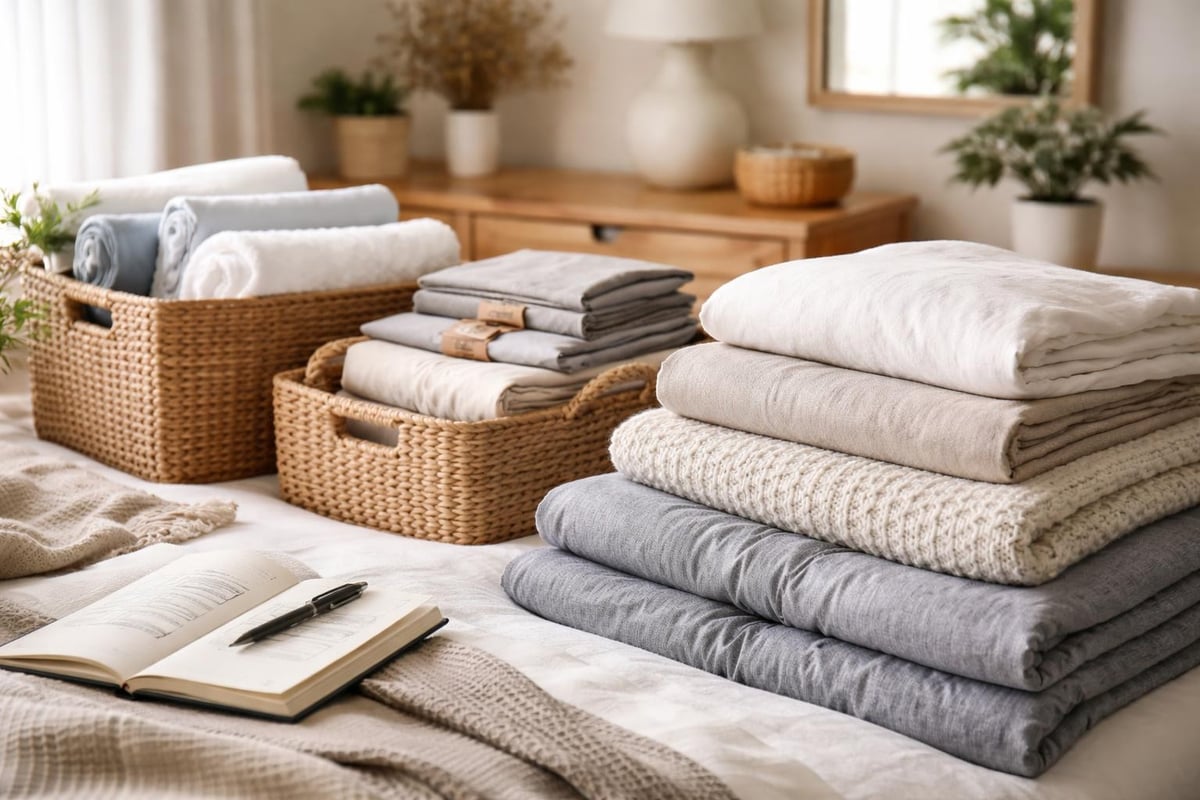
Microfibre sheets work surprisingly well across seasons because they regulate temperature reasonably whilst remaining budget-friendly. They're brilliant starter options when you're building your collection gradually. The sustainable bedding range offers eco-conscious choices that perform well year-round.
Sizing and fitting your bed linen bed sheets properly
Nothing frustrates more than sheets that pop off corners at midnight or dangle excessively. Proper sizing ensures both functionality and aesthetics whilst maximising the lifespan of your bed linen bed sheets.
Measure your mattress depth before shopping. Standard fitted sheets accommodate mattresses up to 30cm deep, but modern memory foam and pillow-top mattresses often exceed this. Deep fitted sheets (up to 40cm) prevent that annoying corner-popping issue that plagues poorly fitted bedding.
Essential sizing considerations
Here's what you need to measure:
- Mattress width and length (single, double, king, super king)
- Mattress depth including any toppers
- Desired drop length for flat sheets
- Pillow dimensions if buying pillowcases separately
Don't forget that fitted sheets should have elastic all around the edges, not just in corners. Full elastic ensures a snug fit that withstands movement throughout the night. Quality construction makes enormous difference here, even in budget-friendly options.
Flat sheets deserve attention too. They should extend at least 20-30cm beyond mattress edges for proper tucking and comfortable coverage. Oversized flat sheets work better than undersized ones, allowing you to achieve that crisp hotel-style bed appearance at home.
Caring for your bed linen bed sheets
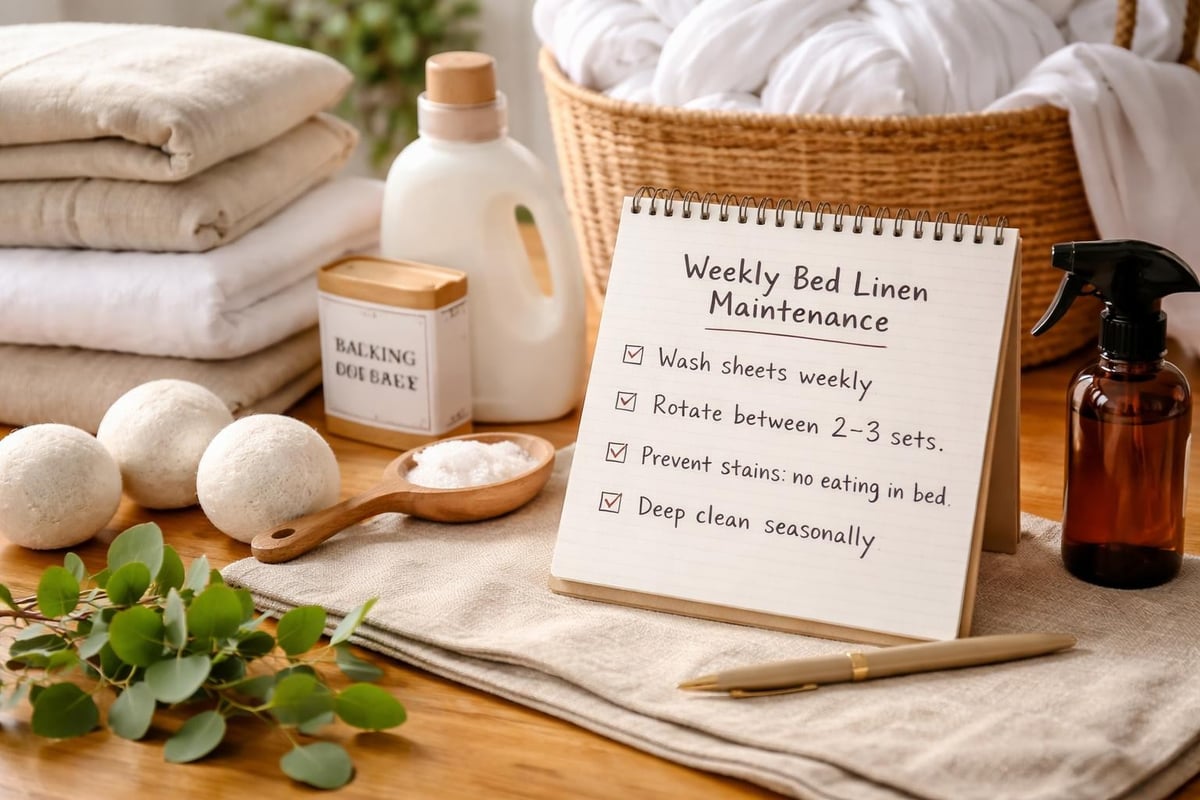
Proper maintenance extends the life of your sheets dramatically whilst keeping them fresh, soft, and hygienic. Most people wash their sheets incorrectly, reducing lifespan and comfort unnecessarily.
Wash sheets weekly in warm (not hot) water to remove body oils, dead skin cells, and dust mites. Hot water might seem more hygienic but actually breaks down fibres faster. Use mild detergent and avoid fabric softeners on cotton sheets as they coat fibres and reduce absorbency over time.
Different materials require specific approaches:
| Material | Water Temp | Drying Method | Special Notes |
|---|---|---|---|
| Cotton | Warm | Tumble low/Line | Remove promptly to reduce wrinkles |
| Linen | Cool-Warm | Line preferred | Wrinkles are natural and charming |
| Bamboo | Cool | Tumble low | Avoid high heat completely |
| Microfibre | Cold-Warm | Tumble low | Never use fabric softener |
Stain treatment strategies
Address spills immediately for best results. Blot rather than rub to avoid spreading stains deeper into fibres. For common bedroom stains:
- Blood: Rinse with cold water immediately, then apply hydrogen peroxide
- Sweat: Pre-soak in white vinegar solution before washing
- Makeup: Use gentle dish soap on the stain before laundering
- Oil-based products: Sprinkle with cornstarch to absorb, then treat
Removing tough stains requires specific techniques that preserve fabric integrity whilst eliminating marks. Never use bleach on coloured sheets as it weakens fibres and causes fading.
Addressing allergies and sensitivities
Bed linen bed sheets can trigger allergic reactions when materials, dyes, or finishes irritate sensitive skin. Understanding potential allergens helps you choose appropriate bedding that promotes restful sleep rather than causing discomfort.
Hypoallergenic doesn't always mean what you think. No standardised definition exists, so manufacturers apply the term loosely. Focus instead on specific features: tightly woven fabrics that resist dust mite penetration, natural untreated materials, and chemical-free dyes.
Cotton and bamboo naturally resist allergen accumulation better than synthetic materials. Their breathability discourages dust mite populations whilst remaining gentle on sensitive skin. Understanding what causes allergic reactions to bed sheets empowers you to make informed choices about materials and treatments.
Creating an allergen-resistant sleep environment
Beyond choosing appropriate sheets, several strategies minimise allergic triggers:
- Wash new sheets before use to remove manufacturing residues
- Maintain weekly washing schedules in hot water when possible
- Use allergen-proof mattress and pillow protectors underneath sheets
- Avoid fabric softeners and heavily scented detergents
- Consider the BCI cotton bedding collection for sustainably sourced, chemical-minimal options
Natural fibres generally cause fewer reactions than synthetic alternatives. However, some people experience sensitivities to specific materials, so pay attention to your body's responses and adjust accordingly.
Budget-friendly shopping strategies
Quality bed linen bed sheets needn't cost a fortune when you shop strategically and understand where to allocate your budget. Certain features justify higher prices whilst others represent unnecessary expenses.
Invest in quality fitted sheets first since they endure more stress than flat sheets or pillowcases. A brilliant fitted sheet lasts years with proper care, whilst decent flat sheets and pillowcases can be more budget-friendly without sacrificing comfort.
Where to save versus splurge
Smart shopping means understanding value:
- Worth spending more: Fitted sheets, guest room bedding you'll use frequently, natural fibres
- Safe to save: Flat sheets, decorative pillowcases, seasonal specialty items
- Best value options: Plain duvet cover sets paired with statement cushions
Sales and clearance events offer fantastic opportunities, especially for classic colours and patterns that transcend trends. Livingetc highlights various retailers offering excellent value, but shopping directly from specialists often provides better deals and selection.
Multi-pack options deliver exceptional value when purchasing basics like white or neutral sheets. Buying several sets simultaneously usually reduces per-unit cost whilst ensuring you have backups during washing. The Happy Home Essentials range showcases affordable everyday options perfect for building your collection.
Styling your bedroom with coordinated bed linen
Beautiful bed linen bed sheets form the foundation of bedroom aesthetics, but coordination creates cohesive, magazine-worthy spaces without requiring design expertise or excessive spending.
Start with neutral sheets as your base. White, cream, grey, and beige provide versatile foundations that pair with any duvet cover, throw, or decorative pillow. This approach allows you to refresh your bedroom's appearance simply by changing accent pieces rather than replacing entire sheet sets.
Layering adds depth and interest whilst remaining budget-conscious:
- Base layer: Quality fitted and flat sheets in neutral tones
- Statement layer: Geometric duvet covers or floral bedding in your preferred style
- Accent layer: Coordinating cushions and throws
- Finishing touches: Decorative pillowcases in complementary colours
Pattern and colour coordination
Mixing patterns successfully requires understanding scale and colour relationships. Combine different pattern sizes (large florals with small geometrics) in complementary colours for sophisticated results. The reversible duvet cover sets offer flexibility, allowing mood changes without purchasing entirely new bedding.
Seasonal refreshes keep bedrooms feeling current. Lightweight pastels and bright whites suit spring and summer, whilst rich jewel tones and warm neutrals create cosy autumn and winter atmospheres. The seasonal bedding collection makes rotating looks affordable and enjoyable.
Special considerations for different household needs
Different households require tailored approaches to bed linen bed sheets based on occupants' ages, lifestyles, and specific requirements. Families with children face different challenges than couples or individuals living alone.
Children's bedding demands durability and easy care above luxury. Kids' duvet cover sets featuring favourite characters motivate reluctant bed-makers whilst microfibre sheets withstand frequent washing without deteriorating. Darker colours and patterns hide stains better than pristine whites, reducing laundry anxiety.
Household-specific recommendations
| Household Type | Priority Features | Recommended Options |
|---|---|---|
| Families with young children | Stain resistance, durability | Microfibre, darker cottons |
| Guest rooms | Versatile appeal, easy care | Hotel-style sets, mid-weight cotton |
| Allergy sufferers | Hypoallergenic materials | Bamboo, tightly woven cotton |
| Hot sleepers | Breathability, moisture-wicking | Linen, cotton percale |
| Budget-conscious shoppers | Value, longevity | Non-iron sets, microfibre |
Guest room bedding should appeal broadly without reflecting strong personal preferences. Neutral hotel-style duvet cover sets create welcoming spaces that suit various tastes whilst maintaining sophistication.
Pet owners need extra-durable options that resist snags and wash frequently without pilling. Tightly woven fabrics discourage claw damage whilst darker colours camouflage shed fur between washes. Multiple sheet sets allow quick changes when accidents occur.
Understanding quality indicators beyond price
Price doesn't always indicate quality when selecting bed linen bed sheets. Several telltale signs reveal whether sheets will perform well regardless of cost, helping you identify genuine bargains versus overpriced disappointments.
Examine fabric weight and opacity. Hold sheets up to light to assess density. Quality sheets shouldn't appear transparent or flimsy. Substantial weight indicates adequate thread count and durable construction, though excessively heavy doesn't necessarily mean better.
Check stitching quality carefully. Seams should be straight, even, and reinforced at stress points like fitted sheet corners. Double-stitched hems last significantly longer than single-stitched versions. Elasticated edges should feel substantial rather than thin and prone to snapping.
Quality assessment checklist
Before purchasing, evaluate these features:
- Even dyeing: No colour variations or streaks across fabric
- Smooth finish: No slubs, pulls, or loose threads
- Reinforced corners: Extra stitching at fitted sheet corners
- Quality elastic: Wide, substantial elastic all around fitted sheets
- Consistent weave: No thin patches or irregular texture
Expert reviews from Allure and similar publications provide valuable insights into how sheets perform after multiple washes. Real-world testing reveals whether initial impressions hold up over time.
Return policies matter enormously. Reputable retailers stand behind their products, allowing returns if sheets don't perform as expected. This confidence indicates quality merchandise worth your investment.
Selecting the perfect bed linen bed sheets combines understanding materials, thread counts, and personal comfort preferences with smart shopping strategies that maximise value. Whether you prioritise sustainability, luxury feel, easy care, or budget-friendliness, quality options exist across all price points in 2026. Happy Home Shop makes building your ideal bedding collection simple and affordable, offering extensive selection from everyday essentials to special seasonal styles, all backed by convenient delivery and regular discounts that help you create the beautiful, comfortable bedroom you deserve.