If you've scrolled through bedroom design inspiration lately, you've probably noticed something curious: beds are looking decidedly more minimal. The trend of "bare bedding" has quietly taken hold in 2026, and it's reshaping how we think about our sleep spaces. This isn't about stripping your bed completely naked (though that's certainly an option for summer!). Rather, bare bedding represents a thoughtful approach to bedroom essentials that prioritises comfort, practicality, and simplicity over excessive layering and decorative excess. It's a refresh that many budget-conscious homemakers are embracing wholeheartedly.
What exactly is bare bedding?
Bare bedding refers to the practice of simplifying your bed setup to include only the essentials you truly need for comfortable sleep. Think of it as the Marie Kondo approach to your sleeping space.
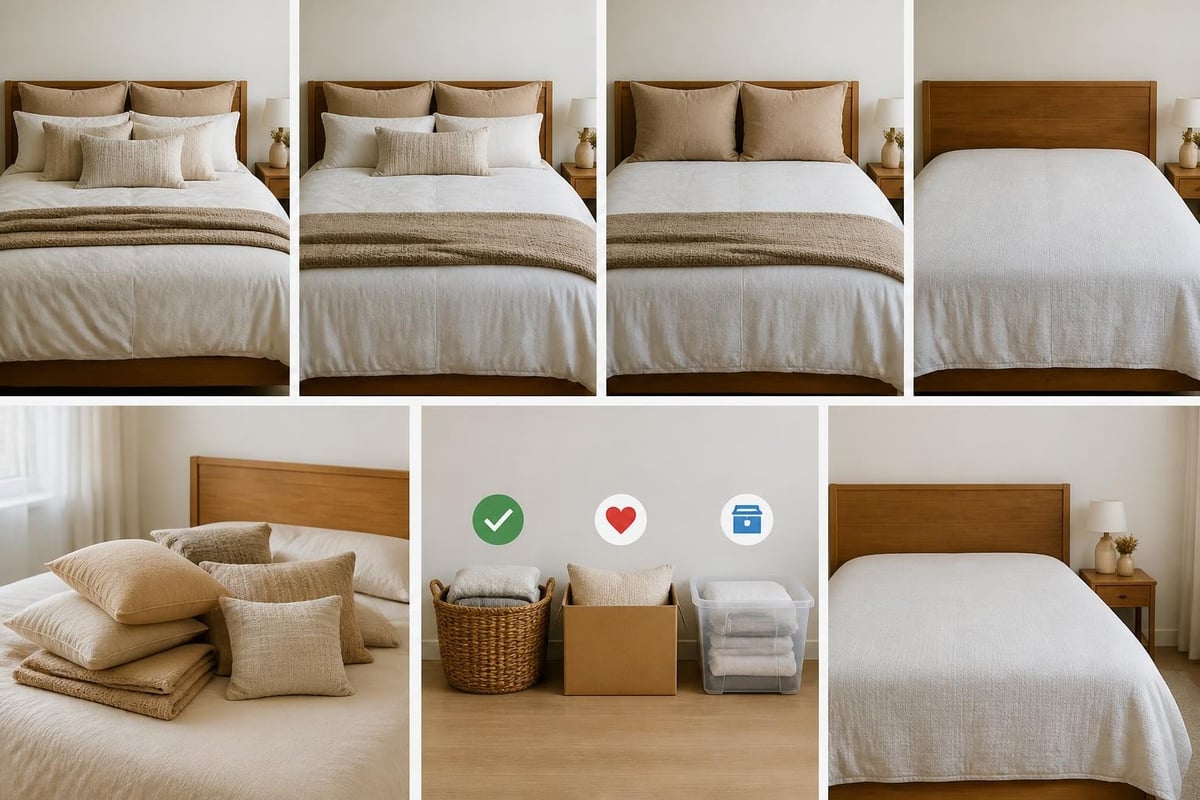
Instead of the traditional layered look with multiple decorative pillows, throws, cushions, runners, and elaborate duvet sets, bare bedding focuses on functional simplicity. You're looking at:
- A fitted sheet
- A flat sheet (optional, depending on preference)
- One duvet or comforter
- One or two sleeping pillows per person
That's it. No mountains of cushions to relocate every night. No decorative throws that slide onto the floor. Just the pieces that directly contribute to a good night's rest.
This approach has gained serious momentum throughout 2026, particularly among younger homeowners and renters who value both aesthetics and practicality. The movement aligns beautifully with broader trends toward minimalism, sustainability, and intentional living.
The environmental angle
One compelling reason people are adopting bare bedding is its reduced environmental impact. According to the European Commission's assessment on household textiles, the textile industry carries a significant environmental footprint, and household linens contribute substantially to this burden.
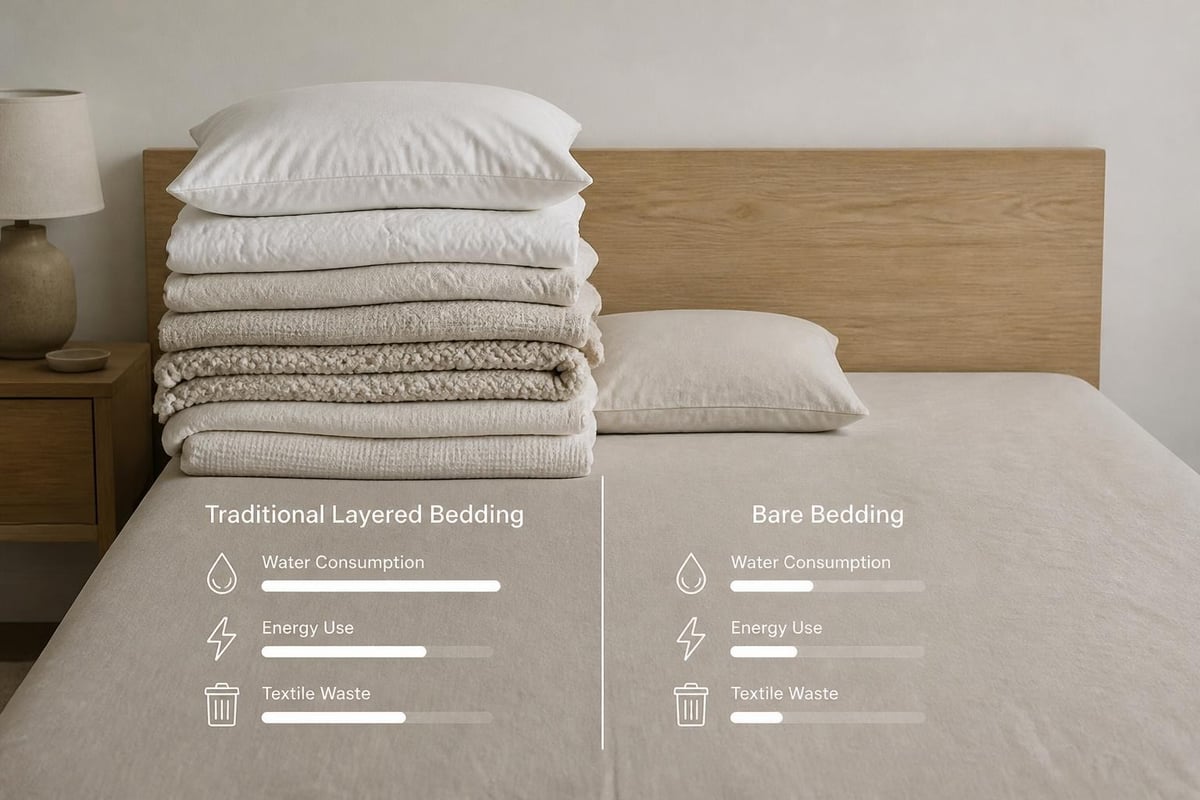
By owning fewer bedding items, you're naturally:
- Washing less frequently (fewer items means fewer loads)
- Consuming less water and energy
- Reducing textile waste over time
- Making more mindful purchasing decisions
The sustainability angle resonates especially well with shoppers looking for sustainable bedding options that won't break the bank.
Why bare bedding works brilliantly for budget lovers
Let's talk pounds and pence. Traditional bedroom styling can become expensive quickly when you're buying decorative cushions, bed runners, multiple throw blankets, and coordinating accessories.
Bare bedding offers refreshing financial advantages:
| Traditional bedding setup | Bare bedding approach | Potential savings |
|---|---|---|
| 6-8 decorative pillows | 2-4 sleeping pillows | £40-£80 |
| 2-3 throw blankets | 1 duvet/comforter | £30-£60 |
| Bed runners and cushions | None needed | £25-£50 |
| Seasonal changeovers | Year-round essentials | £50-£100+ annually |
When you're furnishing a bedroom on a budget, these savings add up beautifully. You can invest in higher quality essentials rather than spreading your budget across numerous decorative pieces.
This philosophy aligns perfectly with the approach at Happy Home Shop, where the focus stays firmly on quality basics that deliver genuine value. Rather than purchasing five cheap cushions that flatten within months, you might choose one excellent duvet set that lasts for years.
The laundry liberation
Here's something nobody warns you about when you fill your bed with decorative items: the laundry multiplication effect.
Every cushion cover, throw, and decorative piece requires washing. They collect dust, absorb odours, and demand attention. Bare bedding dramatically reduces your laundry burden, which means:
- Less time spent stripping and making the bed
- Fewer washing machine cycles weekly
- Reduced drying time and energy costs
- Simplified storage needs
For busy households juggling work, family, and everything else, this time saving feels genuinely liberating. You're reclaiming hours each month previously spent managing bedroom textiles.
Health and hygiene benefits of simplified bedding
Interestingly, bare bedding also offers potential health advantages that often go unmentioned.
Decorative cushions and throws can harbour dust mites, allergens, and bacteria if not washed regularly. The World Health Organization's infection prevention guidance emphasises proper handling of bedding and linens, particularly in contexts where cleanliness matters most.
Better air circulation
Heavily layered beds can trap heat and reduce air circulation around your sleeping space. This becomes particularly relevant during warmer months or for those who naturally sleep hot.
Research examining cooling bed sheets and sleep outcomes demonstrates how bedding choices directly impact sleep quality. Reducing unnecessary layers allows your body to regulate temperature more effectively throughout the night.
Benefits of improved air circulation include:
- More consistent body temperature during sleep
- Reduced night sweating
- Better overall sleep quality
- Decreased moisture buildup (which discourages dust mites)
For those exploring cooling options, plain duvet cover sets in breathable fabrics offer excellent temperature regulation without sacrificing style.
How to create a beautiful bare bedding aesthetic
The beauty of bare bedding lies in its simplicity, but that doesn't mean boring. You can absolutely create a gorgeous bedroom with minimal bedding pieces.
Focus on quality and texture
When you're working with fewer elements, each piece carries more visual weight. This makes quality essential.
Choose bedding with:
- Interesting textures (think linen, waffle weave, or teddy bedding for winter)
- Beautiful drape and weight
- Colours that genuinely make you happy
- Fabrics that feel lovely against your skin
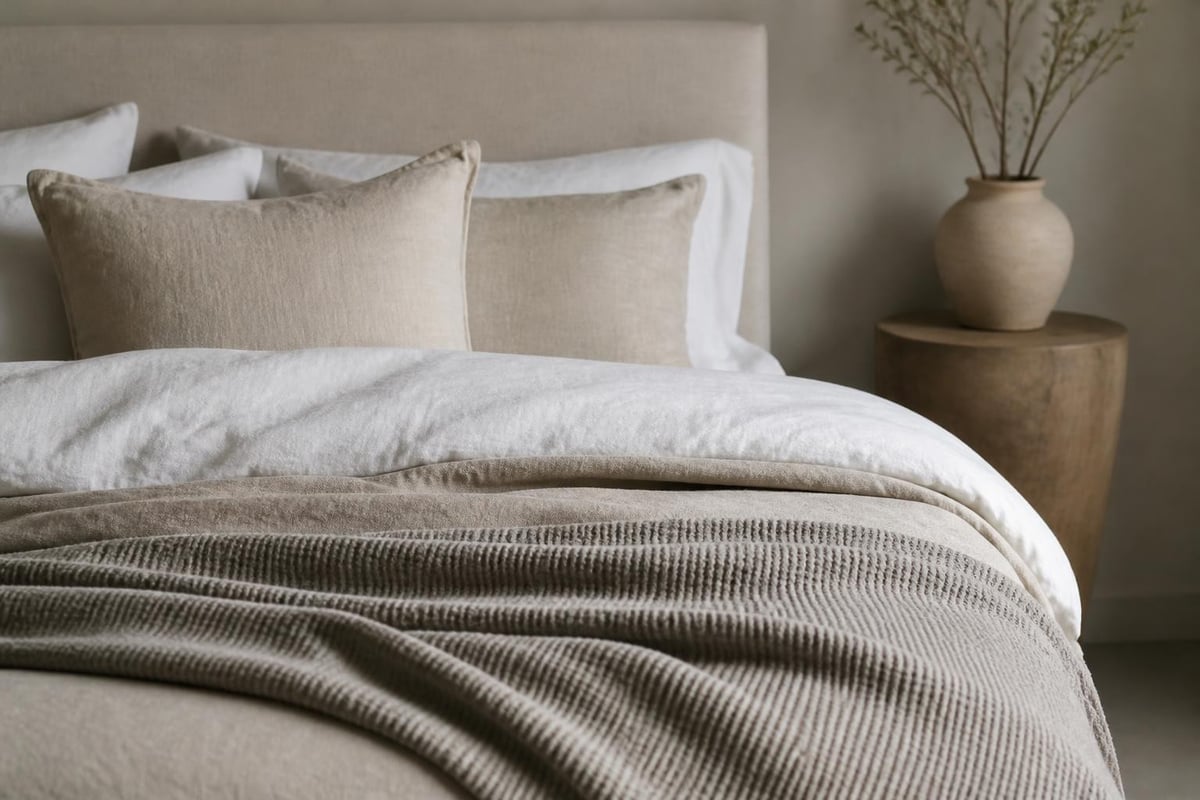
The texture becomes your design statement. A chunky knit blanket folded at the foot of the bed or a crisp white duvet with elegant hotel-style detailing creates visual interest without clutter.
The power of the perfectly made bed
With bare bedding, the way you make your bed matters more. A beautifully smooth duvet, neatly tucked corners, and plump pillows create a polished look.
Consider these quick styling tips:
- Master the hospital corner for fitted sheets (creates crisp lines)
- Fold your duvet down about 30cm to show your top sheet
- Plump pillows daily to maintain their shape
- Smooth out wrinkles when making the bed each morning
If wrinkles bother you, non-iron duvet cover sets eliminate the fuss entirely whilst maintaining that crisp, fresh appearance.
Seasonal adaptations for bare bedding
One concern people raise about bare bedding is seasonal comfort. Won't you freeze in winter with minimal layers?
The solution is simple: adjust your duvet tog rating rather than piling on extra blankets and throws.
Winter bare bedding
During colder months, swap to a higher tog duvet (13.5 or 15 tog for UK winters). You might add:
- One warm blanket folded at the foot of the bed
- Flannel or brushed cotton sheets
- A hot water bottle if needed
That's still considerably simpler than traditional winter bedding with its multiple layers of throws, quilts, and decorative pieces. Browse seasonal bedding options to find temperature-appropriate choices without abandoning the bare bedding philosophy.
Summer bare bedding
Summer becomes even more streamlined. Consider:
- A lightweight 4.5 tog duvet or even just a flat sheet
- Breathable cotton or linen materials
- Perhaps no duvet at all on particularly warm nights
| Season | Recommended duvet tog | Additional layers | Fabric preference |
|---|---|---|---|
| Winter (Dec-Feb) | 13.5-15 tog | Optional blanket | Brushed cotton, flannel |
| Spring (Mar-May) | 10.5 tog | None | Cotton, microfibre |
| Summer (Jun-Aug) | 4.5 tog or sheet only | None | Linen, lightweight cotton |
| Autumn (Sep-Nov) | 10.5 tog | None | Cotton, microfibre |
Bare bedding for different sleeping styles
Not everyone sleeps the same way, and bare bedding adapts beautifully to different preferences and needs.
For hot sleepers
If you naturally run warm at night, bare bedding is genuinely transformative. Removing unnecessary layers allows heat to escape rather than getting trapped beneath decorative throws and excess cushions.
Hot sleepers should prioritise:
- Natural, breathable fabrics (cotton, linen, bamboo)
- Lower tog duvets year-round
- Moisture-wicking materials
- Minimal pillow density
For cold sleepers
Those who feel chilly might worry that bare bedding won't provide enough warmth. The trick is choosing the right duvet weight and perhaps adding one quality blanket.
Cold sleepers benefit from:
- Higher tog duvets (even in summer, consider 7.5-10.5 tog)
- Insulating materials like reversible duvet sets with different seasonal sides
- Warm pyjamas rather than extra bedding layers
- Flannel or fleece sheets in winter
For restless sleepers
If you toss and turn throughout the night, you'll appreciate how bare bedding stays put. Fewer layers mean less to tangle around you or fall off during the night.
Making the transition to bare bedding
Ready to try bare bedding yourself? The transition needn't happen overnight.
Start with these steps:
- Remove decorative cushions and assess how your bedroom feels
- Pack away throws and extra blankets for one week
- Notice whether you actually miss these items
- Evaluate your sleep quality and morning routine
- Gradually donate or store pieces you don't genuinely use
Many people discover they don't miss the extra items at all. The simplified bed becomes easier to make, the room feels more spacious, and the whole sleeping experience improves.
You might keep one or two special pieces for occasional use. Perhaps a beautiful throw for reading in bed on Sunday mornings, or a single decorative cushion that genuinely brings you joy. Bare bedding isn't about rigid rules; it's about intentional choices.
Common questions about bare bedding
Won't my bedroom look unfinished?
Not if you style thoughtfully. A well-made bed with quality linens looks polished and intentional, not sparse. Add interest through bedroom furniture, artwork, plants, or lighting instead.
What about guests?
Keep one or two extra blankets folded in a cupboard for guests who might want additional warmth. They needn't live on your bed permanently.
Can I still change styles seasonally?
Absolutely! Swap your duvet cover colours and patterns with the seasons. Floral bedding for spring, rich tones for autumn. You're simply changing one item rather than seven.
Is bare bedding suitable for children?
Many parents find bare bedding particularly practical for children's rooms. Fewer items mean easier bed-making (great for teaching independence) and less laundry. Kids duvet cover sets in fun patterns provide personality without requiring multiple decorative pieces.
The psychology of simplified spaces
There's something psychologically soothing about bare bedding that extends beyond aesthetics.
Your bedroom should be a restful sanctuary, and visual clutter can subtly increase stress even when you don't consciously notice it. Each decorative item represents a small decision: where should it go when making the bed? Does it need washing? Is it still in style?
Bare bedding eliminates these micro-decisions, creating mental space alongside physical space. You're curating calm through simplification.
This minimalist approach has gained particular traction in 2026 as more people prioritise mental wellbeing and seek to create homes that actively support rest rather than demanding constant maintenance.
Bare bedding and the rental market
Renters have embraced bare bedding enthusiastically, and for good reason.
Advantages for renters include:
- Less to pack and transport when moving
- Lower initial setup costs for furnished bedrooms
- Easier to adapt to different room sizes and layouts
- Simpler storage solutions in smaller spaces
- Quick style changes without major investment
When you're moving house, shifting three essential bedding pieces feels infinitely more manageable than boxing up a dozen decorative cushions, multiple throws, and coordinating accessories.
Finding your bare bedding sweet spot
The beauty of this trend is its flexibility. Your version of bare bedding might look different from someone else's, and that's perfectly fine.
Some people genuinely love the absolute minimum: fitted sheet, duvet, two pillows, done. Others prefer to keep one beautiful throw or a pair of decorative cushions that make them smile.
The key questions to ask yourself:
- Does this item contribute to my sleep comfort?
- Do I use this piece regularly, or does it just look nice?
- Does making my bed feel like a chore or a quick, pleasant task?
- Am I keeping this because I love it or because I think I should?
Your answers will guide you toward your perfect balance. There's no bare bedding police checking whether you've truly minimised enough!
For inspiration and quality basics to build your simplified sleep space, browse the collections at Happy Home Shop, where you'll find everything you need without the pressure to buy things you don't.
Bare bedding represents a refreshing shift toward intentional living that saves time, money, and mental energy whilst creating genuinely restful sleeping spaces. Whether you embrace the trend fully or simply reduce your bedding layers by half, you're likely to discover benefits that extend well beyond your bedroom. When you're ready to refresh your sleep essentials with quality pieces that'll serve you brilliantly for years, Happy Home Shop offers affordable, beautiful bedding that makes simplified living feel genuinely luxurious.