Transforming your bedroom into a cosy sanctuary starts with understanding bed coverings. Whether you're after a minimalist look with crisp white sheets or fancy something with a bit more personality, the right combination of bedding layers can completely change how your room feels. From traditional quilts passed down through generations to modern duvet sets that make bed-making a doddle, there's never been more choice when it comes to dressing your bed. The key is knowing what works for your lifestyle, budget, and personal taste whilst keeping comfort at the forefront.
What are bed coverings and why do they matter?
Bed coverings encompass all the textiles we use to dress and protect our beds, serving both practical and decorative purposes. These include everything from fitted sheets and duvet covers to decorative throws and bedspreads.
The Sewing & Craft Alliance provides comprehensive guidelines on the various types of bed coverings, explaining how each serves different functions in your bedroom. Getting these choices right isn't just about aesthetics. The proper bed coverings regulate temperature throughout the night, protect your mattress investment, and create a hygienic sleeping environment.
The functional benefits you might be overlooking
Most people think of bed coverings purely as decoration, but they do so much more:
- Temperature regulation – different materials and weights help you stay comfortable year-round
- Hygiene protection – washable layers keep allergens and dust mites at bay
- Mattress preservation – quality coverings extend the life of your mattress
- Noise reduction – soft textiles absorb sound, creating a quieter sleeping environment
- Allergy management – the right fabrics can significantly reduce allergic reactions
Speaking of allergies, if you've been experiencing issues, you might want to explore what's causing allergic reactions to bed sheets and how to address them properly.

Understanding the different types of bed coverings
Not all bed coverings are created equal, and knowing the distinction between them helps you make smarter purchasing decisions.
Duvets and duvet covers
A duvet is essentially a soft flat bag filled with down, feathers, wool, or synthetic alternatives. The duvet cover is the protective, decorative casing that keeps it clean and adds style to your bedroom. This two-piece system is brilliantly practical because you can easily change your room's look by swapping covers.
The plain duvet cover sets collection offers timeless options that work with any décor style, whilst the geometric range brings contemporary flair to modern bedrooms. For families with little ones, the kids duvet cover sets provide fun, age-appropriate designs that children actually want to sleep under.
Quilts and comforters
Quilts typically feature three layers – a decorative top, batting in the middle, and a backing fabric – all stitched together in patterns. Comforters are similar but generally thicker, with synthetic filling sewn or quilted to prevent shifting. Both can be used directly on the bed without additional covers, though many people still prefer to protect them.
| Type | Filling | Washability | Best for |
|---|---|---|---|
| Duvet | Feather/synthetic | Cover only | Year-round use with seasonal tog ratings |
| Quilt | Thin batting | Entire piece | Warmer months or decorative layering |
| Comforter | Thick synthetic | Entire piece (challenging) | All-season warmth without cover changes |
Bedspreads and coverlets
Bedspreads are lightweight coverings designed to drape over the entire bed, often reaching the floor. They're more decorative than functional for warmth. Coverlets sit between bedspreads and quilts – they're lighter than quilts but don't extend as far as bedspreads, typically falling just past the mattress edge.
Choosing the right materials for your bed coverings
Material choice dramatically affects how your bed coverings perform, from breathability to durability and maintenance requirements.
Cotton remains the gold standard for most bed coverings due to its natural breathability, softness, and easy-care properties. Egyptian and Pima cotton offer extra-long fibres that create exceptionally smooth, durable fabrics. The BCI cotton bedding collection showcases sustainably sourced options for environmentally conscious shoppers.
Polyester and microfibre blends bring affordability and wrinkle resistance to the table. The microfibre duvet cover sets prove that budget-friendly doesn't mean compromising on comfort. These materials dry quickly and require minimal ironing, perfect for busy households.
Natural versus synthetic fillings
When selecting bed coverings with internal filling, you'll face the natural versus synthetic debate:
Natural fillings include:
- Down and feathers (exceptional warmth-to-weight ratio)
- Wool (temperature regulating, naturally hypoallergenic)
- Silk (luxurious, lightweight, naturally hypoallergenic)
Synthetic fillings offer:
- Polyester (affordable, hypoallergenic, easy maintenance)
- Hollowfibre (breathable, machine-washable, quick-drying)
- Microfibre (soft, lightweight, suitable for allergy sufferers)
Research on enzyme-modified wool fibres for machine-washable bed coverings shows how textile technology continues advancing, making natural fibres more practical for everyday use.
Seasonal considerations for bed coverings
Your ideal bed coverings change with British weather, which can shift dramatically throughout the year.
The tog rating system explained
Tog ratings measure thermal insulation – higher numbers mean warmer coverings. Understanding this helps you select appropriate bed coverings for each season:
- Summer (3-4.5 tog) – lightweight options for warm nights
- Spring/Autumn (7-10.5 tog) – moderate warmth for transitional weather
- Winter (12-15 tog) – maximum insulation for cold months
- All-season combinations – pairing a 4.5 tog with a 9 tog using poppers for adjustable warmth
The seasonal bedding collection makes it easy to rotate your bed coverings as temperatures shift, ensuring year-round comfort without overheating or feeling chilly.
Layering techniques for flexibility
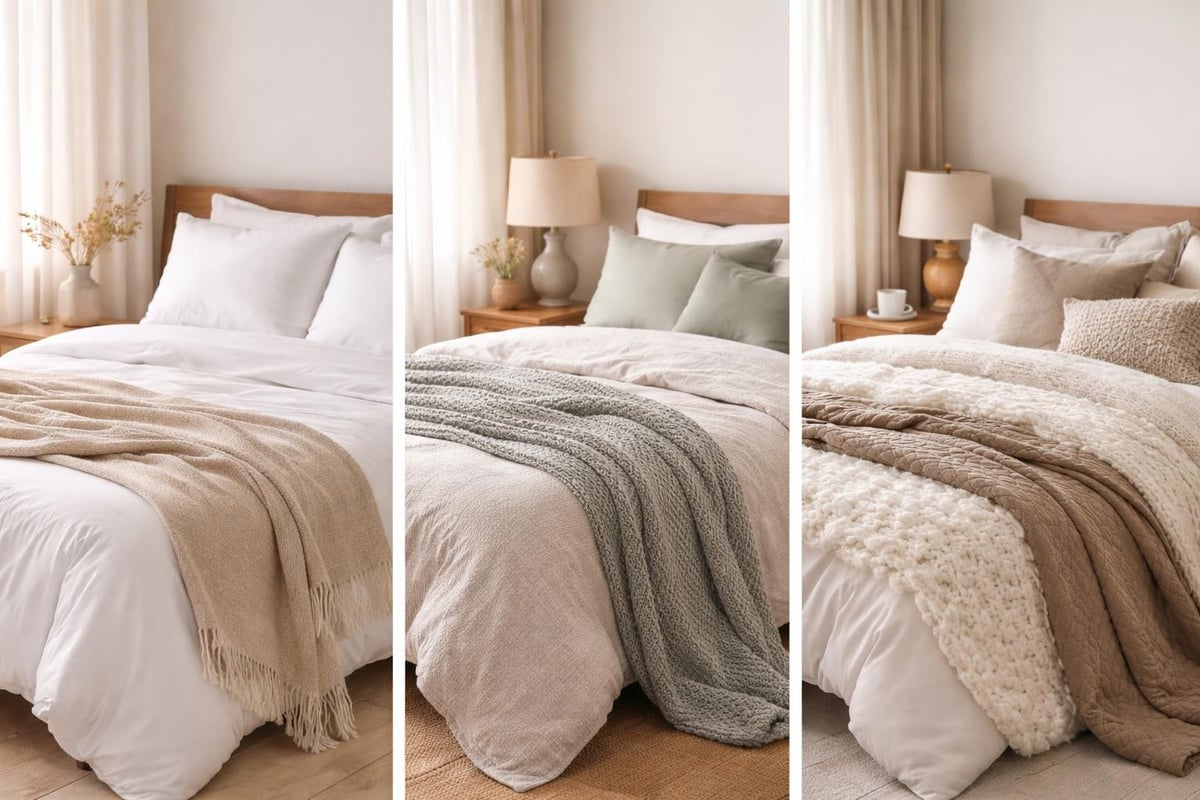
Rather than relying on a single heavy covering, smart layering provides adjustable comfort. Start with quality sheets, add a moderate-weight duvet, then finish with a decorative throw you can remove when it gets too warm. This approach suits our unpredictable climate perfectly.
The autumn cosy range includes pieces specifically designed for transitional weather, when you need something warmer than summer bedding but not quite full winter weight.
Style and design considerations
Bed coverings occupy significant visual space in your bedroom, making them powerful design elements that influence the entire room's atmosphere.
Coordinating colours and patterns
Choosing bed coverings that complement your existing décor creates cohesion. Consider these approaches:
- Monochromatic schemes use varying shades of one colour for sophisticated simplicity
- Complementary colours sit opposite each other on the colour wheel, creating vibrant contrast
- Analogous combinations use neighbouring colours for harmonious, flowing designs
- Pattern mixing works when you vary scale and stick to a unified colour palette
The checks and stripes duvet cover sets offer classic patterns that never go out of style, whilst the floral bedding brings natural beauty indoors. For those who love bold statements, the gothic duvet cover sets create dramatic bedroom aesthetics.
Reversible options for versatility
Reversible bed coverings essentially give you two looks in one, providing excellent value. According to Colorado State University's design guidelines, selecting versatile bed coverings allows you to refresh your room's appearance without major investment. The reversible duvet cover sets collection showcases this clever approach.
Safety standards and practical considerations
When selecting bed coverings, safety should never be an afterthought, particularly for children's bedrooms and nurseries.
The U.S. Consumer Product Safety Commission outlines important safety standards for bedding products, ensuring materials meet flammability requirements and don't pose suffocation risks. Whilst these are American regulations, similar standards apply throughout the UK and Europe.
Safe sleep practices for infants
For babies and young children, safe sleep guidelines recommend specific approaches to bed coverings. Infants under 12 months should sleep in bare cots with fitted sheets only, avoiding pillows, quilts, and loose bed coverings that could present suffocation hazards.
As children grow, transitioning to appropriate bed coverings requires consideration of:
- Size appropriateness (coverings shouldn't be excessively large or heavy)
- Breathable fabrics that prevent overheating
- Secure fastenings on duvet covers to prevent filling bunching
- Non-toxic dyes and treatments on all materials
The character bedding range provides age-appropriate designs that make bedtime appealing whilst maintaining safety standards.

Caring for your bed coverings properly
Proper maintenance extends the life of your bed coverings whilst keeping them hygienic and fresh.
Washing frequency and methods
Different bed coverings require different care approaches. Duvet covers and pillowcases should be washed weekly, whilst the duvet insert itself needs washing only 2-3 times yearly. Quilts and bedspreads can typically go longer between washes if you're using top sheets.
Care tips by material type:
| Material | Temperature | Frequency | Special considerations |
|---|---|---|---|
| Cotton | 40-60°C | Weekly (covers) | Can withstand high temperatures |
| Microfibre | 30-40°C | Weekly | Low heat drying prevents damage |
| Wool | 30°C or specialist | Seasonally | Often requires professional cleaning |
| Silk | Cold hand wash | As needed | Never machine wash unless specified |
The non-iron duvet cover sets offer brilliant solutions for people who detest ironing, using specially treated fabrics that emerge from the wash relatively crease-free.
Storage between seasons
When rotating seasonal bed coverings, proper storage prevents damage and keeps them fresh. Wash everything thoroughly before storing, ensuring items are completely dry to prevent mildew. Use breathable cotton storage bags rather than plastic, which can trap moisture. Cedar blocks deter moths without harsh chemicals.
Store bed coverings in cool, dry locations away from direct sunlight, which can fade colours over time. Vacuum-sealed bags save space but shouldn't be used for down or feather fillings, which need air circulation to maintain loft.
Budget-friendly approaches to quality bed coverings
Creating a beautiful bedroom doesn't require spending a fortune on bed coverings. Strategic shopping and smart choices stretch your budget further.
Money-saving strategies include:
- Invest in quality basics like plain white or neutral duvet covers that work with everything
- Add personality through affordable accessories like cushions and throws
- Shop end-of-season sales for next year's requirements
- Choose reversible bed coverings for maximum versatility
- Prioritise items touching your skin (sheets, pillowcases) over decorative layers
The Happy Home Essentials range demonstrates that affordability and quality aren't mutually exclusive. Building your bedding collection gradually means you can invest in pieces as budget allows rather than compromising on everything at once.
When to splurge versus save
Some bed coverings merit higher investment, whilst others work perfectly well at lower price points. Spend more on items that directly impact sleep quality: your mattress protector, fitted sheets, and primary duvet. You can economise on decorative elements like throws, cushions, and seasonal bedspreads that don't affect comfort.
Trends and timeless choices in bed coverings
Whilst bedroom trends come and go, some styles endure because they simply work. Understanding the difference helps you make purchases you'll love for years.
Current trending bed covering styles:
- Textured fabrics like teddy fleece and waffle weave
- Earthy, natural colour palettes
- Sustainable and ethically produced materials
- Maximalist patterns and bold colours
- Hotel-inspired crisp white bedding
The teddy bedding collection taps into the cosy texture trend, whilst the hotel style duvet cover sets offer that luxurious feeling of sleeping in premium accommodation.
Timeless options that never date
Classic bed coverings transcend trends, remaining stylish decade after decade. White or cream linens, simple stripes, subtle florals, and quality plain colours all fall into this category. These pieces form the foundation of a flexible bedroom that you can update with trendy accessories without replacing everything.
The sustainable bedding collection proves that environmental consciousness and timeless style work beautifully together, offering pieces that look good whilst doing good.
Measuring and fitting bed coverings correctly
Poorly fitting bed coverings look messy and don't function properly. Taking accurate measurements prevents disappointing purchases.
Standard UK bed sizes and corresponding bed coverings
Understanding standard dimensions helps you select appropriate bed coverings:
- Single: 90 x 190 cm (duvet: 135 x 200 cm)
- Small Double: 120 x 190 cm (duvet: 200 x 200 cm)
- Double: 135 x 190 cm (duvet: 200 x 200 cm)
- King: 150 x 200 cm (duvet: 230 x 220 cm)
- Super King: 180 x 200 cm (duvet: 260 x 220 cm)
Mattress depth significantly affects fitted sheet requirements. Measure from the mattress top, down the side, and underneath to ensure adequate fabric. Modern mattresses often exceed traditional depths, requiring deep-fitted sheets.
The bed sheets collection includes various depth options, ensuring proper fit regardless of your mattress type.
Drop length for bedspreads and decorative bed coverings
For bedspreads and coverlets, measure from the top of your mattress to where you want the covering to end. Traditional bedspreads nearly touch the floor, whilst modern styles often stop at the bed frame base. Consider your bed height and room proportions when deciding.
Selecting the right bed coverings transforms your bedroom from merely functional to genuinely inviting, creating a personal retreat that reflects your style whilst supporting quality sleep. By understanding the different types, materials, and care requirements, you can build a bedding collection that serves you well throughout the seasons without stretching your budget. Whether you're drawn to classic elegance, contemporary minimalism, or playful patterns, the perfect bed coverings await. Happy Home Shop offers an extensive range of duvet sets, sheets, and accessories designed to make beautiful bedding accessible to everyone, with regular promotions and convenient delivery ensuring your bedroom makeover is both affordable and effortless.