There's something wonderfully satisfying about a perfectly made bed. Whether you're rushing out the door in the morning or settling down for the evening, knowing how to make a bed properly transforms your bedroom from chaotic to calm in just a few minutes. It's one of those everyday tasks that seems simple enough, yet there's definitely a right way to do it if you want that hotel-fresh look without the five-star price tag. With the right technique and lovely bedding, you can create a sleep sanctuary that beckons you home each evening. Let's dive into the art of bed-making and discover how to achieve that crisp, inviting look every single day.
The foundation: starting with your mattress
Before you even think about sheets and duvets, your mattress deserves proper attention. A quality mattress protector is your first layer of defence against spills, stains, and general wear. This often-overlooked step extends your mattress life considerably and creates a smooth base for everything that follows.
Make sure your mattress sits evenly on its frame or base. Give it a quick brush-down to remove any dust or debris that might have accumulated. If you notice any sagging or lumps, consider rotating your mattress (most should be turned every three to six months).
Essential foundation checklist:
- Clean, dry mattress surface
- Properly fitted mattress protector
- Level, supportive base
- No visible stains or damage
Many people skip the protector step entirely, but it's genuinely one of the smartest investments for your sleep setup. Think of it as insurance for your mattress, keeping everything fresh and hygienic underneath your beautiful bedding.
Fitting your sheet perfectly
The fitted sheet often causes the most frustration when you make a bed, but it doesn't have to be a wrestling match. Start at one corner, preferably the corner furthest from you, and work your way around. The elastic should fit snugly beneath the mattress corners without pulling or bunching.
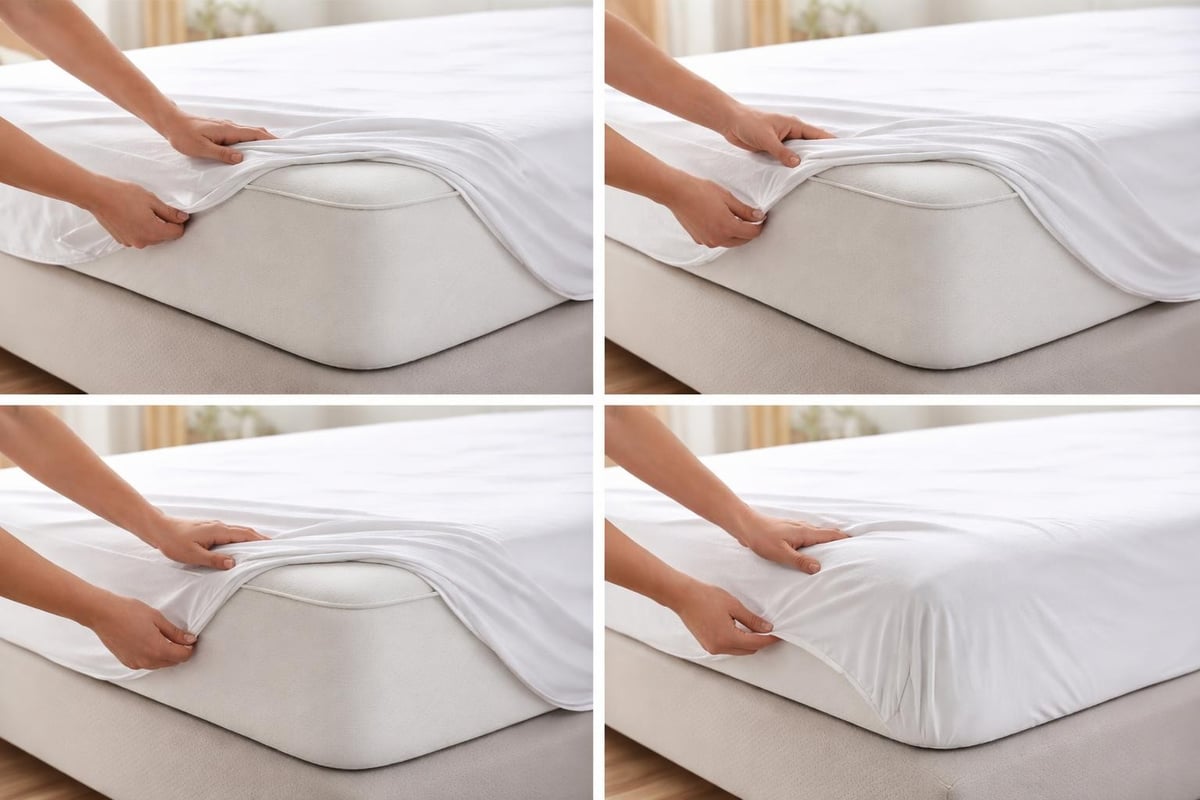
Here's where size truly matters. A king-size fitted sheet on a double bed will create chaos, whilst an undersized sheet will ping off at 3 am. Check your mattress depth too, as modern memory foam and pillow-top mattresses often need deep-fitted sheets.
Achieving those crisp corners
For flat sheets (if you use them), hospital corners create that crisp, tucked-in look you see in luxury hotels. Tuck the bottom edge under the mattress foot, then lift the side edge at a 45-degree angle, creating a triangular fold. Tuck the hanging fabric underneath, then fold the triangle down and tuck it in. Repeat on the other side.
- Drape your flat sheet evenly across the bed
- Tuck the foot end completely under the mattress
- Create your triangular fold on each side
- Secure everything with firm, even tucking
- Ensure equal overhang on both sides
Not everyone loves a tightly tucked flat sheet, though. Some prefer the relaxed European approach where sheets drape freely. There's no wrong answer here, just personal preference and comfort.
Layering your duvet or comforter
Your duvet is the star of the show when you make a bed, so give it the attention it deserves. Shake it out properly before placing it on the bed, this helps redistribute the filling and removes any flat spots from storage. Lay it evenly across the bed, ensuring equal drop on both sides.
Duvet placement guide:
| Aspect | Measurement | Tip |
|---|---|---|
| Top drop | 20-30cm | Should cover pillows slightly |
| Side drop | 30-40cm | Must cover mattress sides fully |
| Bottom drop | 25-35cm | Just past mattress edge |
The duvet should look plump and inviting, not flat and sad. If yours has lost its oomph, try tumbling it in the dryer on low with a couple of tennis balls. This fluffs up the filling brilliantly and costs nothing.
For a truly luxe look, consider the duvet burrito method when changing covers. Lay your duvet cover inside-out, place the duvet on top, roll them together from the bottom, then unroll whilst pulling the cover right-side-out. Game-changer for anyone who's battled with duvets disappearing into covers. Our plain duvet cover sets work beautifully with this technique, as their simple design makes alignment super easy.
Arranging pillows and cushions
Pillows deserve more thought than simply throwing them against the headboard. Standard sleeping pillows typically go at the back, propped upright or nearly so. If you use pillow shams (decorative covers), these create a lovely backdrop for the whole arrangement.

Creating visual interest with layers
Start with your largest pillows and work forward with progressively smaller accent cushions. Two standard pillows form your base, then add one or two decorative cushions in complementary colours or patterns. A final small accent cushion or bolster at the very front ties everything together.
- Back layer: Sleeping pillows in matching cases or shams
- Middle layer: Decorative square cushions (45-50cm)
- Front layer: Smaller accent cushions or bolsters
- Bonus touch: One statement cushion with texture or pattern
Good Housekeeping's approach emphasizes the importance of odd numbers for visual appeal. Three or five cushions often look more intentional than two or four. However, don't stress too much about rules, your bed should reflect your style, not a magazine spread.
The geometric collection offers brilliant cushions for adding visual punch without overwhelming your space. Mix these with solid colours for a designer look on a budget.
The throw blanket finishing touch
A throw blanket adds warmth, texture, and that final layer of sophistication when you make a bed. You can drape it across the foot of the bed, fold it neatly over one corner, or even layer it beneath the duvet for extra cosiness on chilly nights.
Styling options for throws:
| Style | Method | Best for |
|---|---|---|
| Classic fold | Fold in thirds lengthwise, place at bed foot | Traditional, tidy look |
| Casual drape | Artfully scrunch across bottom third | Relaxed, inviting feel |
| Corner accent | Fold and place in one bottom corner | Modern, asymmetric style |
| Side cascade | Drape over one side edge | Luxe, hotel-inspired |
Choose throws in textures that complement your duvet. If you've got smooth cotton bedding, a chunky knit or teddy bedding throw adds gorgeous contrast. Conversely, if your duvet is already textured, keep your throw sleek and simple.
Daily maintenance and quick refreshes
You don't need to strip and remake your bed completely every single day. A quick morning routine keeps things looking fresh between proper washes. Pull your duvet up smoothly, shake and arrange your pillows, and straighten any throws or cushions. This takes perhaps ninety seconds but makes an enormous difference to your bedroom's overall appearance.
Speed-making strategies for busy mornings
When you're rushing, focus on the essentials. Get your duvet roughly in place and pillows stacked. Everything else is optional. IKEA's five-step approach strips away the faff, concentrating on what actually matters for a tidy appearance.
- Smooth fitted sheet (if visible)
- Pull duvet up evenly
- Stack pillows neatly
- Quick cushion arrangement
- Straighten throw if using one
For those mornings when you've got an extra minute, fluff your duvet by lifting it slightly and letting it fall back down. This aerates the filling and creates that plump, welcoming look that makes climbing back in later absolutely irresistible.
Creating a hotel-worthy aesthetic
Professional housekeepers have tricks for making beds look absolutely pristine, and you can pinch their techniques. Tight corners, symmetrical arrangement, and attention to details like ensuring pillowcase openings face inward rather than outward all contribute to that polished appearance.
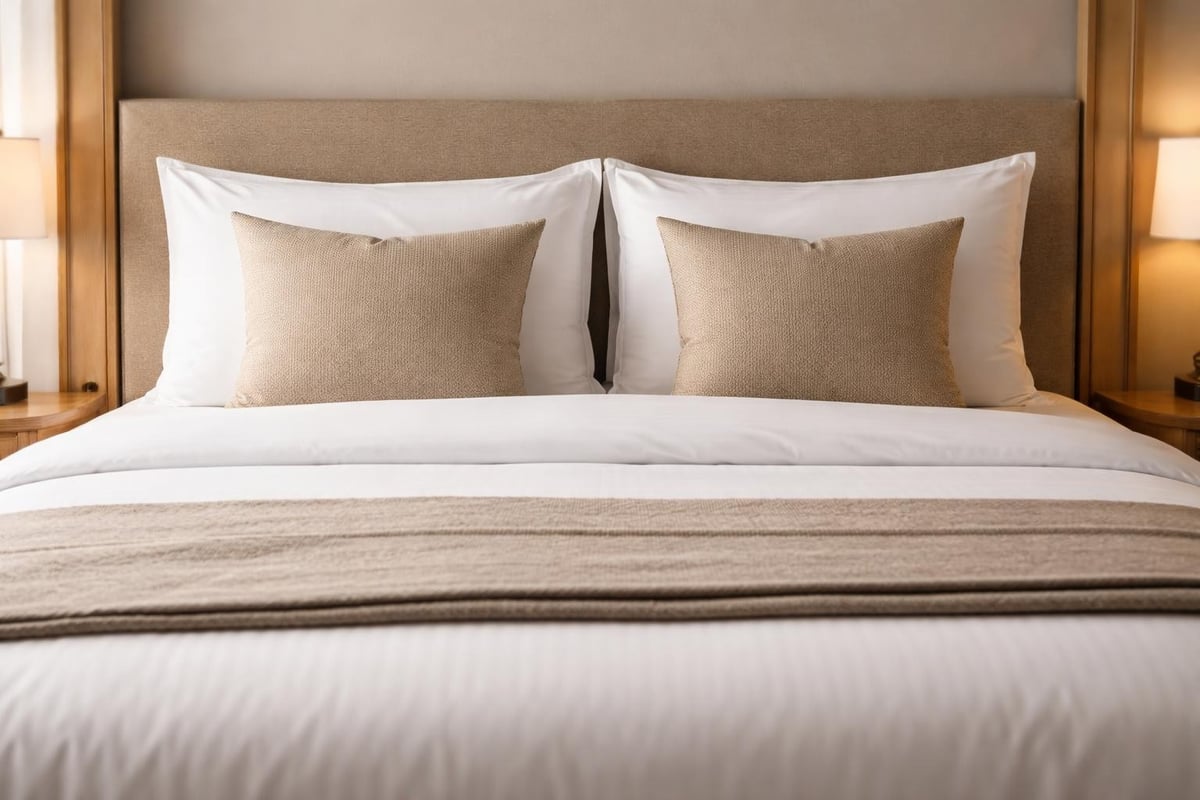
Homes & Gardens reveals that layering is key to luxury. Multiple pillows, a quality duvet, perhaps a decorative top sheet, and carefully chosen accent pieces create depth and interest. But here's the secret: you don't need dozens of pillows or expensive linens. Strategic choices work brilliantly.
Our hotel-style duvet cover sets are specifically designed to give you that crisp, professional look without the boutique hotel price tag. Paired with thoughtful pillow arrangement and a complementary throw, they transform any bedroom into a retreat.
Elements of hotel-style presentation:
- Crisp white or neutral base layers
- Symmetrical pillow arrangement
- Duvet pulled taut and even
- Minimal but impactful accessories
- Everything perfectly aligned
Colour coordination matters too. Ideal Home suggests keeping to a cohesive palette, typically three colours maximum. This doesn't mean everything matches exactly, rather that your choices complement each other harmoniously.
Choosing bedding that makes the process easier
Let's be honest: some bedding materials are far easier to work with than others. When you make a bed regularly, you'll notice that certain fabrics lie flatter, resist wrinkles better, and generally cooperate more readily. Cotton remains the gold standard for good reason, it's breathable, durable, and easy to maintain.
Cotton's natural properties make it ideal for everyday bedding. It washes well, doesn't trap heat, and develops a lovely softness over time. Thread count matters, but not as much as marketing would have you believe. Anything between 200-400 thread count offers excellent comfort and longevity.
Practical bedding considerations
Think about your lifestyle when selecting bedding. If you're prone to allergies, you'll want materials that wash frequently without deteriorating. For more on this topic, check out our guide on allergic reactions to bed sheets, which helps identify potential irritants.
| Bedding type | Ease of making | Maintenance level | Best for |
|---|---|---|---|
| Cotton percale | Very easy | Low | Hot sleepers, crisp look |
| Cotton sateen | Easy | Low-medium | Luxe feel, cooler months |
| Microfibre | Very easy | Very low | Budget-conscious, easy care |
| Linen | Moderate | Medium | Relaxed aesthetic, texture lovers |
The reversible duvet cover sets collection offers brilliant versatility. You essentially get two looks in one, perfect for changing seasons or simply switching up your style without buying entirely new bedding.
Seasonal adjustments to your bed-making routine
Your bed-making approach should shift slightly with the seasons. Summer calls for lighter layers and breathable fabrics, whilst winter invites cosy textures and extra blankets. This doesn't mean completely overhauling your bed every few months, just making small adjustments that enhance comfort.
In warmer months, you might skip the flat sheet entirely or use just a lightweight throw instead of a heavy duvet. Position your bed to catch breezes from windows, and choose lighter colours that don't absorb heat. Our seasonal bedding range makes these transitions simple and affordable.
Winter warmth strategies
When temperatures drop, layering becomes your best friend. Start with your usual fitted sheet, add a flat sheet if you like, then your duvet, and finish with one or two throws. This creates insulating air pockets that trap warmth beautifully. You can adjust throughout the night by removing or adding layers as needed.
Winter bed layers from bottom to top:
- Fitted sheet (flannel for extra warmth)
- Optional flat sheet
- Duvet with appropriate tog rating
- Decorative throw or blanket
- Extra throw at bed foot for flexibility
Don't forget your pillows. Switching to warmer pillow cases or adding an extra pillow creates a cosy nest perfect for cold evenings. The floral bedding collection includes lovely autumn and winter designs that bring warmth through colour and pattern alone.
Teaching children to make their own beds
Getting kids involved in bed-making teaches responsibility and creates good habits. Start young with simple expectations, even a toddler can help pull up a duvet. As they grow, gradually increase what you expect them to manage independently.
Make it achievable for their age and ability. A five-year-old won't create hospital corners, but they can definitely straighten their duvet and arrange stuffed animals nicely. Our kids' duvet cover sets feature fun designs that make the task more appealing.
Age-appropriate bed-making tasks
Breaking the process into manageable chunks helps children learn without feeling overwhelmed. Celebrate their efforts rather than critiquing imperfections, you're building skills and confidence, not training hotel housekeepers.
- Ages 3-5: Pull duvet up, place favourite toy on pillow
- Ages 6-8: Make bed with supervision, arrange pillows
- Ages 9-11: Complete bed-making independently, change pillowcases
- Ages 12+: Full bed-making including sheet changes
The character bedding options featuring beloved characters can motivate reluctant bed-makers. When their favourite characters appear once the bed is made, it becomes a rewarding reveal rather than a chore.
Troubleshooting common bed-making challenges
Even with perfect technique, certain issues crop up repeatedly. Fitted sheets that won't stay put, duvets that bunch inside their covers, or pillows that won't stay fluffy all frustrate even experienced bed-makers. Fortunately, simple solutions exist for each problem.
For sheets that constantly slip off corners, check you've got the correct size. Many modern mattresses are deeper than standard sheets accommodate. Deep-fitted sheets solve this instantly. If your duvet bunches, try duvet cover clips or ties, most quality covers include these specifically to prevent shifting.
Quick fixes for frequent frustrations:
| Problem | Cause | Solution |
|---|---|---|
| Sheets slip off | Wrong size or old elastic | Measure mattress, buy correct depth |
| Duvet bunches | No corner ties | Add clips or safety pins temporarily |
| Flat pillows | Old filling | Fluff in dryer or replace |
| Wrinkled duvet | Synthetic blend | Iron on low or choose cotton |
Wrinkles bother some people tremendously. If you're one of them, the non-iron duvet cover sets will change your life. These clever fabrics resist creasing naturally, so your bed looks crisp with minimal effort.
Learning to make a bed properly transforms this daily task from tedious chore to satisfying ritual. With the right techniques and quality bedding, you'll create a welcoming space that helps you start and end each day feeling organized and calm. Ready to upgrade your bedding and make this routine even easier? Happy Home Shop offers an extensive range of affordable, high-quality duvet sets, sheets, and accessories in countless designs and colours, helping you create the beautiful bedroom you deserve without stretching your budget. Browse our collections today and discover how the right bedding makes all the difference.