Writing a brilliant duvet cover description is part art, part science, and wholly essential if you're serious about selling bedding online. Whether you're a small business owner, marketplace seller, or just someone who wants to understand what makes a good product listing tick, knowing how to describe a duvet cover properly can make the difference between a scroll-past and a sale. The perfect duvet cover description doesn't just list features; it paints a picture of how your bedroom will feel, look, and function with that particular piece of bedding gracing your bed.
What makes a duvet cover description actually work
A good duvet cover description serves multiple purposes simultaneously. It needs to inform shoppers about practical specifications whilst also inspiring them to imagine how the bedding will transform their sleep space. The best descriptions strike that delicate balance between technical accuracy and emotional appeal.
Key elements every duvet cover description should include:
- Fabric composition and material quality
- Thread count or weave type
- Dimensions for different bed sizes
- Closure method (buttons, zip, ties)
- Care instructions
- Design details (patterns, colours, textures)
- What's included in the set
Beyond these basics, your description should address common questions before they're even asked. Does it have corner ties to keep the duvet in place? Is the fabric pre-shrunk? Will the colour fade after multiple washes? Understanding what a duvet cover is helps you anticipate what information matters most to buyers.
The material story matters enormously
One of the most critical aspects of any duvet cover description is explaining the fabric in a way that helps people understand how it will feel and perform. Simply stating "100% cotton" isn't enough anymore. Shoppers want to know whether it's Egyptian cotton, organic cotton, or brushed cotton, and what that means for their sleep experience.
Different materials offer distinct benefits. Cotton breathes beautifully and gets softer with each wash. Linen has that relaxed, lived-in look and excels at temperature regulation. Microfibre resists wrinkles and costs less whilst still feeling pleasant against skin. The best duvet cover material depends entirely on personal preferences and budget constraints.
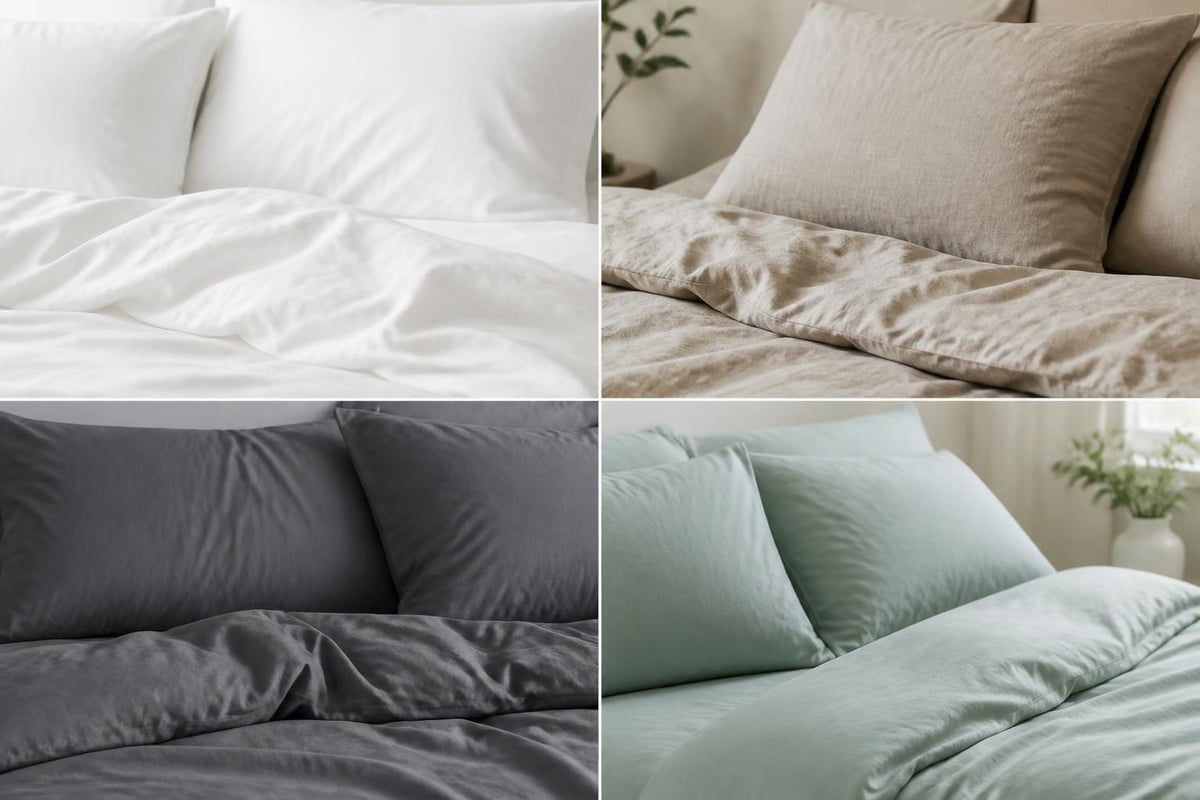
When writing about materials for Happy Home Shop's collections, focus on how the fabric choice affects everyday life. Does your warm bedding sets collection feature brushed cotton that feels extra cosy on cold winter nights? That's a detail worth celebrating in your duvet cover description.
Technical specifications without the technical jargon
Numbers matter in bedding, but only when shoppers understand what they mean. Thread count is the classic example of a specification that's often misunderstood. A duvet cover description that simply states "400 thread count" assumes everyone knows what that number represents.
| Specification | What it means | Why it matters |
|---|---|---|
| Thread count | Threads per square inch | Generally indicates softness and durability (though not the only factor) |
| GSM (weight) | Grams per square metre | Helps determine how substantial the fabric feels |
| Shrinkage | Pre-shrunk or potential to shrink | Affects whether the cover will still fit properly after washing |
| Colour fastness | Resistance to fading | Indicates how long the design will look fresh |
The best approach is to translate specifications into benefits. Instead of "200 thread count percale weave," try "crisp, cool percale cotton with a smooth 200 thread count that stays fresh wash after wash." This duvet cover description style helps people understand what they're actually getting.
Size guidance prevents returns
One of the most frustrating experiences for online bedding shoppers is ordering what looks perfect, only to discover it doesn't fit their duvet properly. Your duvet cover description should eliminate this problem before it starts.
Essential sizing information:
- Exact measurements in both centimetres and inches
- Which duvet tog ratings work best with each cover size
- Whether the cover runs generous or snug
- How much larger the cover should be than the duvet itself
- Compatibility with different duvet thicknesses
A comprehensive duvet cover description addresses these points naturally. For instance: "This king size cover measures 230cm x 220cm, designed to accommodate standard king duvets (225cm x 220cm) with comfortable ease. The generous cut works beautifully with both 10.5 and 13.5 tog duvets without feeling tight or restrictive." If you're interested in avoiding common sizing mishaps, our guide on duvet cover sizing and fit offers detailed advice.
Design descriptions that help people visualise their bedroom
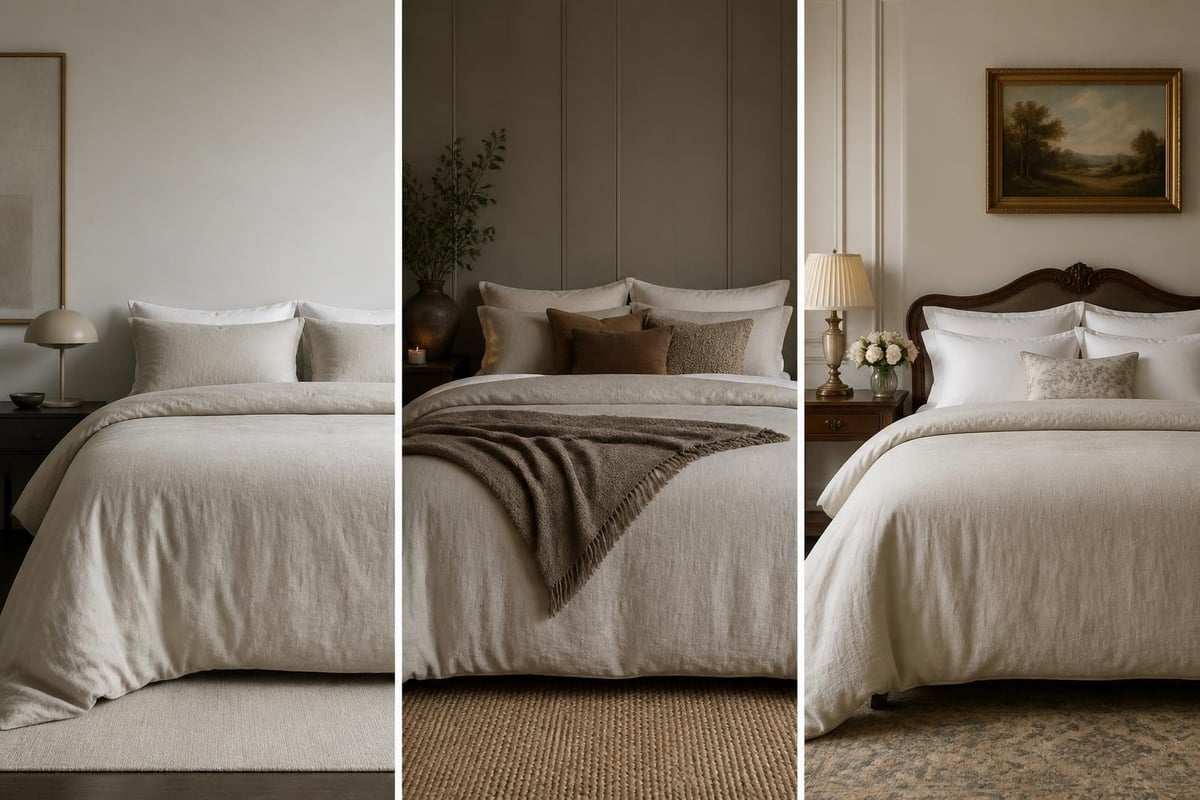
This is where duvet cover descriptions often fall disappointingly flat. Stating "blue floral pattern" when you could paint a picture with words is a missed opportunity. Your description should help someone imagine exactly how their bedroom will look and feel with this bedding.
Consider two approaches to describing the same item:
Basic: "Navy blue duvet cover with white flowers."
Enhanced: "Deep navy cotton duvet cover scattered with delicate white botanical prints, creating a calming, nature-inspired aesthetic that works beautifully in both modern and traditional bedrooms. The balanced contrast makes it easy to pair with coordinating cushions or keep things minimal."
The second duvet cover description helps shoppers visualise the end result. It suggests styling possibilities and reassures them about versatility. When describing bedding from Happy Home Shop's diverse collection, think about the lifestyle and aesthetic each design supports.
Colour accuracy prevents disappointment
Colour is notoriously difficult to convey online, but your duvet cover description can bridge that gap with careful word choice. Instead of just "green," specify "sage green with subtle grey undertones" or "vibrant emerald green with jewel-tone depth."
Comparing colours to familiar objects helps enormously. "Mustard yellow reminiscent of autumn leaves" or "soft blush pink like early morning sky" gives people reference points. If you're working with colourful versus minimal duvet covers, your descriptions need to help people understand where each design falls on that spectrum.
Care instructions that build confidence
Nobody wants to buy beautiful bedding only to ruin it in the first wash. A thorough duvet cover description includes care information that's both accurate and reassuring. This isn't just about liability; it's about helping customers enjoy their purchase for years.
Effective care descriptions include:
- Recommended washing temperature
- Tumble drying suitability
- Ironing requirements
- Whether bleach or fabric softener should be avoided
- Expected longevity with proper care
For example: "Machine washable at 40°C, this duvet cover maintains its softness and colour brilliance wash after wash. Tumble dry on low or line dry for best results. The high-quality cotton requires minimal ironing, though a quick press creates that hotel-fresh look if desired." This style of duvet cover description reassures buyers whilst setting realistic expectations. Our bedding care guide provides additional washing wisdom.
The practical details that answer unasked questions
Every experienced bedding shopper has questions they've learned to ask through past disappointments. Your duvet cover description should anticipate and answer these concerns proactively.
Does the cover have corner ties? This small detail prevents duvet bunching and makes a massive difference in user experience. Is the zip hidden or exposed? Does it catch on skin? Are there button closures that might come undone? Understanding what duvet covers include helps you highlight the features that matter.
Questions your description should answer:
- How easy is it to get the duvet inside?
- Will the cover stay in place or slip around?
- Is it noisy or rustly to sleep with?
- Does it pill after washing?
- How long does it typically take to dry?
- Does it arrive folded or rolled?
These practical considerations rarely make it into basic product listings, but they're exactly what separates adequate duvet cover descriptions from exceptional ones that genuinely help people make informed decisions.
Writing for different price points
The way you craft a duvet cover description should reflect the product's position in your range. Budget-friendly options deserve honest, enthusiastic descriptions that highlight their value proposition. Premium pieces warrant more detailed, luxurious language that justifies the investment.
| Price tier | Description approach | Key focus areas |
|---|---|---|
| Budget | Enthusiastic, value-focused | Affordability, essential quality, style variety |
| Mid-range | Balanced benefits and features | Quality materials, durability, design appeal |
| Premium | Detailed, luxurious language | Exceptional craftsmanship, longevity, refined aesthetics |
A budget duvet cover description might emphasise how it "delivers brilliant style without breaking the bank, made from quality microfibre that resists wrinkles and washes beautifully." A premium description could highlight "sumptuous Egyptian cotton with a 400 thread count sateen weave that develops an increasingly luxurious hand with each wash, an investment in nightly comfort."
Happy Home Shop specialises in making quality bedding accessible, so your descriptions should celebrate both affordability and quality without apology. When you're offering excellent value, say so confidently.
Seasonal considerations in your descriptions
Bedding needs shift throughout the year, and savvy duvet cover descriptions acknowledge this reality. Winter bedding benefits from words like "cosy," "warm," "snug," and "comforting." Summer pieces should emphasise "breathable," "cool," "crisp," and "lightweight."
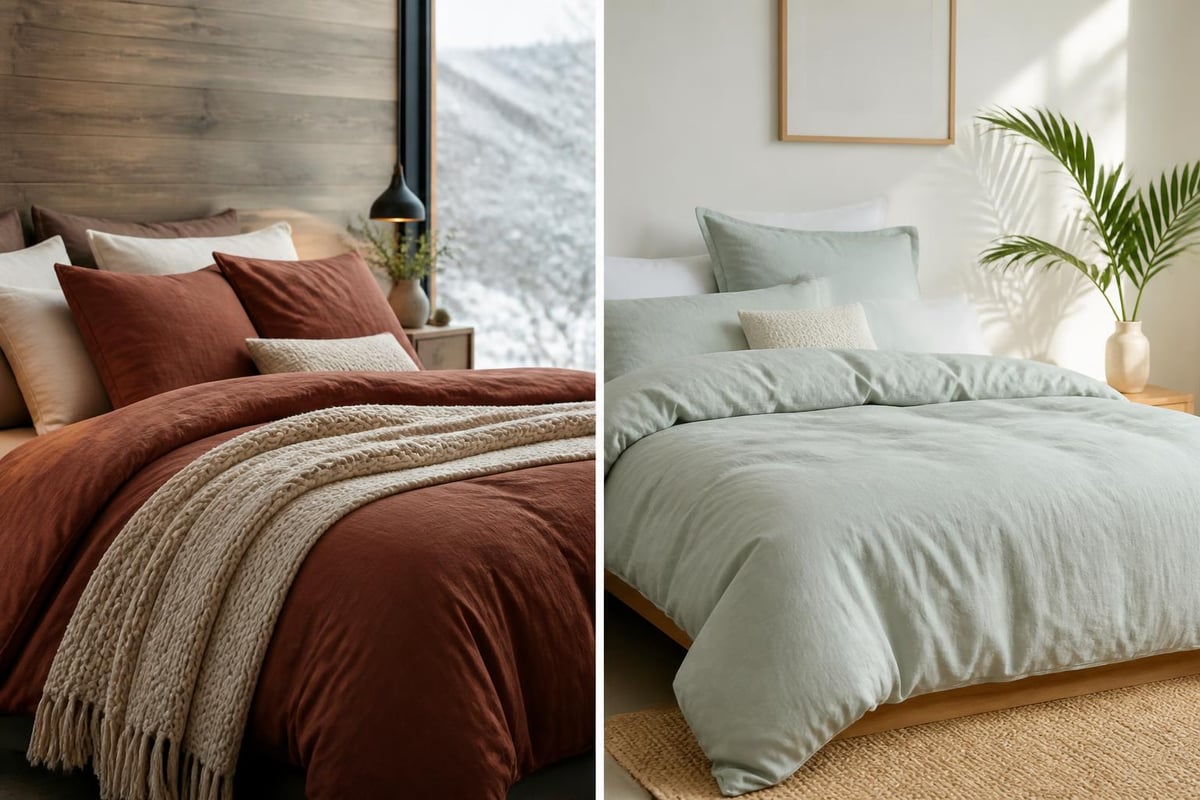
Even the same duvet cover can be described with seasonal flexibility. A linen cover might be "perfect for hot summer nights" in June and "beautifully layered with warm throws" come December. Understanding why cotton works beautifully for year-round comfort helps you craft descriptions that work across seasons.
Common duvet cover description mistakes to avoid
Even experienced retailers sometimes fall into these traps. A truly effective duvet cover description steers clear of these common pitfalls whilst focusing on what actually helps customers make confident purchases.
Description errors that hurt sales:
- Using generic phrases that could describe any bedding
- Focusing exclusively on features without explaining benefits
- Neglecting to mention what's included in the package
- Assuming everyone knows bedding terminology
- Forgetting to address common concerns about online bedding shopping
- Over-promising quality that the product can't deliver
- Using inconsistent measurements or missing size charts entirely
The worst duvet cover descriptions are those written by people who've never actually slept with the product. If possible, your descriptions should reflect genuine experience with how the bedding looks, feels, and performs. This authenticity shines through and builds trust.
SEO without sacrificing readability
Writing for search engines doesn't mean stuffing keywords awkwardly into every sentence. A well-crafted duvet cover description naturally includes relevant terms that people actually search for whilst remaining perfectly readable and helpful.
Think about how real people shop for bedding. They search for "soft cotton duvet cover king size" or "navy blue bedding set" or "easy care duvet covers." Your description should incorporate these natural phrases where they make sense contextually.
The protective and decorative roles of duvet covers give you multiple angles for keyword inclusion. You can discuss protection ("guards your duvet from spills and wear"), decoration ("instantly updates your bedroom's look"), and practical benefits ("easier to wash than a full duvet") within the same description.
Creating descriptions for different platforms
Your duvet cover description might need to work across multiple channels: your website, marketplace listings, social media, and even printed catalogues. Smart retailers create a master description that can be adapted for different contexts.
Platform-specific adjustments:
- Website: Full, detailed descriptions with comprehensive specifications
- Marketplaces: Concise, benefit-focused with keyword optimisation
- Social media: Short, engaging snippets that highlight one key feature
- Email marketing: Lifestyle-focused descriptions that inspire
- Print catalogues: Space-efficient but evocative language
The core information remains consistent, but emphasis and length adjust to suit each platform's strengths and audience expectations. Your duvet cover description framework should be flexible enough to scale up or down as needed.
The power of customer language
Pay attention to how customers describe bedding in reviews and feedback. They often use different language than retailers assume. If reviewers consistently mention that a duvet cover "makes the bed look hotel-fancy," that phrase belongs in your description.
Real customer insights inform better duvet cover descriptions because they reflect actual experiences and priorities. When shoppers at Happy Home Shop mention that they "love how soft this gets after washing" or "can't believe the quality for the price," those observations should influence how you describe similar products.
Telling the complete bedding story
The most effective duvet cover descriptions don't exist in isolation. They reference coordinating pieces, suggest styling options, and help customers build complete bedroom looks they'll love.
Mention matching pillowcases, complementary cushions, or throws that work beautifully together. Help people understand what else they might need for a cohesive bedroom refresh. This isn't pushy sales tactics; it's genuinely helpful guidance that prevents the frustration of mismatched pieces.
For instance: "This geometric duvet cover pairs beautifully with solid-coloured sheets in any of the accent colours from the pattern. Add textured cushions in complementary tones for a designer look that's surprisingly easy to achieve." Understanding basic bedding essentials helps you create descriptions that educate as they sell.
Building trust through transparency
The best duvet cover descriptions are refreshingly honest. They acknowledge that no single product is perfect for everyone whilst highlighting who will love this particular design. This transparency builds trust and actually increases conversion rates because people feel confident they're making the right choice.
If a fabric wrinkles easily but that's part of its relaxed charm, say so. If a bold pattern works brilliantly in spacious rooms but might overwhelm tiny bedrooms, mention it. Shoppers appreciate honesty and reward it with loyalty. When you're upfront about both strengths and considerations, returns decrease and satisfaction soars.
Creating duvet cover descriptions that truly work requires understanding both the product details and your customers' needs, combining practical specifications with inspiring lifestyle benefits. Whether you're refreshing your bedroom with cosy textures, vibrant patterns, or classic elegance, finding bedding that matches your vision becomes easier with clear, helpful information. Happy Home Shop makes beautiful, affordable bedding accessible to everyone, with detailed product descriptions and a carefully curated selection designed to help you create the bedroom of your dreams without stretching your budget.