Creating a beautiful, comfortable space doesn't mean breaking the bank. Your bedroom should be a sanctuary where you can relax, recharge, and feel completely at ease. The foundation of any inviting bedroom starts with quality bedding and home textiles that reflect your personal style whilst providing the comfort you deserve. Whether you're moving into a new place, refreshing your current space, or simply treating yourself to an upgrade, understanding the basics of bedding and home essentials will help you make smart choices that look fantastic and last for years to come.
Understanding bedding basics for your perfect sleep space
When it comes to bedding and home textiles, quality doesn't always mean spending a fortune. The key is knowing what to look for and understanding how different elements work together to create your ideal sleep environment.
Thread count myths and what really matters
For years, we've been told that higher thread counts automatically mean better sheets. Whilst thread count does play a role in fabric quality, it's not the whole story. Thread count refers to the number of threads woven into one square inch of fabric, but the quality of the cotton, the weave type, and the finishing process matter just as much.
What to prioritize instead:
- Fibre quality: Long-staple cotton creates softer, more durable sheets
- Weave type: Percale offers crisp coolness, sateen provides silky smoothness
- Feel: Trust your hands and personal preference over marketing claims
- Construction: Well-made seams and hems indicate quality craftsmanship
According to Good Housekeeping's 2026 Bedding Awards, many affordable bedding options now rival luxury brands in terms of comfort and durability. The testing shows that smart shopping beats high spending every time.
Seasonal bedding choices that work year-round
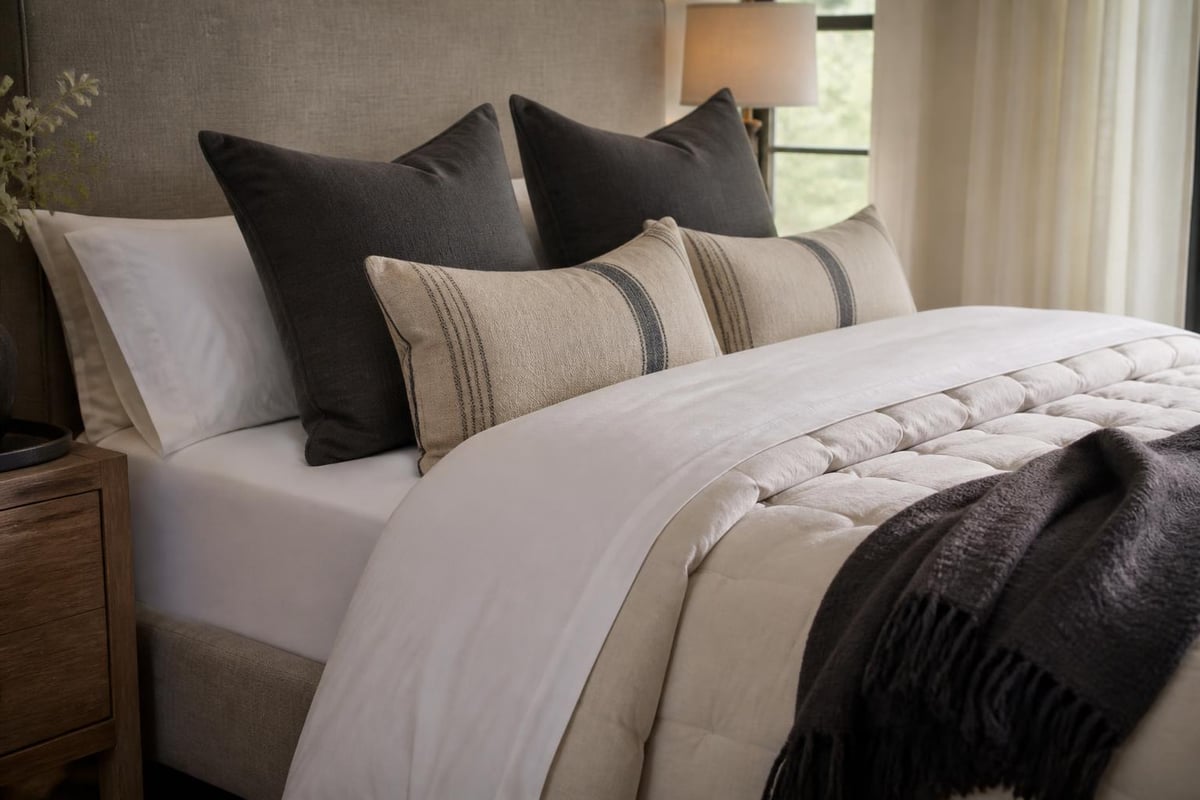
Your bedding and home textile needs change with the seasons. Rather than buying completely new sets four times a year, invest in versatile pieces you can layer.
| Season | Recommended Tog | Additional Layers | Fabric Focus |
|---|---|---|---|
| Summer | 4.5 tog or less | Light throw only | Breathable cotton, linen |
| Autumn | 7-10.5 tog | Add a blanket | Cotton blends, jersey |
| Winter | 13.5 tog | Multiple layers | Flannel, fleece accents |
| Spring | 7-10.5 tog | Decorative cushions | Fresh cotton, lighter weaves |
The Sleep Foundation's research on bedroom temperatures and bedding choices demonstrates that layering provides better temperature regulation than single heavy duvets. This approach also gives you more flexibility throughout unpredictable British weather.
If you're looking for cosy options, exploring warm bedding sets can help you find the perfect combination for chilly evenings without overheating during the night.
Coordinating colours and patterns in your bedroom
Creating a cohesive look in your bedding and home space doesn't require an interior design degree. With a few simple principles, you can mix patterns, textures, and colours like a professional.
The 60-30-10 rule for bedroom colour schemes
Professional designers use this simple formula to create balanced, visually appealing spaces:
- 60% dominant colour: Your walls, larger furniture pieces, and main bedding items
- 30% secondary colour: Curtains, smaller furniture, accent bedding
- 10% accent colour: Cushions, throws, decorative accessories
This ratio creates harmony whilst preventing your space from feeling boring or overwhelming. Start with neutral base colours for your main bedding items, then add personality through accent pieces that are easy and affordable to change seasonally.
Popular 2026 colour combinations:
- Warm terracotta with sage green and cream accents
- Navy blue with blush pink and gold touches
- Charcoal grey with mustard yellow and white highlights
- Soft lavender with beige and silver details
Mixing patterns without creating chaos
Pattern mixing adds depth and interest to your bedding and home textiles. The secret is varying the scale and sticking to a consistent colour palette.
Start with one bold pattern as your focal point, perhaps a floral duvet cover. Add a medium-scale pattern like stripes in your cushions, then finish with a small-scale pattern or subtle texture in your throw. All patterns should share at least one colour to tie the look together.
The Bali or Hudson complete sets offer excellent starting points for pattern mixing, as they've already coordinated complementary designs that work beautifully together.
Caring for your bedding investment
Quality bedding and home textiles last longer when properly cared for. These maintenance tips protect your investment whilst keeping everything fresh and comfortable.
Washing frequencies that actually make sense
| Item | Washing Frequency | Why This Matters |
|---|---|---|
| Sheets | Every 1-2 weeks | Removes dead skin cells, oils, allergens |
| Duvet covers | Every 2-4 weeks | Protects duvet insert, maintains freshness |
| Pillowcases | Every 3-4 days | Reduces acne, keeps hair healthier |
| Throws & blankets | Monthly or as needed | Removes dust, maintains appearance |
| Mattress protector | Every 2-3 months | Extends mattress life, eliminates allergens |
For allergy sufferers, Consumer Reports recommends washing bedding weekly in hot water to eliminate dust mites effectively. A quality mattress protector creates an additional barrier against allergens whilst protecting your mattress from spills and wear.
Proper storage extends bedding life
When rotating seasonal bedding and home textiles, storage method matters. Clean everything thoroughly before storing, as stains and oils can set over time and attract pests.
Storage best practices:
- Use breathable cotton bags rather than plastic containers
- Add lavender sachets to deter moths naturally
- Store in cool, dry locations away from direct sunlight
- Avoid vacuum-sealed bags for natural fibres, which need air circulation
- Refold stored items every few months to prevent permanent creases
Budget-friendly bedroom transformations
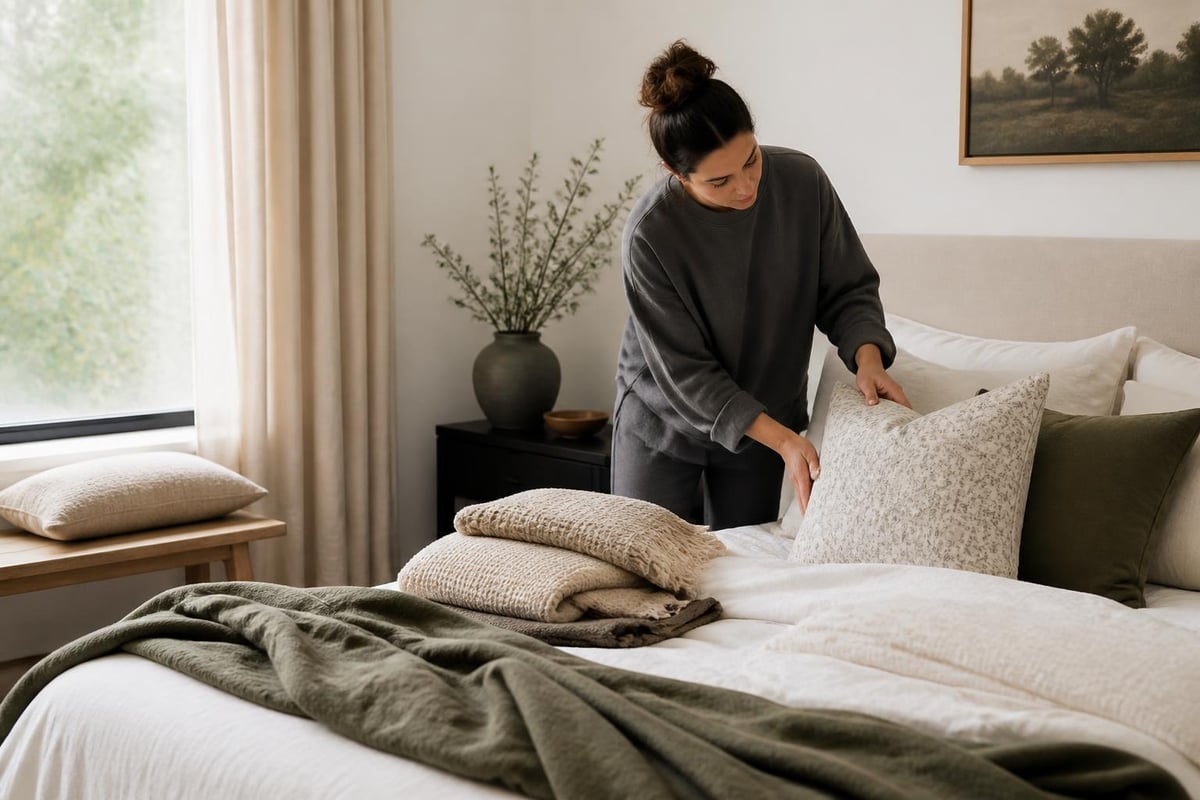
Refreshing your bedding and home space doesn't require starting from scratch. Strategic updates create dramatic impact without dramatic spending.
High-impact updates under £50
Sometimes the smallest changes make the biggest difference. These affordable updates instantly elevate your bedroom's style:
- New pillowcases in an accent colour breathe life into existing bedding
- A textured throw adds luxury and warmth for minimal investment
- Fresh cushions introduce new patterns without committing to full bedding changes
- Coordinating towels create a spa-like bathroom feel
- Seasonal accessories like the Cable knit throw for autumn charm
The Sleep Foundation's comprehensive bedding guides emphasize that comfort should always take priority over trends. Invest in quality basics, then play with affordable accessories to keep your space feeling current.
Building a complete bedding wardrobe gradually
Rather than purchasing everything at once, build your bedding and home collection strategically. This approach spreads costs whilst ensuring you choose pieces you truly love.
Year-one priority purchases:
- Two sets of quality fitted and flat sheets
- One all-season duvet (10.5 tog works year-round for most)
- Four pillowcases minimum for regular rotation
- One duvet cover in a neutral shade
- Basic mattress protector
Year-two additions:
- Seasonal duvet for winter warmth (13.5 tog quilt for extra cosiness)
- Decorative cushions and throws
- Second duvet cover for variety
- Quality towels in coordinating colours
This gradual approach allows you to discover your preferences whilst maintaining a comfortable, attractive bedroom throughout the process. Shopping during seasonal sales stretches your budget even further.
Matching bedding with home décor styles
Your bedding and home textiles should complement your overall interior design style. Understanding different aesthetic approaches helps you make cohesive choices.
Modern minimalist bedrooms
Clean lines and neutral palettes define minimalist spaces. Choose solid-colour bedding in whites, greys, or muted earth tones. Quality matters more than quantity here, so invest in fewer pieces with superior construction and timeless appeal.
Texture creates interest in minimalist bedding and home schemes without visual clutter. Consider linen sheets, waffle-weave blankets, or subtly textured duvet covers that add depth whilst maintaining simplicity.
Cottage core and traditional charm
Soft florals, vintage-inspired patterns, and layered textiles characterize cottage aesthetics. Mix different patterns in complementary colours, pile on the cushions, and embrace decorative details like ruffled edges or embroidered accents.
The Fern or Baltimore complete sets capture this cosy, traditional charm whilst remaining affordable and practical. Layer with coordinating throws and plenty of plump pillows for that lived-in, welcoming feel.
Contemporary eclectic spaces
Bold patterns, unexpected colour combinations, and mix-and-match styles define eclectic bedrooms. This approach offers maximum creative freedom in your bedding and home choices.
Start with a neutral base, then experiment with vibrant accent pieces. Change cushion covers seasonally, swap throws based on your mood, and don't be afraid to combine different eras and styles. The key is maintaining some consistent element, whether that's colour, pattern scale, or texture.
Maximizing comfort through smart layering
Creating the perfect sleep environment involves more than just choosing attractive bedding and home textiles. Strategic layering provides both comfort and visual appeal.
The science of bedding layers
Proper layering creates pockets of air that regulate temperature naturally. This principle applies whether you're trying to stay cool in summer or warm in winter.
Optimal layering from bottom to top:
- Mattress protector (waterproof, breathable)
- Fitted sheet (smooth, high-quality cotton)
- Flat sheet (optional but aids temperature control)
- Duvet or quilt (appropriate tog for season)
- Duvet cover (protects duvet, easy to wash)
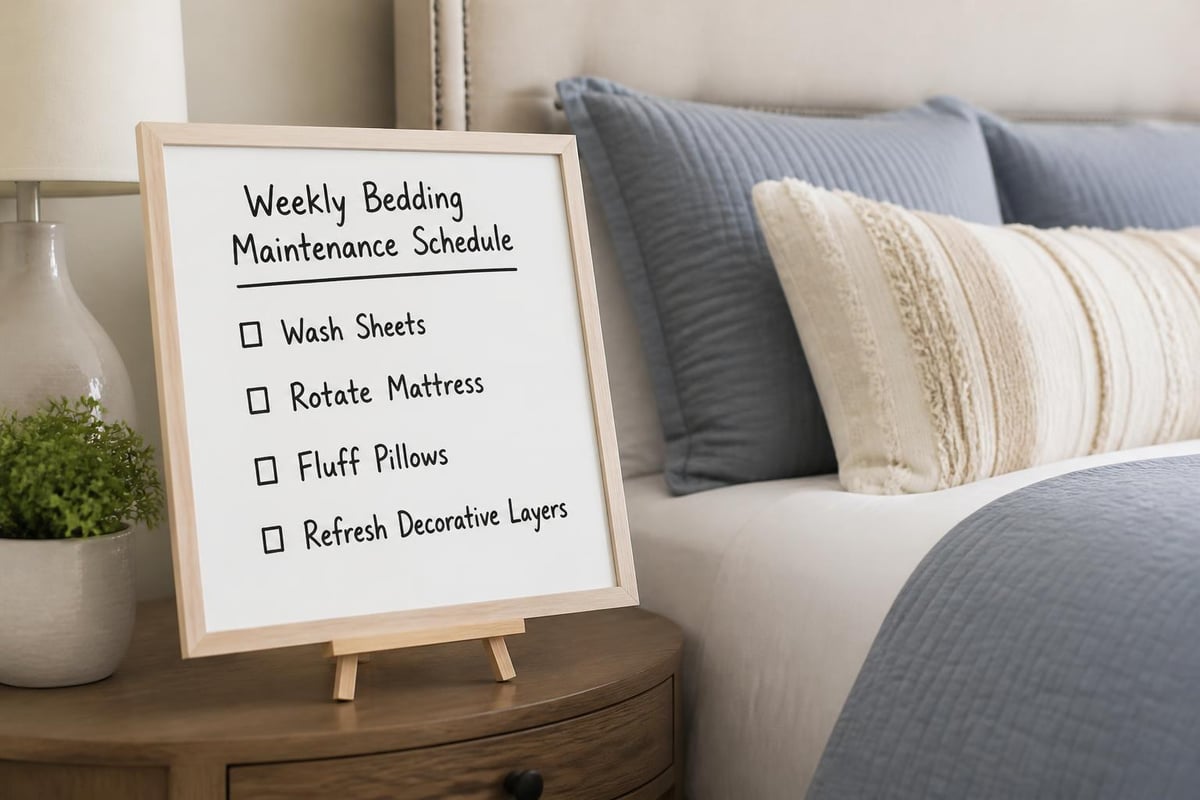
- Decorative layers (throws, cushions, blankets)
Research from the Sleep Foundation shows that understanding different bedding layers and their purposes helps consumers create personalized sleep systems. What works beautifully in one home might not suit another, depending on personal temperature preferences, heating systems, and climate.
Temperature regulation through textile choices
Natural fibres generally outperform synthetics for temperature regulation, though modern textile technology has created some excellent synthetic options. Cotton remains the gold standard for bedding and home textiles due to its breathability, durability, and comfort.
Material guide for different needs:
| Material | Best For | Consider If |
|---|---|---|
| Cotton | Year-round use, sensitive skin | You want versatility and easy care |
| Linen | Hot sleepers, summer months | You prefer relaxed, textured looks |
| Flannel | Winter warmth, cosy feel | You sleep cold or love extra softness |
| Jersey | Stretch comfort, casual feel | You want that worn-in t-shirt softness |
| Microfibre | Budget-friendly, wrinkle-resistant | You need low-maintenance options |
Mixing materials across different bedding and home pieces creates both visual interest and functional benefits. Cotton sheets topped with a soft flannel duvet cover and a chunky knit throw provide varied textures whilst addressing different comfort needs.
Answering common bedding questions
Understanding the finer points of bedding and home textiles helps you make confident purchasing decisions.
How many sets do you actually need?
Two complete sets of sheets per bed is the practical minimum. This allows one set in use whilst the other is being washed. Three sets provides more flexibility for unexpected spills or seasonal rotation.
For duvet covers, two per bed works well for most households. Rotate them regularly to extend their lifespan and give yourself variety. If you enjoy refreshing your space frequently, consider additional covers in different colours or patterns.
When to replace bedding items
Quality bedding and home textiles last for years with proper care, but everything eventually needs replacing. Watch for these signs:
- Sheets: Thinning fabric, persistent stains, loss of elasticity in fitted sheets (typically 2-3 years)
- Duvets: Clumping, reduced loft, fabric tears (5-10 years depending on quality)
- Pillows: Lack of support, permanent lumps, discoloration (1-2 years)
- Towels: Persistent odours, reduced absorbency, fraying edges (2-5 years)
- Throws and decorative items: Pilling, fading, loss of shape (3-5 years)
Shopping at Happy Home Shop during sales events allows you to replace worn items affordably, maintaining a fresh, inviting bedroom without budget stress.
Dealing with common bedding challenges
Fitted sheets that won't stay put: Check that you've purchased the correct size for your mattress depth. Modern mattresses run deeper than older models. Sheet suspenders or grippers provide an affordable solution.
Duvet shifting inside cover: Look for duvet covers with corner ties or tabs. Alternatively, use safety pins or duvet clips to secure corners, preventing that annoying bunching.
Pilling on sheets and towels: Wash new items before use, avoid fabric softener, and wash similar textures together. Some pilling is normal with certain fabrics, but excessive pilling indicates lower quality fibres.
Creating a cohesive bedding and home aesthetic
Your bedroom shouldn't exist in isolation from the rest of your home. Creating flow between spaces makes your entire house feel more intentional and stylish.
Coordinating bedroom and bathroom linens
Your bedding and home textiles can share a cohesive colour story throughout your private spaces. Choose towels that complement your bedroom palette, creating a sense of continuity.
The Camden, Spa, or Waffle towel collections offer excellent coordination options with various bedding styles. Matching or complementary colours between bedroom and bathroom creates a curated, designer look.
Bringing bedroom comfort to living spaces
The cosy, layered approach that works beautifully in bedrooms translates wonderfully to living areas. Soft throws draped over sofas, cushions in coordinating colours, and textured blankets create inviting spaces throughout your home.
Consider pieces like the Teddy throw or Juniper tufted throw that transition seamlessly between bedroom and living room use. This versatility maximizes your investment whilst maintaining aesthetic consistency.
Seasonal refreshes keep spaces feeling current
Swapping lighter, brighter textiles in spring and summer for richer, warmer tones in autumn and winter keeps your bedding and home spaces feeling fresh. This doesn't require purchasing completely new sets, simply rotating accent pieces and decorative layers.
Store off-season items properly, and you'll have a ready rotation that makes seasonal changes effortless and affordable. This approach also extends the life of all your bedding and home textiles by reducing wear through constant use.
Making sustainable bedding choices
Environmental consciousness doesn't conflict with creating beautiful, comfortable bedding and home spaces. Small choices add up to meaningful impact.
Quality over quantity reduces waste
Investing in better-quality bedding and home textiles that last longer ultimately creates less waste than frequently replacing cheaper items. Well-made sheets, duvets, and towels withstand hundreds of wash cycles whilst maintaining their appearance and comfort.
When shopping, look for reinforced seams, quality stitching, and durable fabrics. These indicators suggest items that will serve you well for years rather than months.
Proper care extends product lifespan
Following care instructions, using appropriate water temperatures, and avoiding harsh chemicals protects your bedding and home investment. Line drying when possible reduces energy consumption and is gentler on fabrics than tumble drying.
Rotating between multiple sets prevents excessive wear on any single item. This simple practice can double or triple the usable life of your sheets and duvet covers.
Repurposing and recycling worn textiles
When bedding and home items finally reach the end of their useful life, consider alternatives to binning them. Worn sheets make excellent cleaning rags, old towels work perfectly for pet bedding, and damaged duvets can be donated to animal shelters.
Textile recycling programmes increasingly accept household linens, ensuring materials are repurposed rather than sent to landfill. Check with your local council or charity shops for textile recycling options in your area.
Creating a beautiful bedroom with quality bedding and home essentials doesn't require an unlimited budget or professional design expertise. By understanding the basics, choosing versatile pieces, and caring for your items properly, you can build a comfortable, stylish space that welcomes you home every day. Happy Home Shop makes this journey easier with affordable, quality bedding, towels, and home textiles that help you create the sanctuary you deserve. Browse the collection today and discover how simple it is to transform your space without stretching your budget.